Georgian
Circa 1800–1825 | England
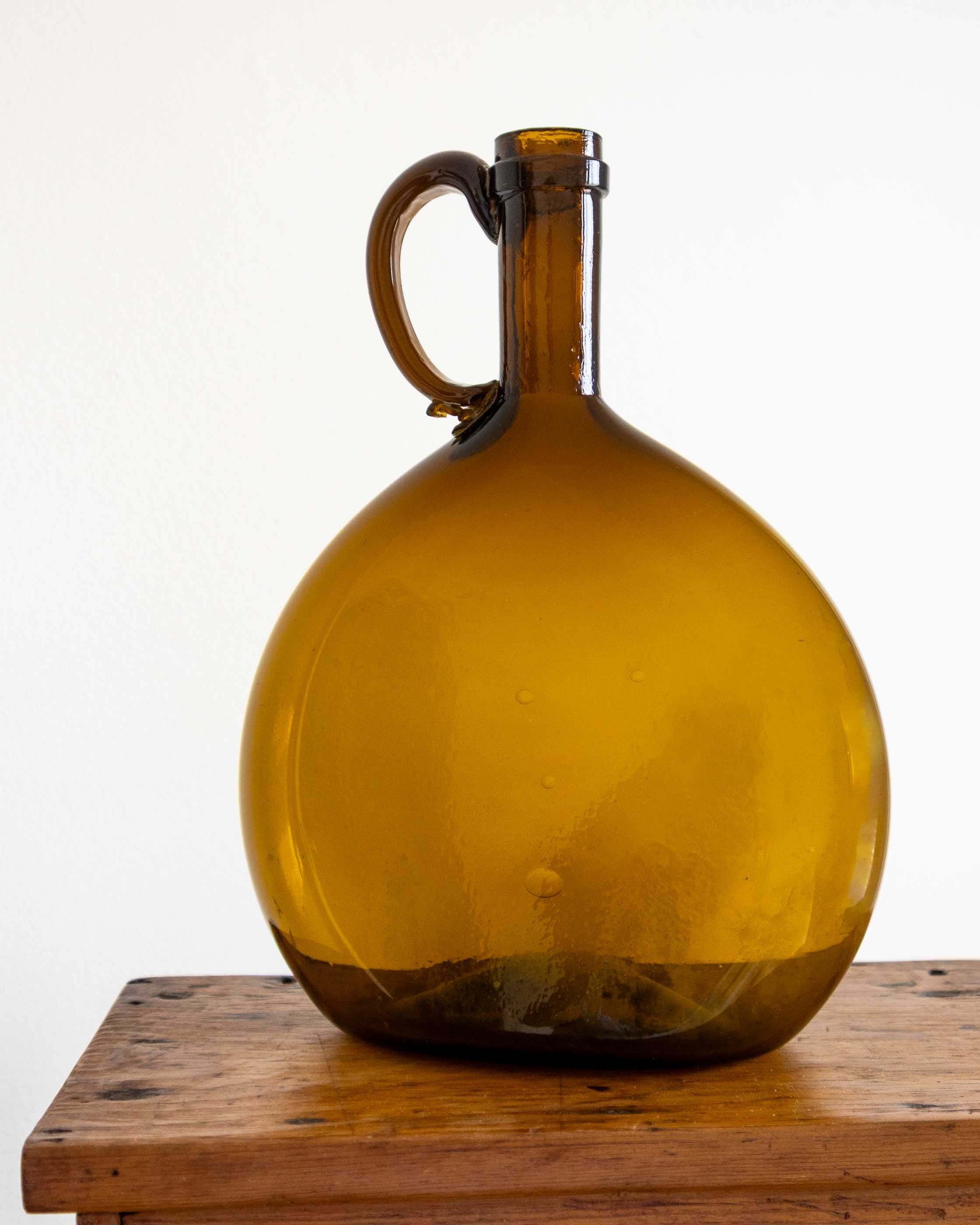
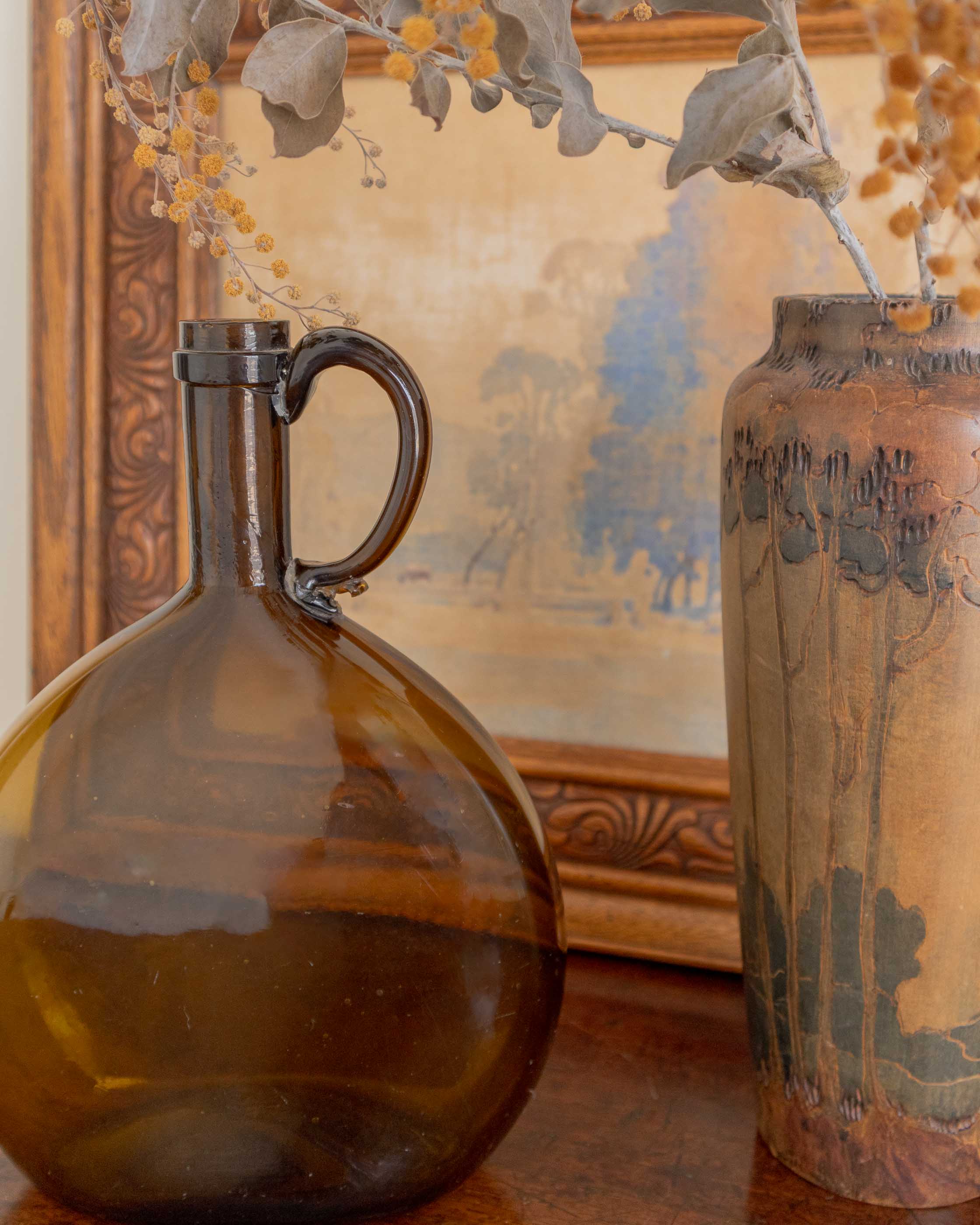
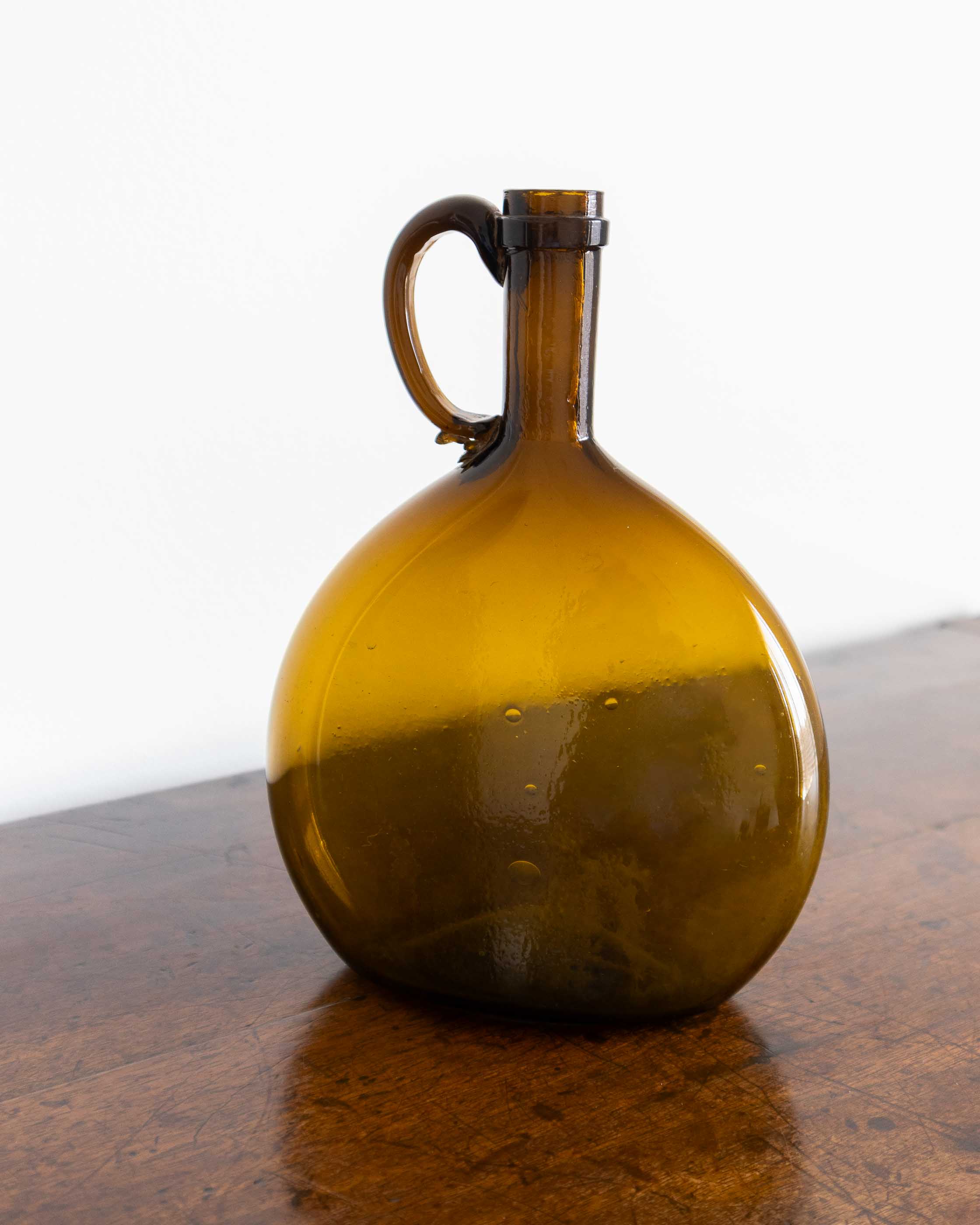
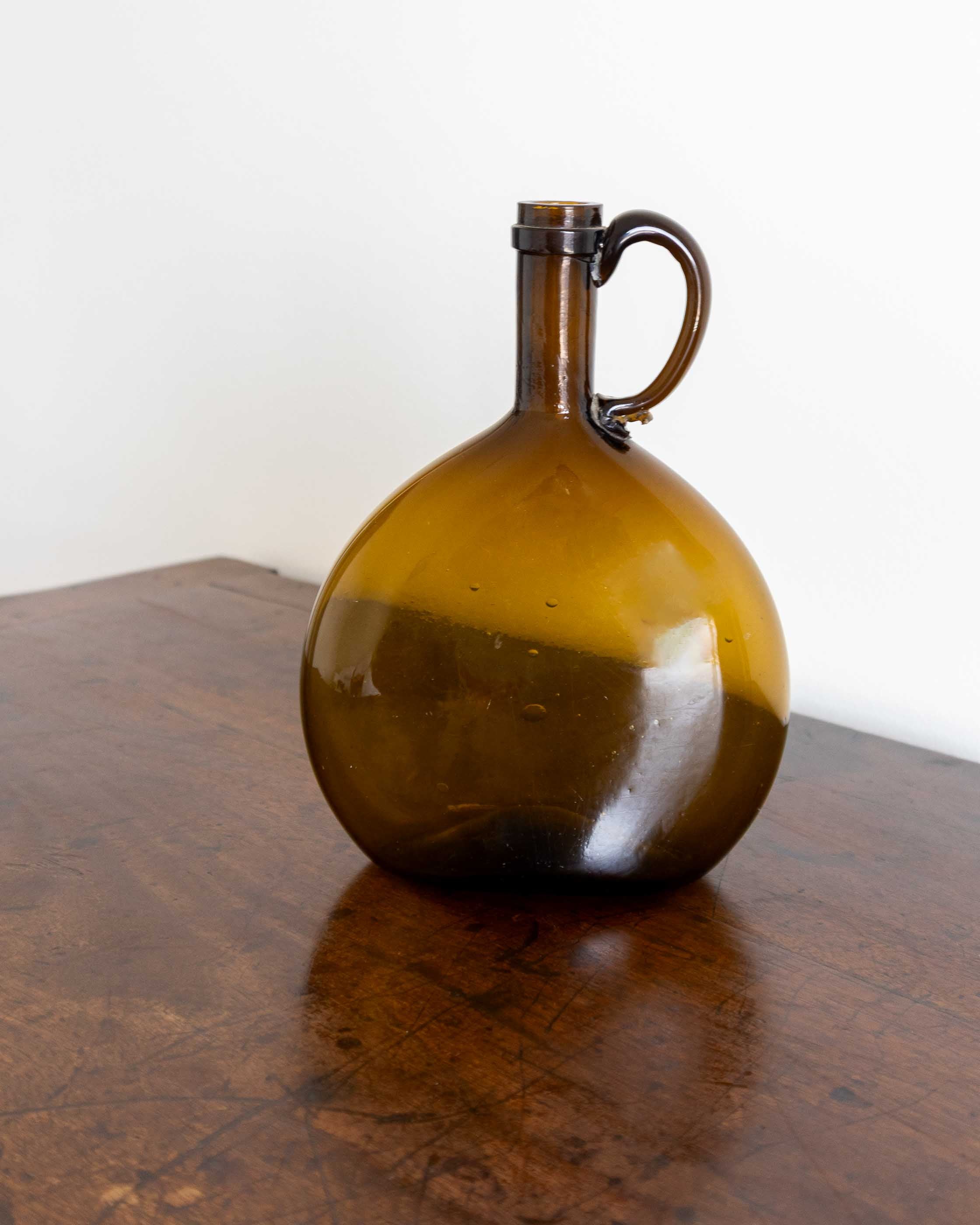
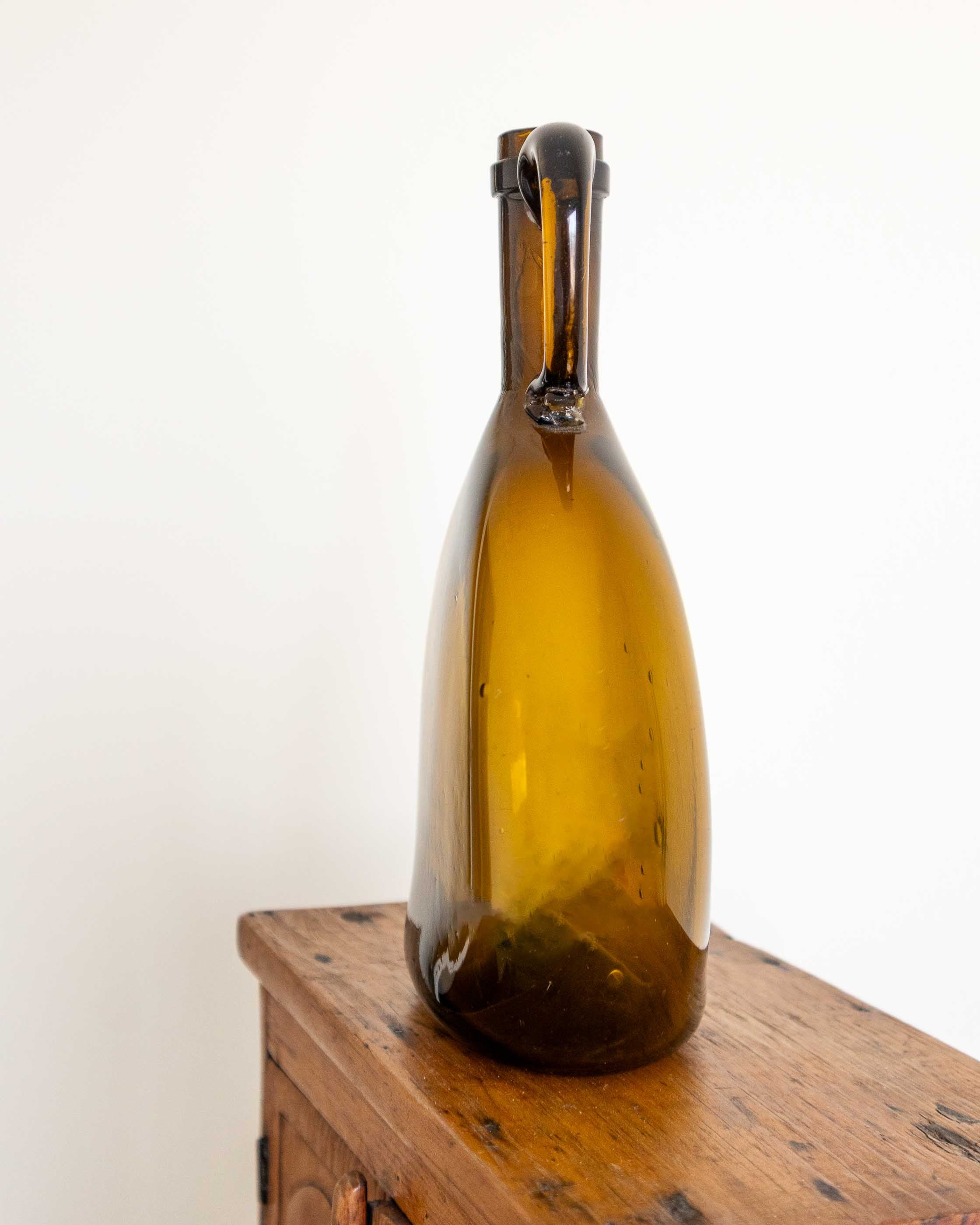
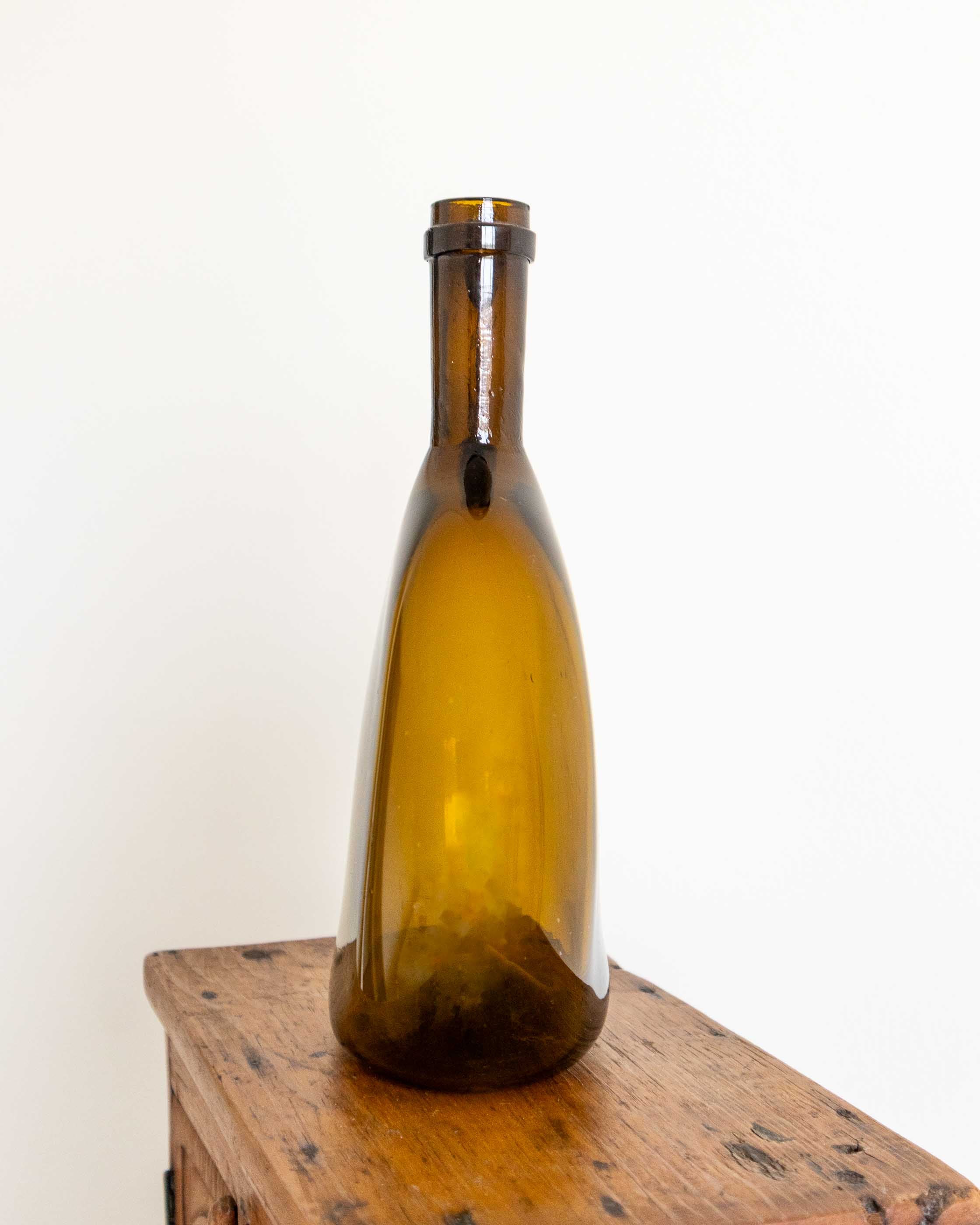
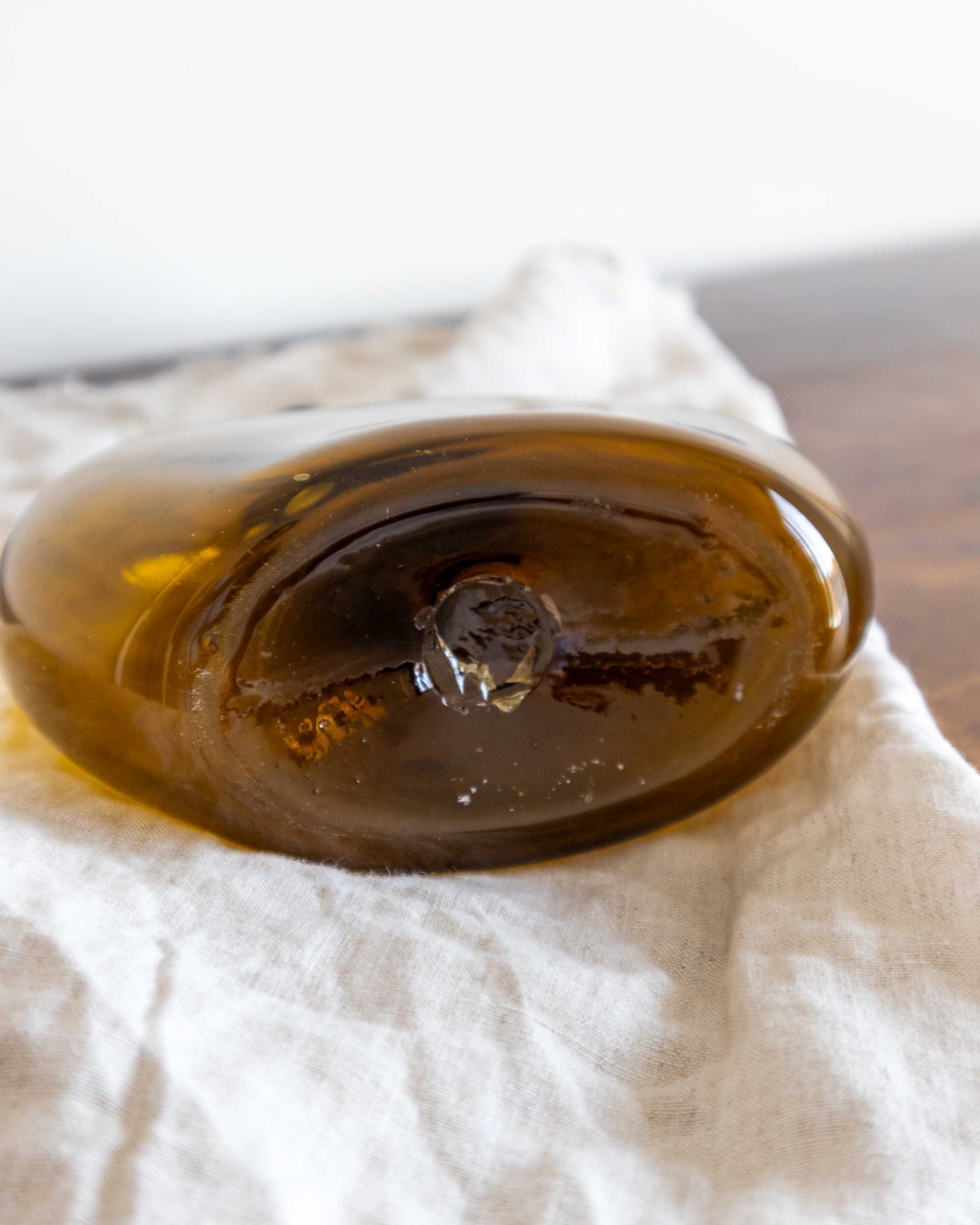
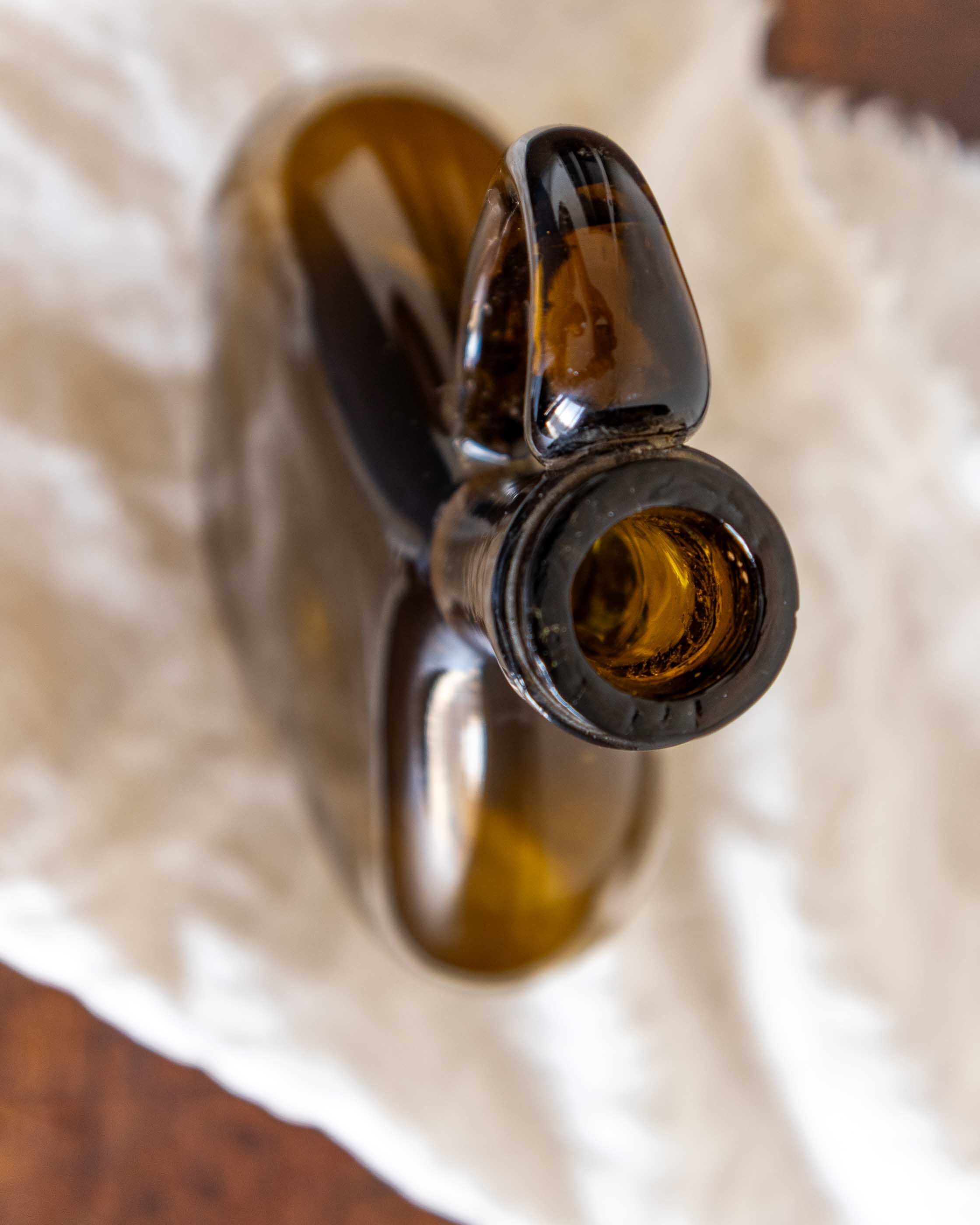
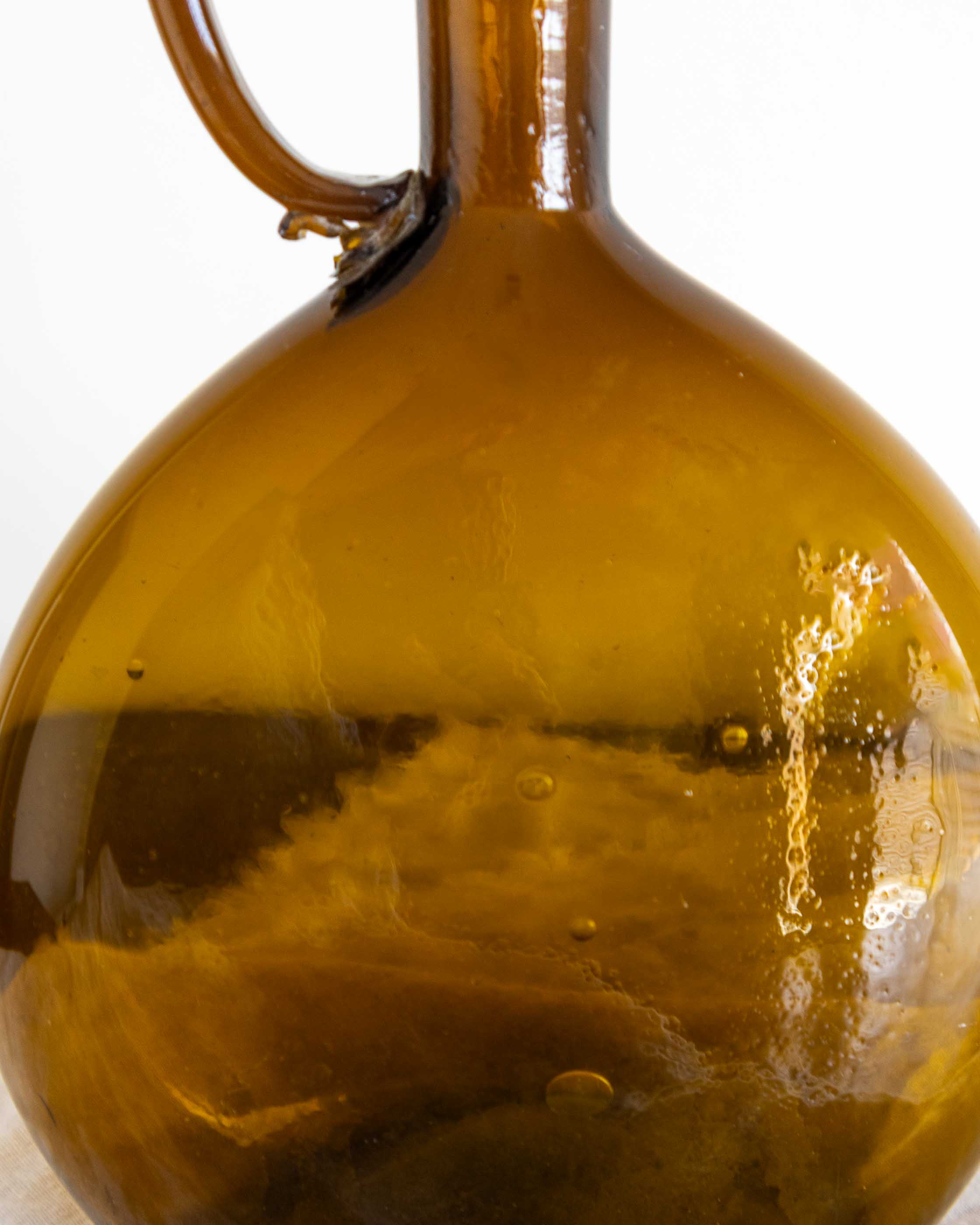
An attractive late Georgian amber glass flagon for whiskey or spirits. The flagon has a flat sided bulbous shape and a short neck (see The Gen). There is a small loop handle on the side. The base of the handle has a sharp edge produced during the making of the bottle or could point to a restoration. The handle is crudely done. There is an unground pontil mark to the base (see The Gen). A truly beautiful amber colour, especially when it catches the light.
DIMENSIONS: Height 22 cm, Width 16 cm, Depth 5.8 cm.
CONDITION: In very good condition; wear consistent with an antique age and use, such as fine scratches, chips and scuff marks which do not impact on the flagon’s visual appeal. There is some internal staining/haze.
REFERENCES: For examples of similar flagons see The Decanter: An Illustrated History of Glass from 1650, Andy McConnell, Antique Collector’s Club, 2004, p. 346 and English Coloured Glass 1780–1840, M.G. Betro, The Australian Antique Collector, Jan–June 1985, p. 58.
~~~~~~~~~~~
THE GEN
“Another coloured decanter form appeared between 1800 and 1870. Correctly termed flasks or flagons, from the French flacon, they had oval-sectioned bodies, short necks and neck-mounted finger-rings. The earliest examples were Bocksbeutel, literally goatbag, made in the Spessart forest, near Wiirzburg, first recorded in 1785, and imported containing Frankish Stein wines. Their unusual shape presumably inspired an English silversmith to start a fashion by embellishing one with mounts.
Converted Bocksbeutels and mells were fitted with silver or plated collars, and stoppered with corks. Elkington produced at least eleven different stoppers for half-pint, pint and quart decanters and flagons, with finials including silver or plated balls, pull-rings, fruiting vines and a Bacchus. Another popular cork stopper had mother-of-pearl disc finials engraved with Gothic content cartouches.” (The Decanter: An Illustrated History of Glass from 1650, Andy McConnell, Antique Collector’s Club, 2004, pp 346–348)
For example, decanters and cruets of the late 18th century always seem to have a ground mark whereas later flagons and country market glassware, such as cream jugs and mugs, which were made until the middle of the 19th century, seem to always have an unground mark.” (English Coloured Glass 1780–1840, M.G. Betro, The Australian Antique Collector, Jan–June 1985, p. 58)
~~~~~~~~~~~
Would you like to know more about this piece?
Make an enquiry via email here.