Victorian
Circa 1840 | English
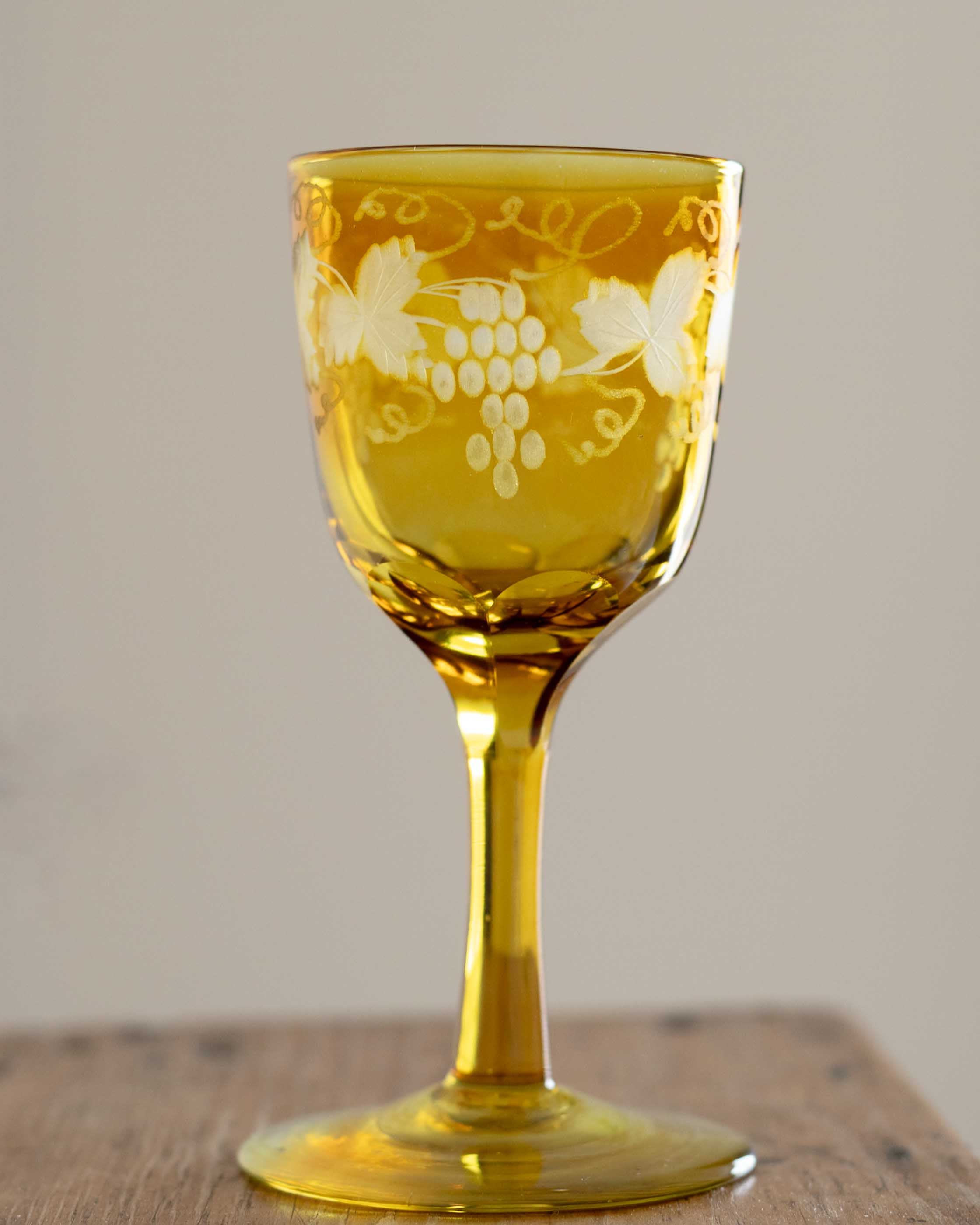
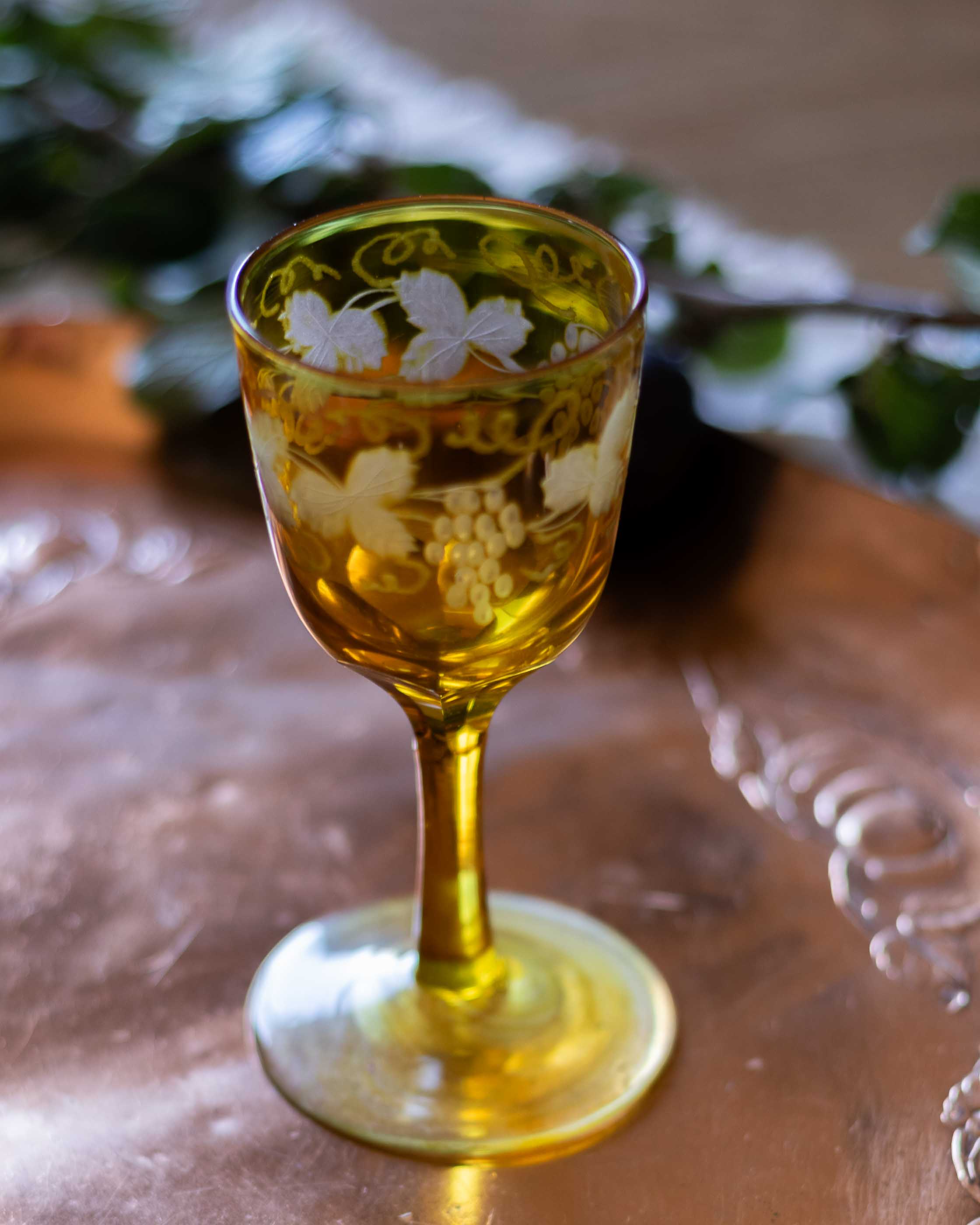
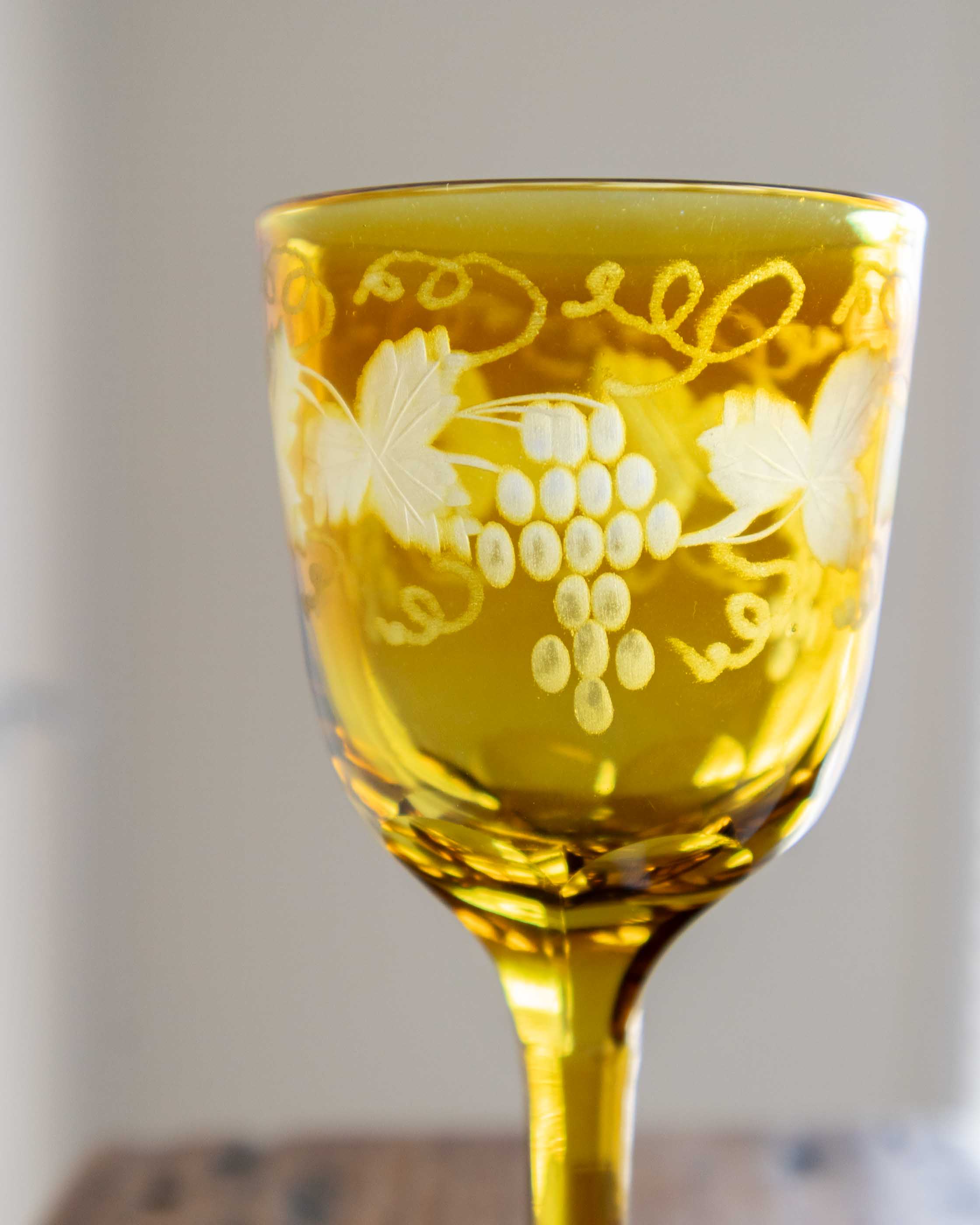
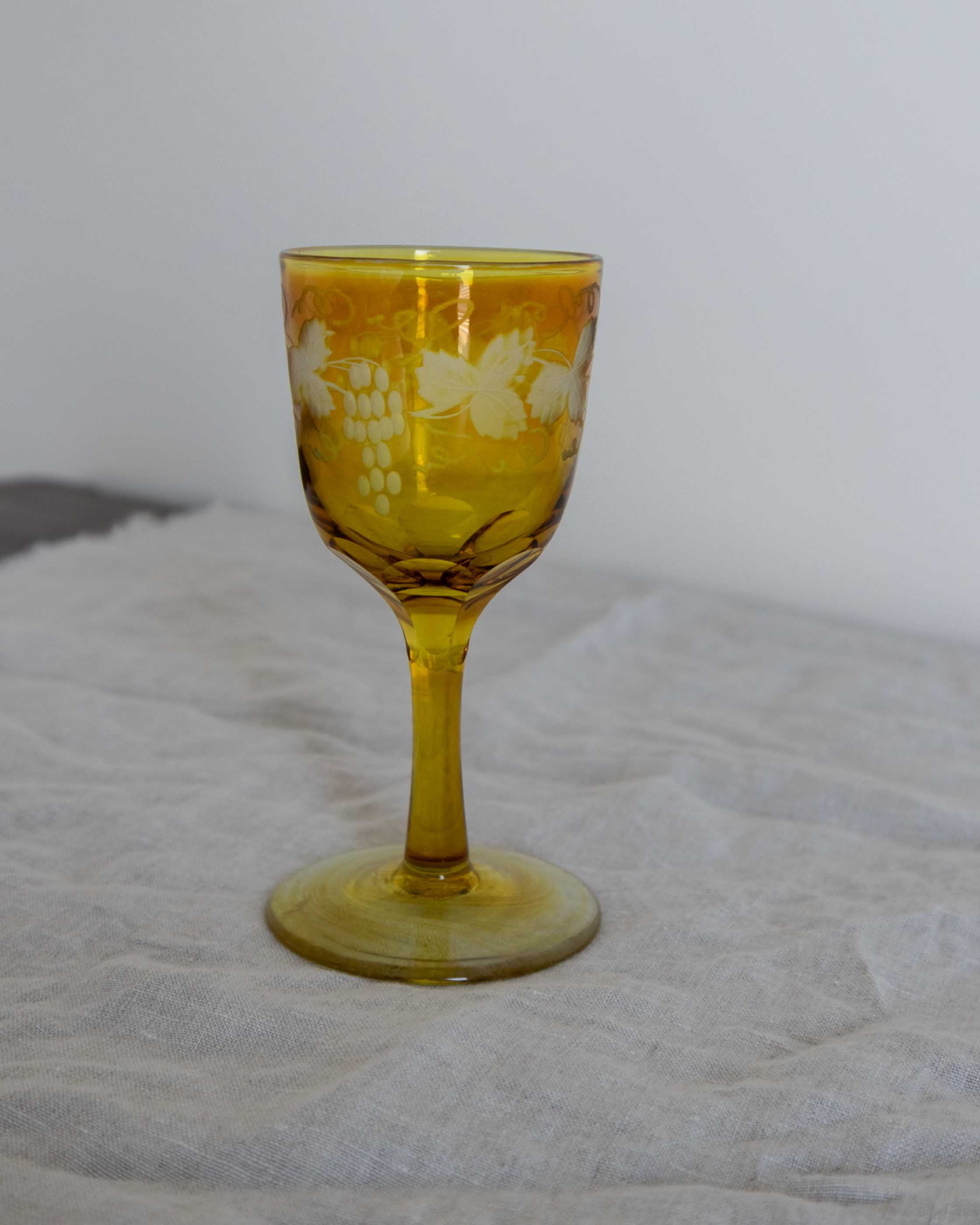
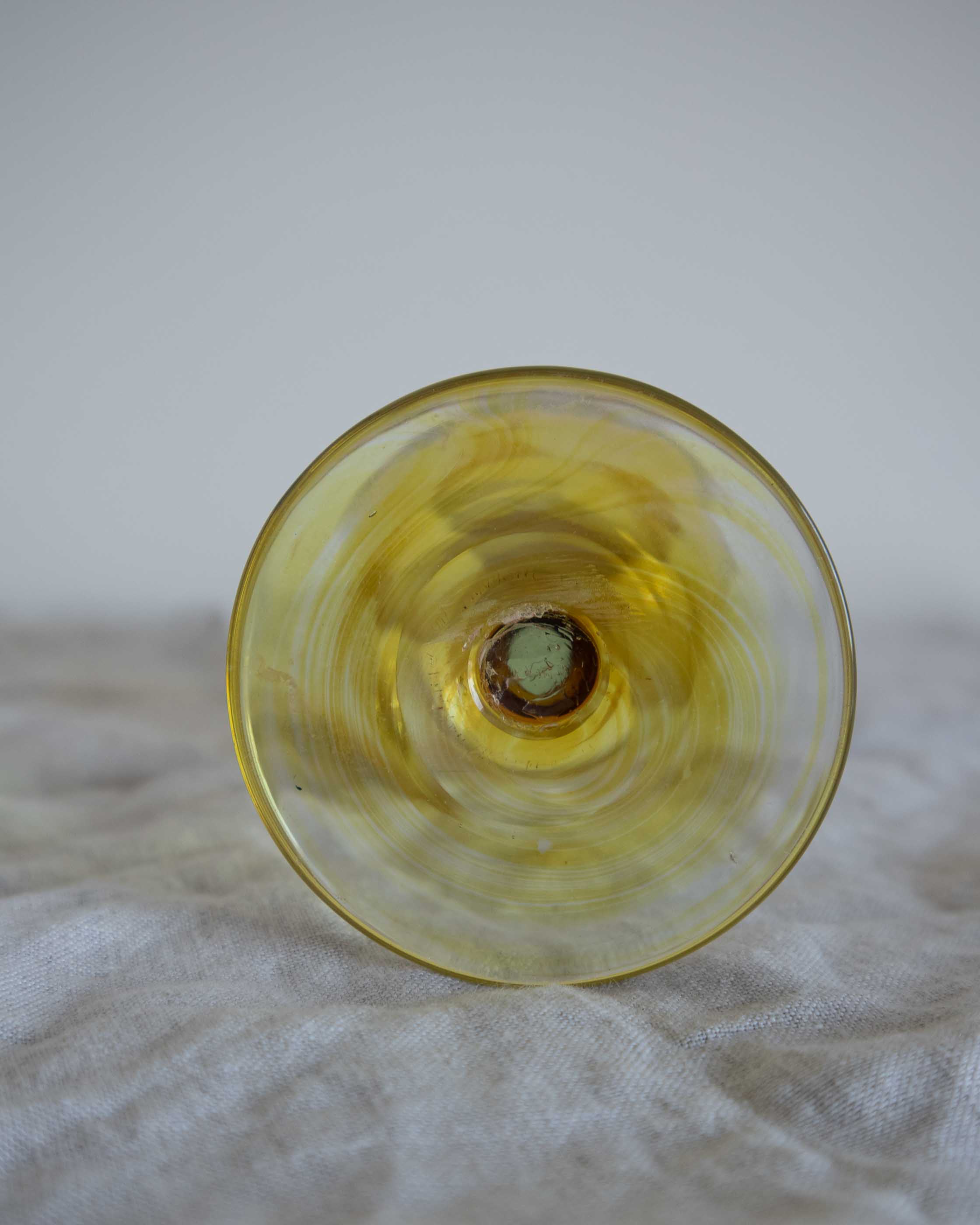
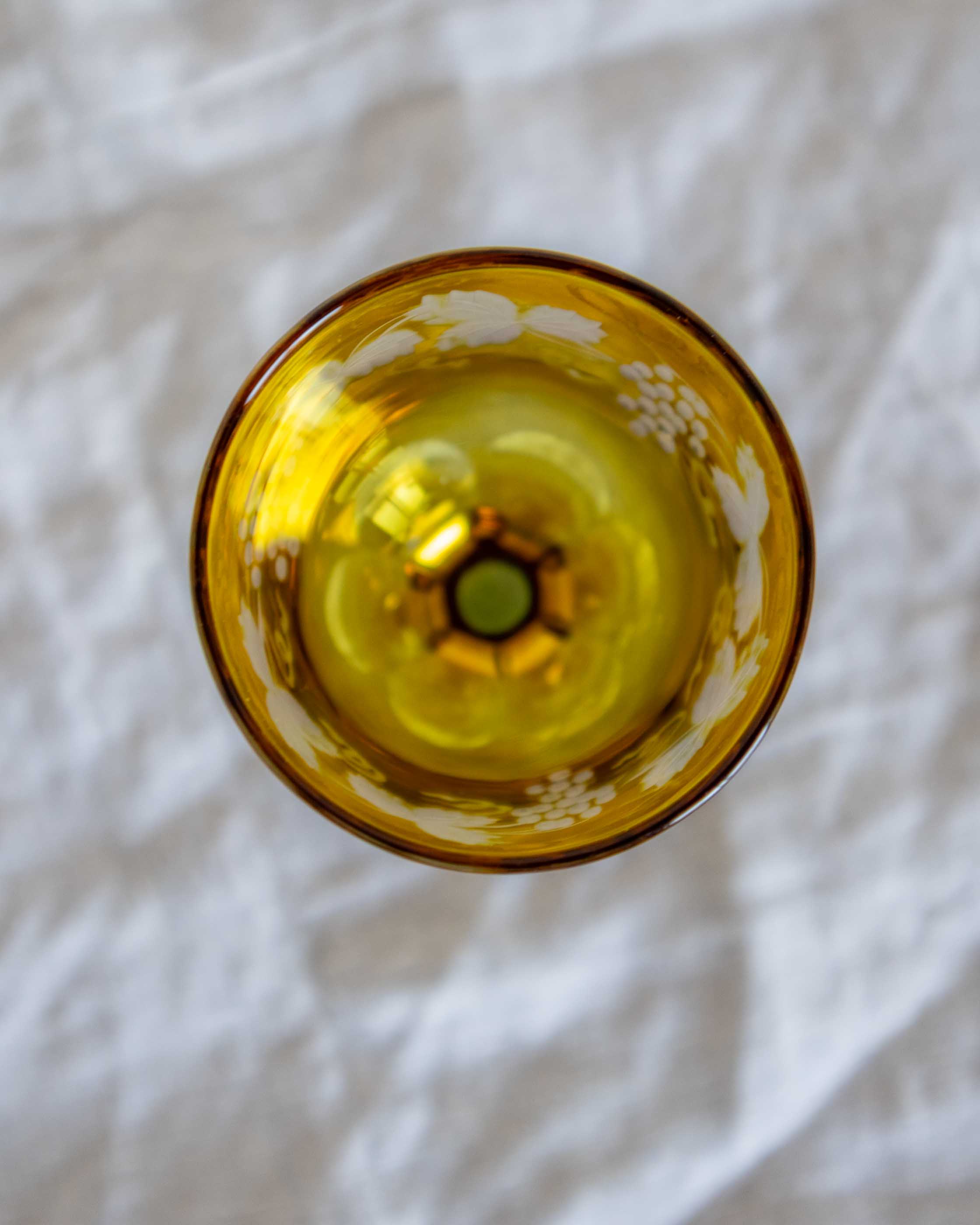
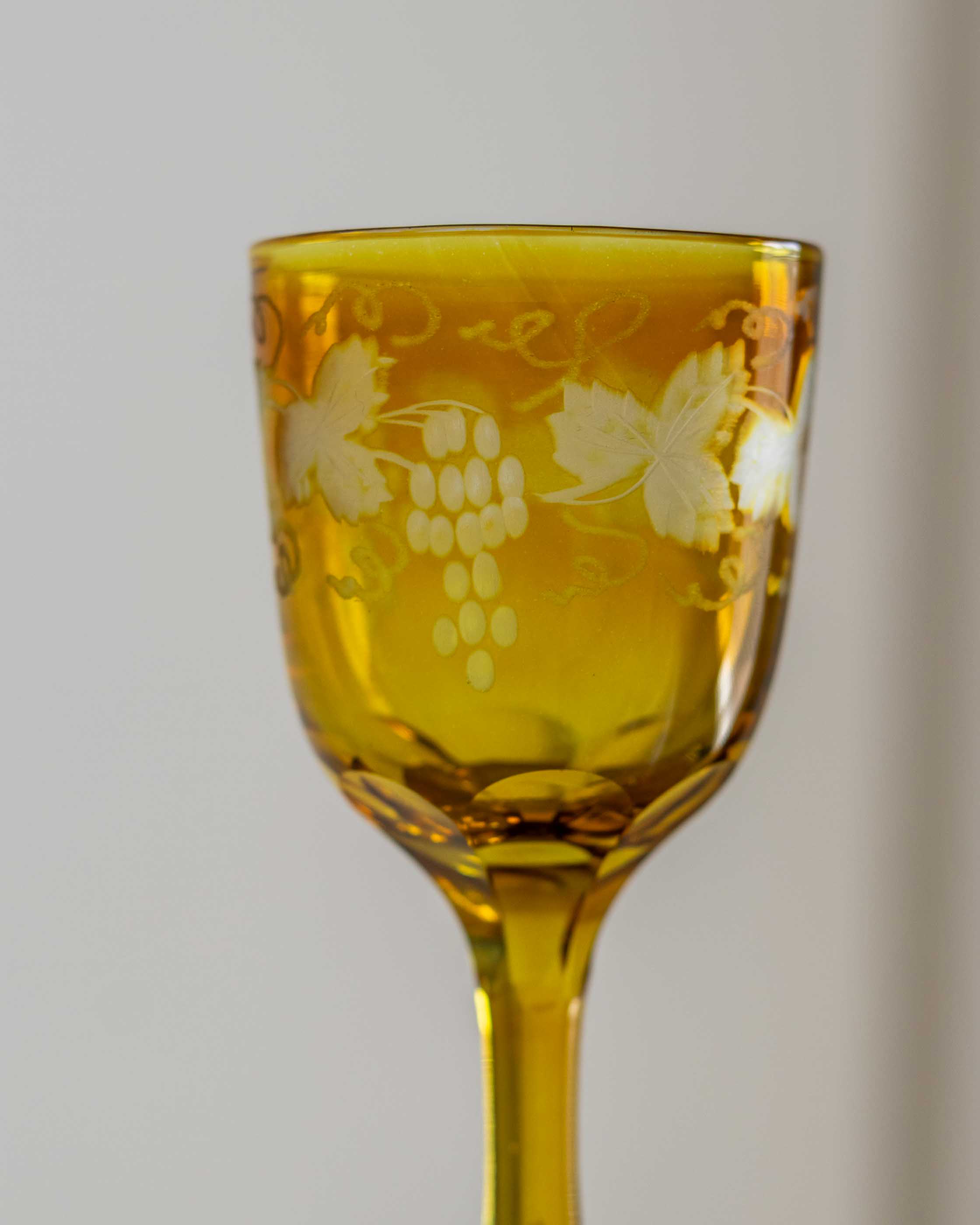
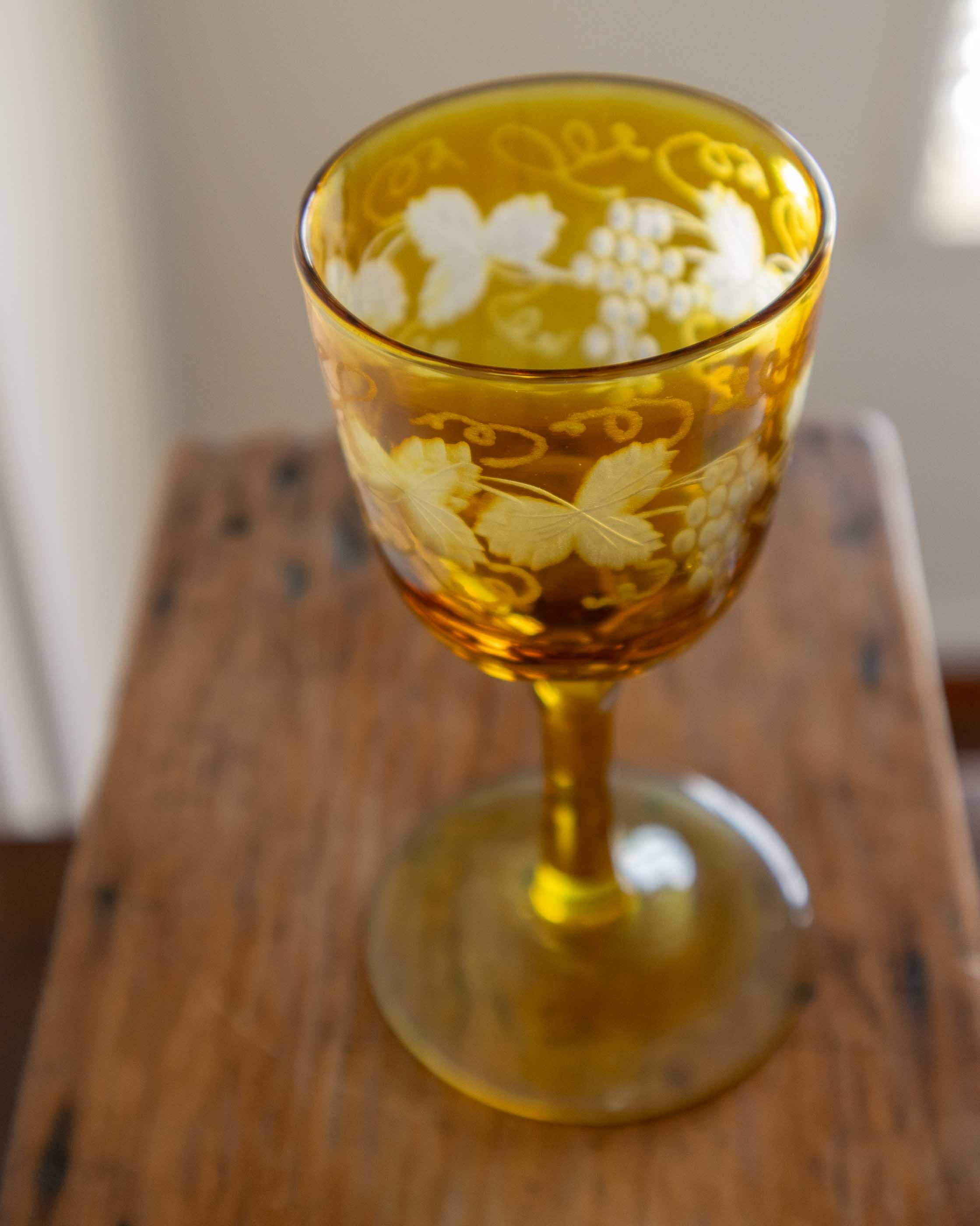
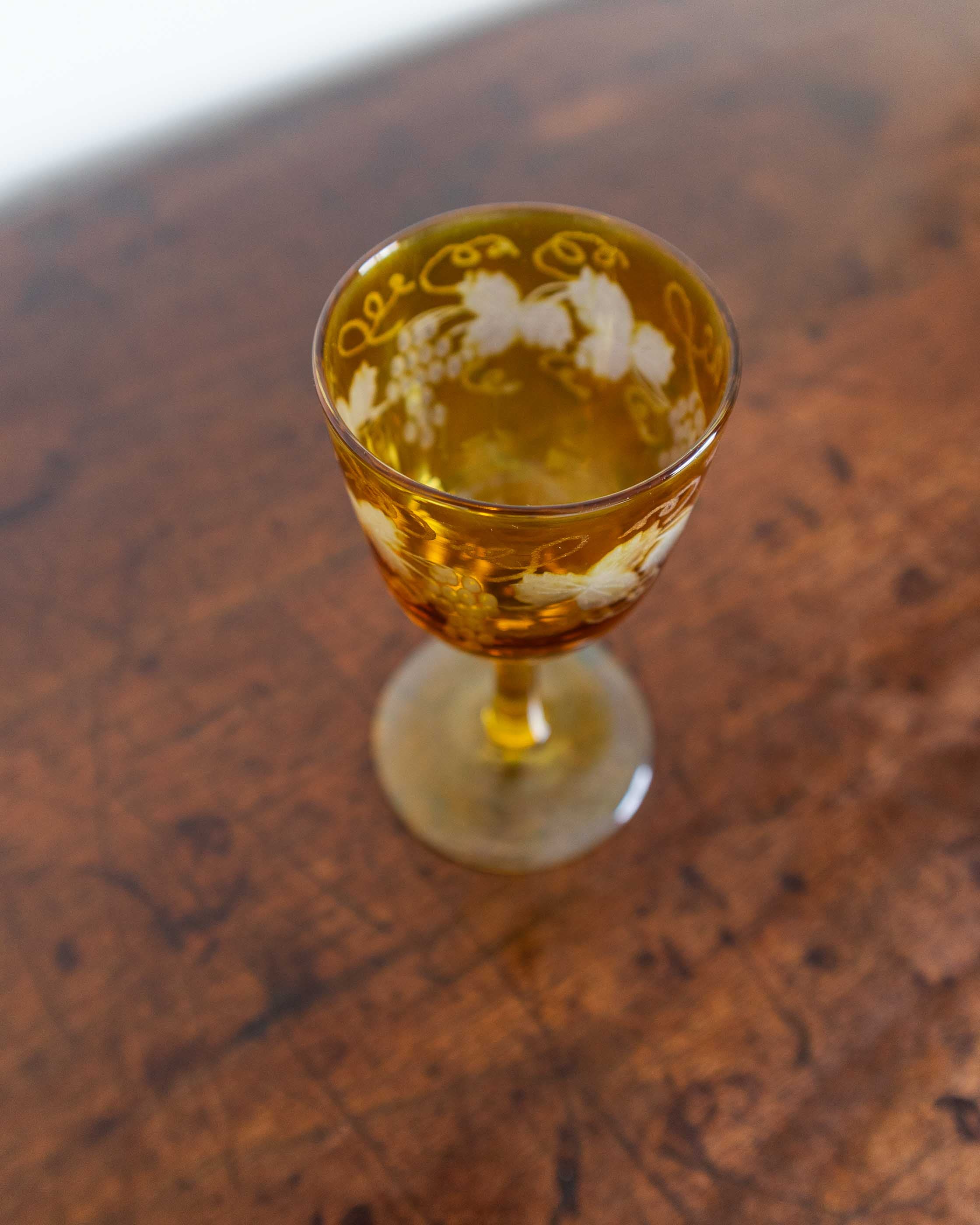
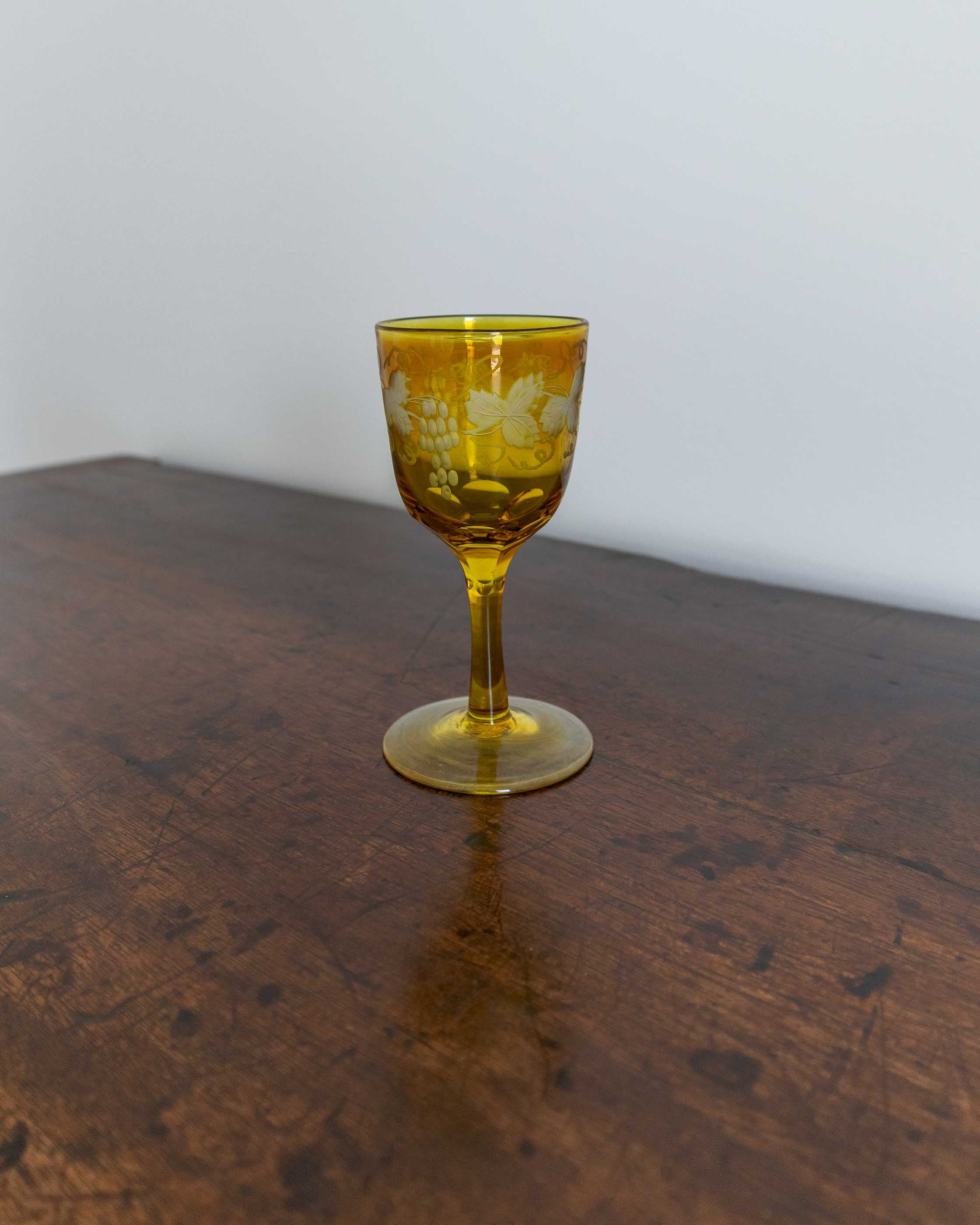
An antique Victorian amber wine glass with the bowl engraved with a trailing fruiting vine. Pontil scar to the underside of the foot. The amber colour is darkest at the top of the glass and graduates to lighter shades towards the foot where it ends with faint swirls on clear glass. So, this may be a stained or flashed amber glass.
DIMENSIONS: Height 12.9 cm, Bowl 5.9 cm, Foot 6.7 cm.
CONDITION: In very good condition; wear consistent with an antique age and use, such as fine scratches and marks which do not impact on the visual appeal of the wine glass. There are no chips, cracks or evident restoration.
REFERENCES: For an example of a similar engraved amber-stained glass decanter see Sotheby’s Mallet at Bourdon House Auction, 9 March 2007, Lot 1035.
~~~~~~~~~~~
THE GEN
“Amber-stained glass. Mainly Victorian-era pattern glass partially or completely stained a natural amber color. The tone ranged from light pale yellow to deep golden brown. Made by numerous companies, it was introduced about 1885, and remained popular until about 1905.
Staining. The process of coloring the surface of annealed glassware using brushed-on colored pigments that sink into the surface where applied, leaving it almost smooth. The technique was used on early Islamic glassware by an unknown process, and in medieval Europe using a silver stain. A method of staining was later developed by Friedrich Egermann, using silver chloride to produce a yellow stain (about 1820) and a red stain (about 1840) as a cheap substitute for flashed glass. The articles made were usually embellished with engraving or etching. The normal colors of glass made by staining are brownish yellow (amber) and deep ruby, ruby red being the most common. The stains were lightly fired and the wares embellished by engraving, revealing the thinness of the staining. The process was used only rarely in the United States. (Glass A to Z, David J. Shotwell, Krause Publications, 2002, pp 12 and 525)
~~~~~~~~~~~
Would you like to know more about this piece?
Make an enquiry via email here.