Victorian
Circa mid to late 19th century | England
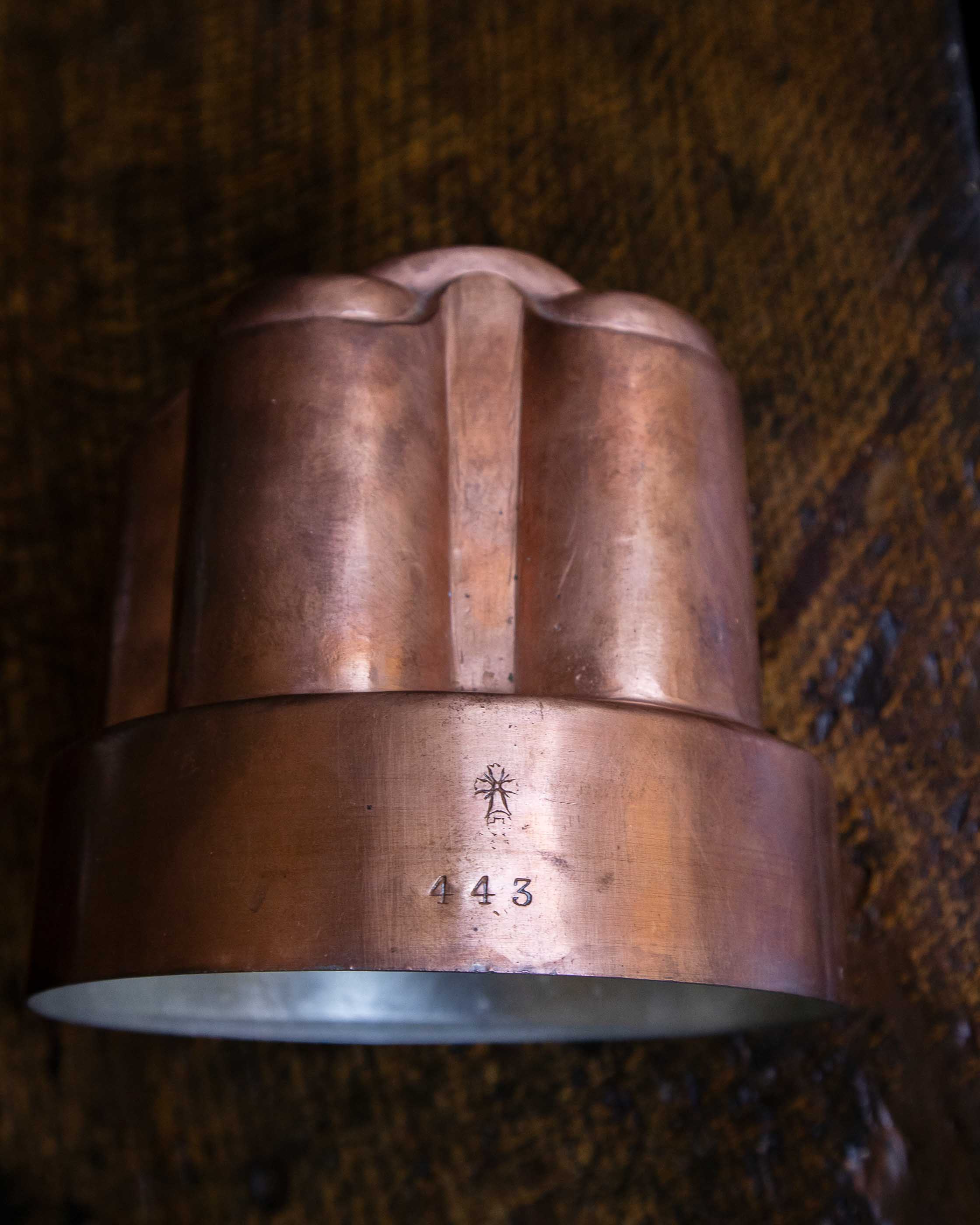
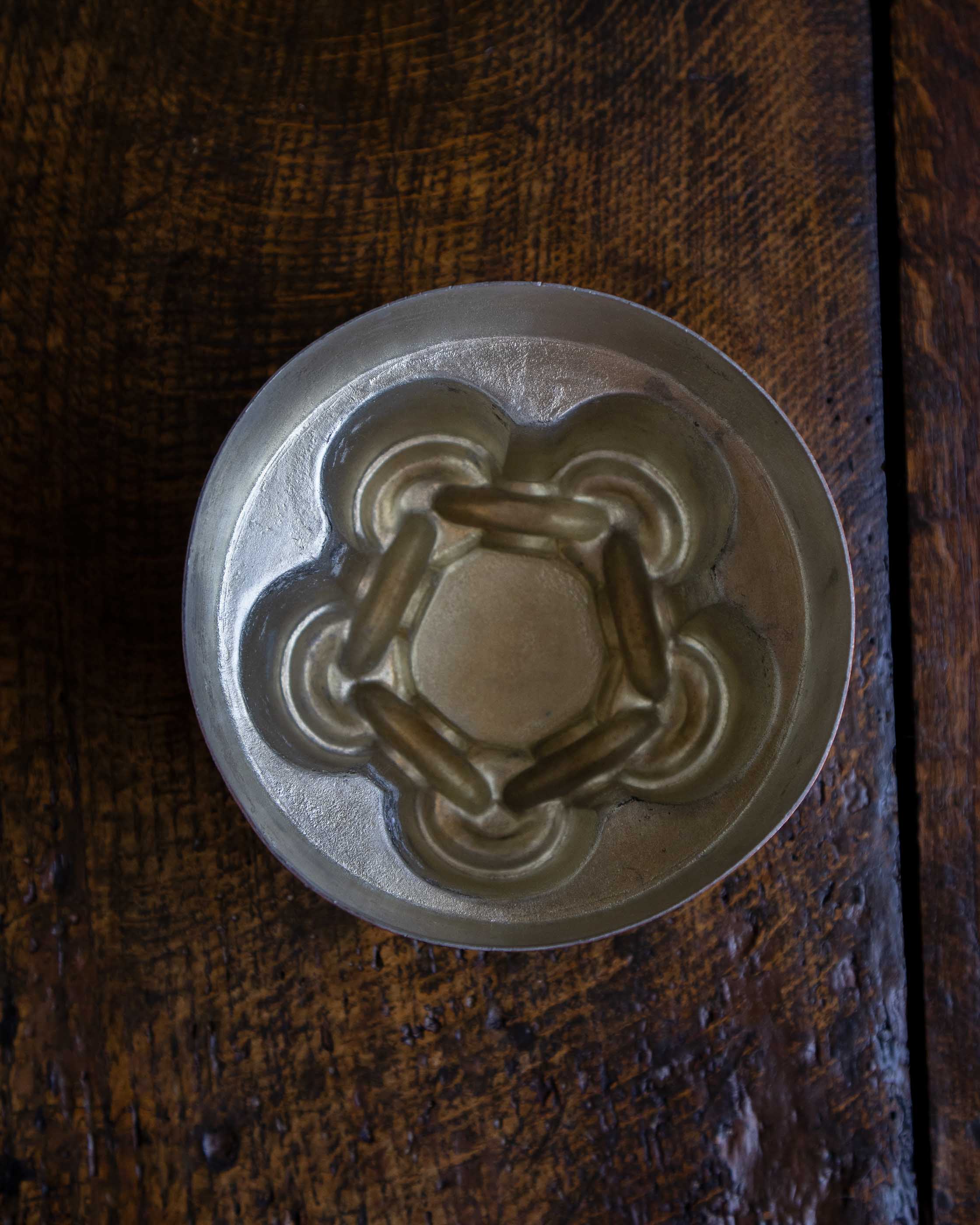
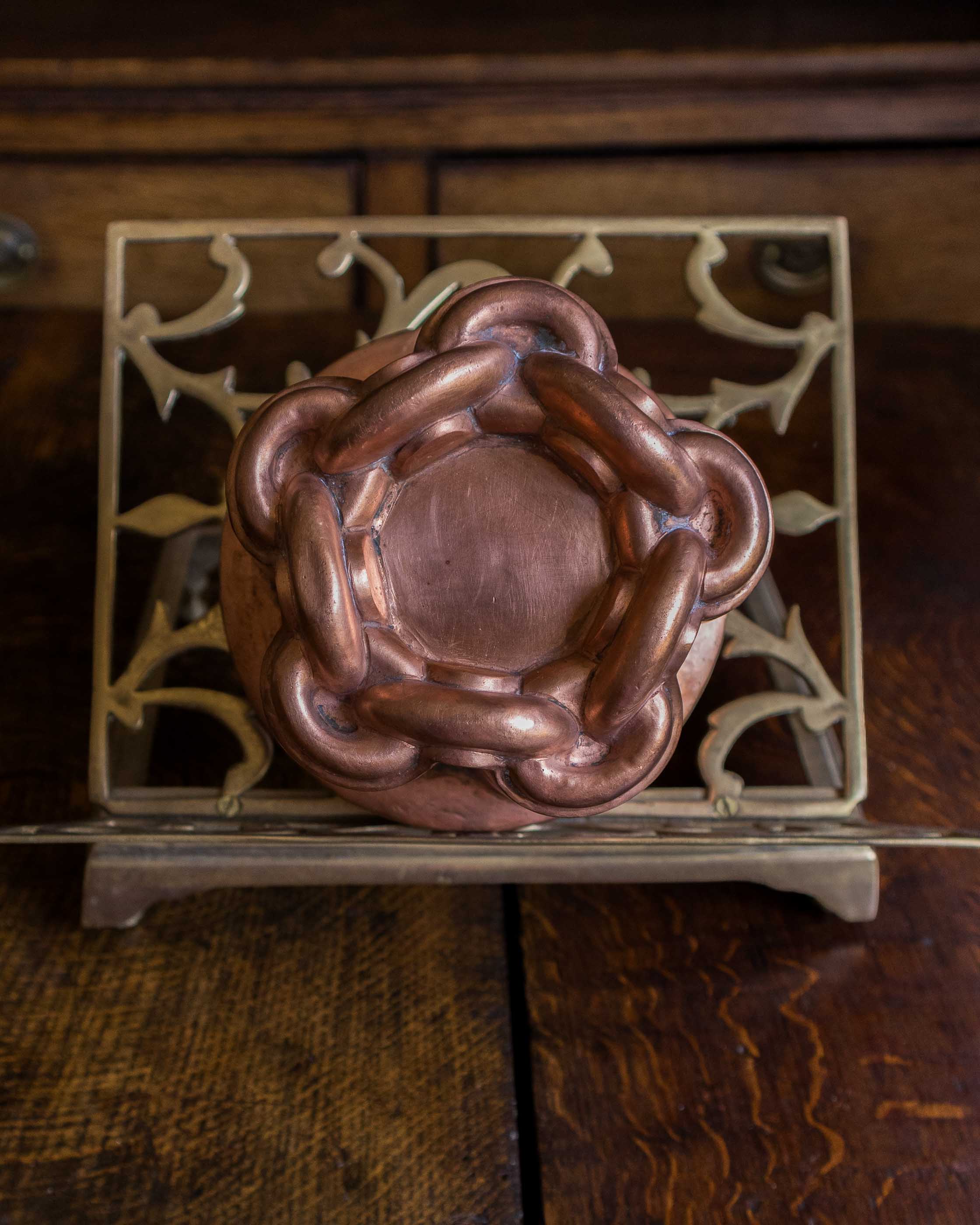
An antique copper jelly mould decorated with a chain link design by Benham & Froud. Copper moulds became popular in the mid-nineteenth century English kitchen following the Great Exhibition in 1851 (see The Gen).
DIMENSIONS: Diameter 13.5 cm, Height 13 cm.
SIGNATURES, MARKINGS & INSCRIPTIONS: Stamped with the orb and cross mark (see The Gen) and pattern number 443.
CONDITION: In very good condition, wear consistent with an antique age and use. There are no holes or repairs.
All our antique copper comes in as found ‘unrestored’ condition with the years of history retained in the lovely patina created by surface marks made by ordinary kitchen use. The choice then becomes yours whether to have the item polished, or the tin relined, and a decorative item can once more become a treasured new kitchen utensil to be loved and used by a new gen. At times an item may already have been lovingly polished by a previous owner and the copper will show off its rosy glow. Whether polished or not, the patina adds to the history of the item and wonder of the stories it could tell.
REFERENCES: See an example of this mould that was auctioned in a group lot of Benham & Froud moulds at Christie’s on 24 May 2017, Lot 269.
~~~~~~~~~~~
THE GEN
“The food mold was not only a Victorian convention; it was also a Victorian invention. It could be fabricated easily only after the patenting of the process of stamping in 1769, which applied an engraved metal piece known as a die to form a piece of sheet metal. The food mold was not produced by a specialist trade until 1824, and throughout the nineteenth century, the finest molds available in America were made in England by such firms as Benham and Froud of London, or Ash Brothers and Heaton of Birmingham. These molds were technically superior in a variety of ways. Firstly, they were made of copper, which excelled in its ability to transfer heat and cold evenly. Secondly, the copper used was quite heavy. Thirdly, they were usually spun.” (Dining in America 1850–1900, Kathryn Grover, The University of Massachusetts Press, 1987, pp 55–56)
“Perhaps one of the greatest achievements of the coppersmith in connection with church metal-work is the ball and cross of St. Paul’s, surmounting the great dome. It was made in the year 1821 by Benham and Froud, an old firm of coppersmiths. When viewed from beneath few would imagine that the cross, although so high up, is 30 ft. in height, and that its weight is upwards of one and a half tons. The occasional gilding of this triumph of the coppersmith’s art is in itself a costly procedure.” (Chats on Old Copper and Brass, F.W. Burgess, Ernest Benn Limited, 1954, p. 72)
~~~~~~~~~~~
Would you like to know more about this piece?
Make an enquiry via email here.