Georgian Regency
Circa 1800–1830 | England
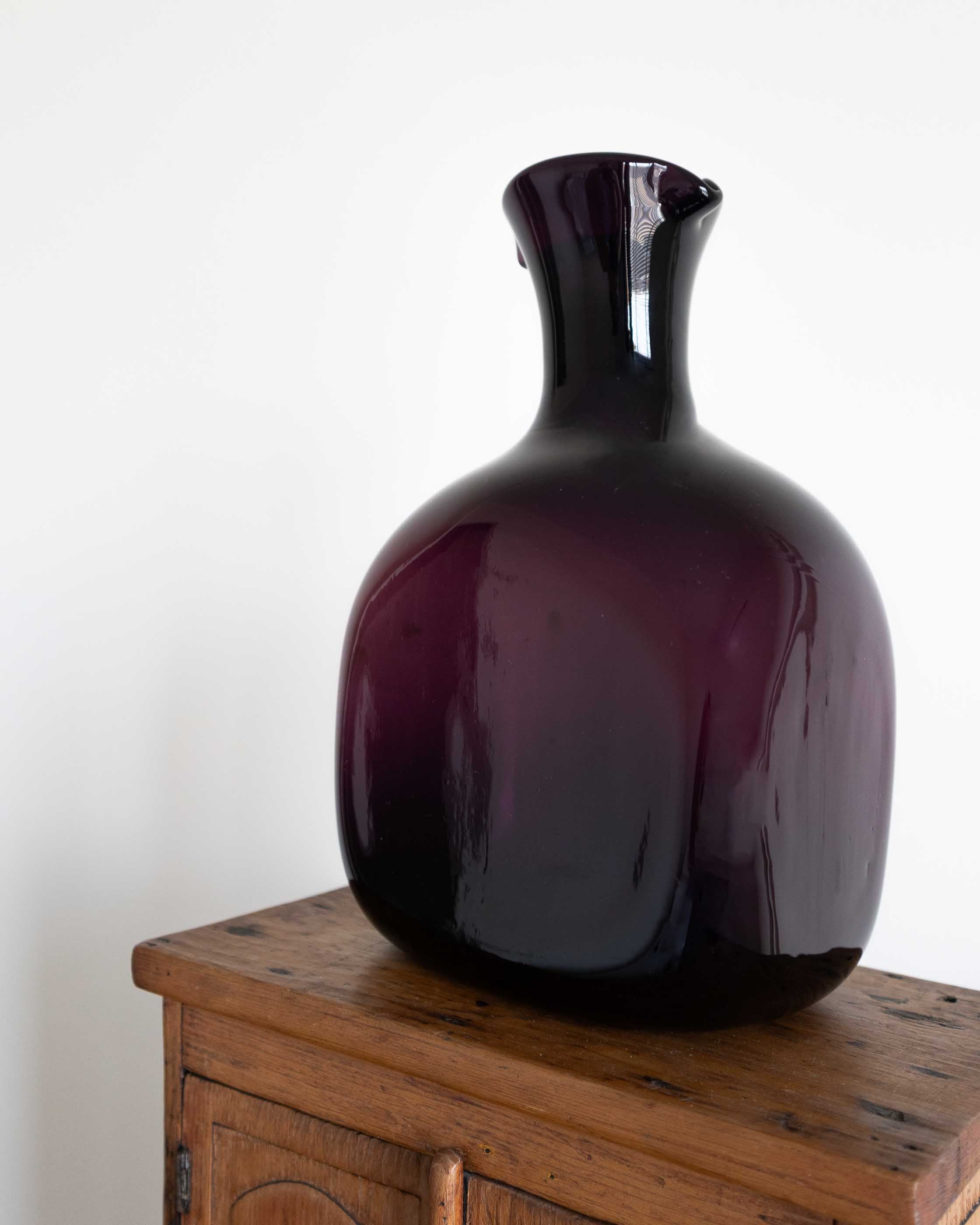
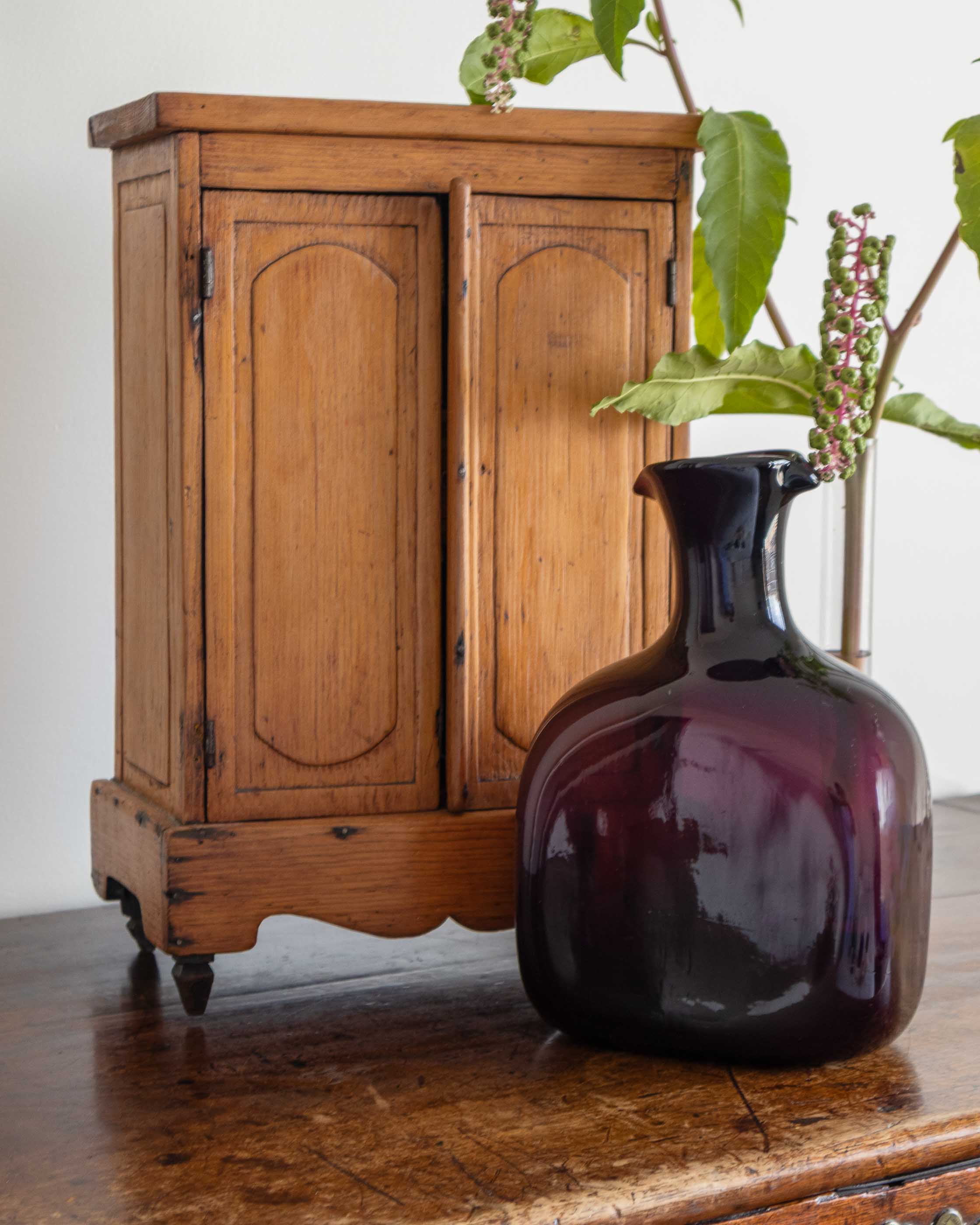
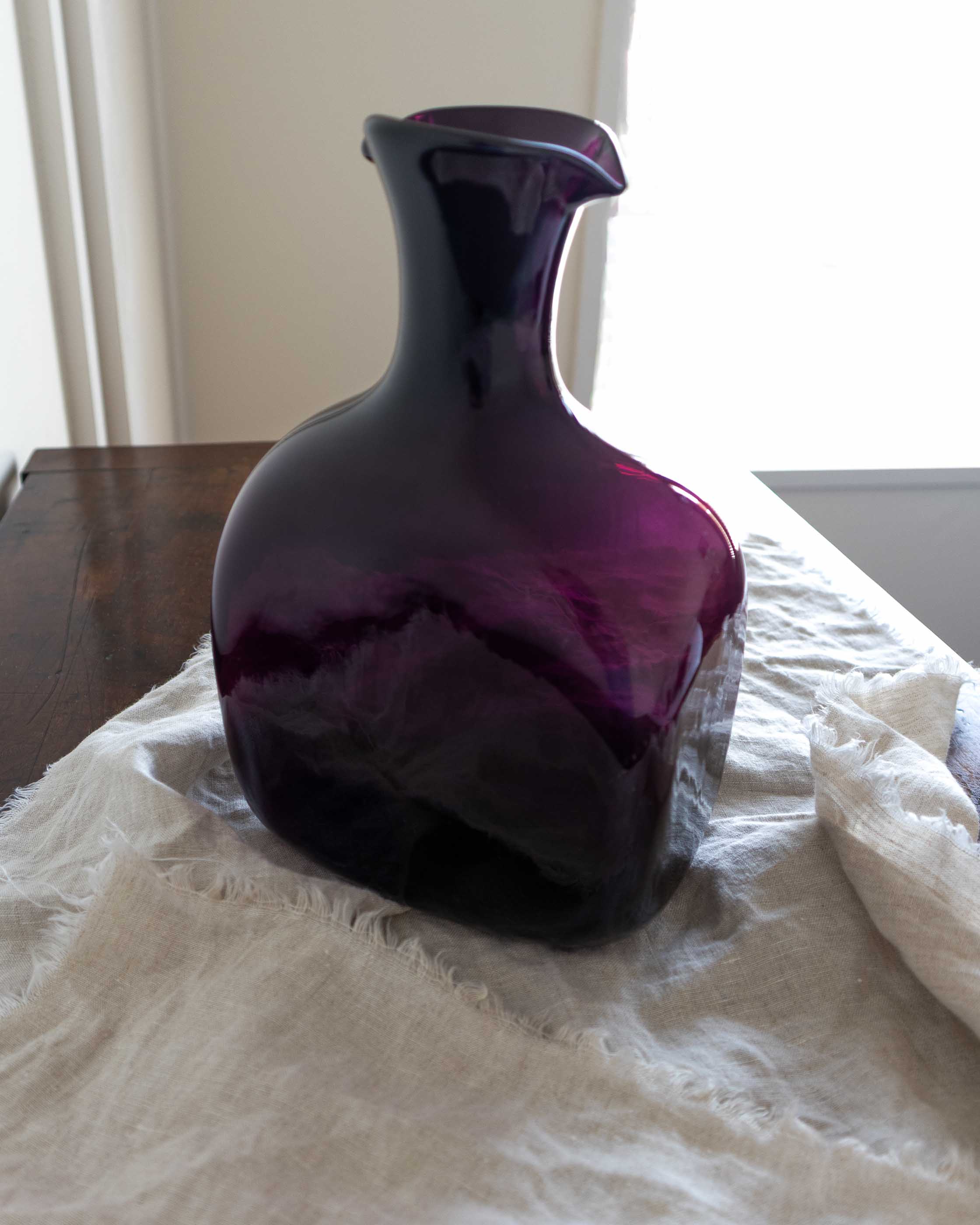
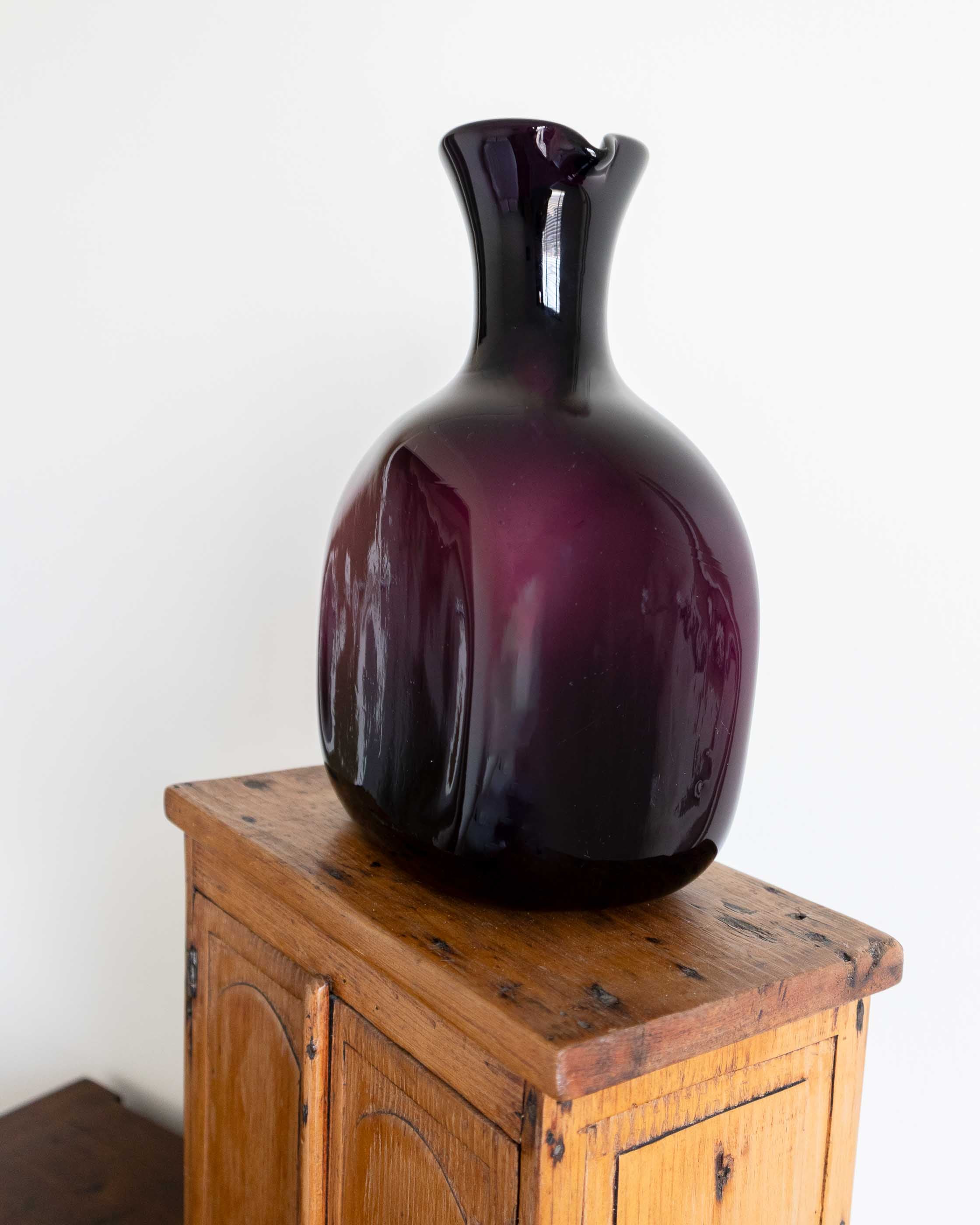
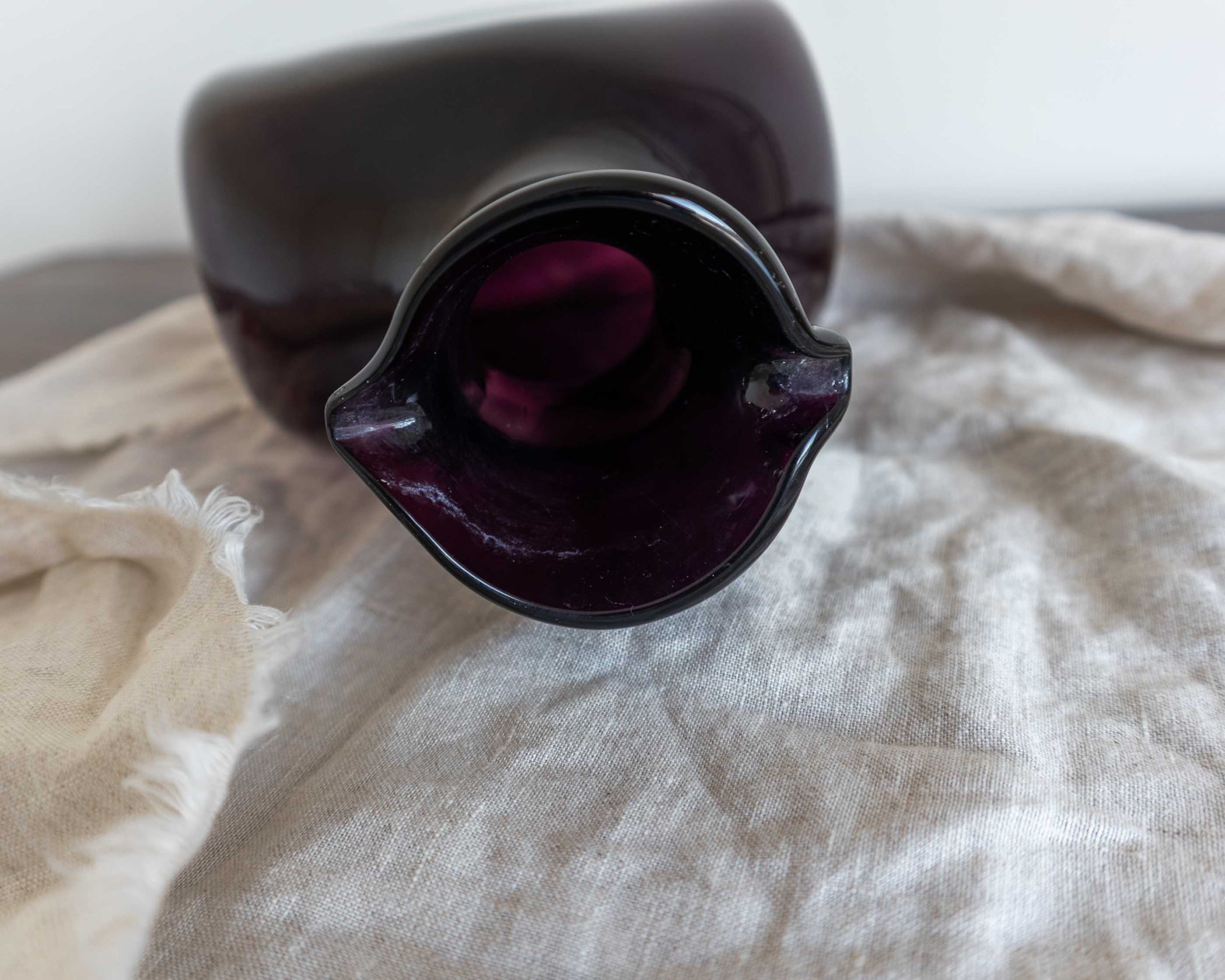
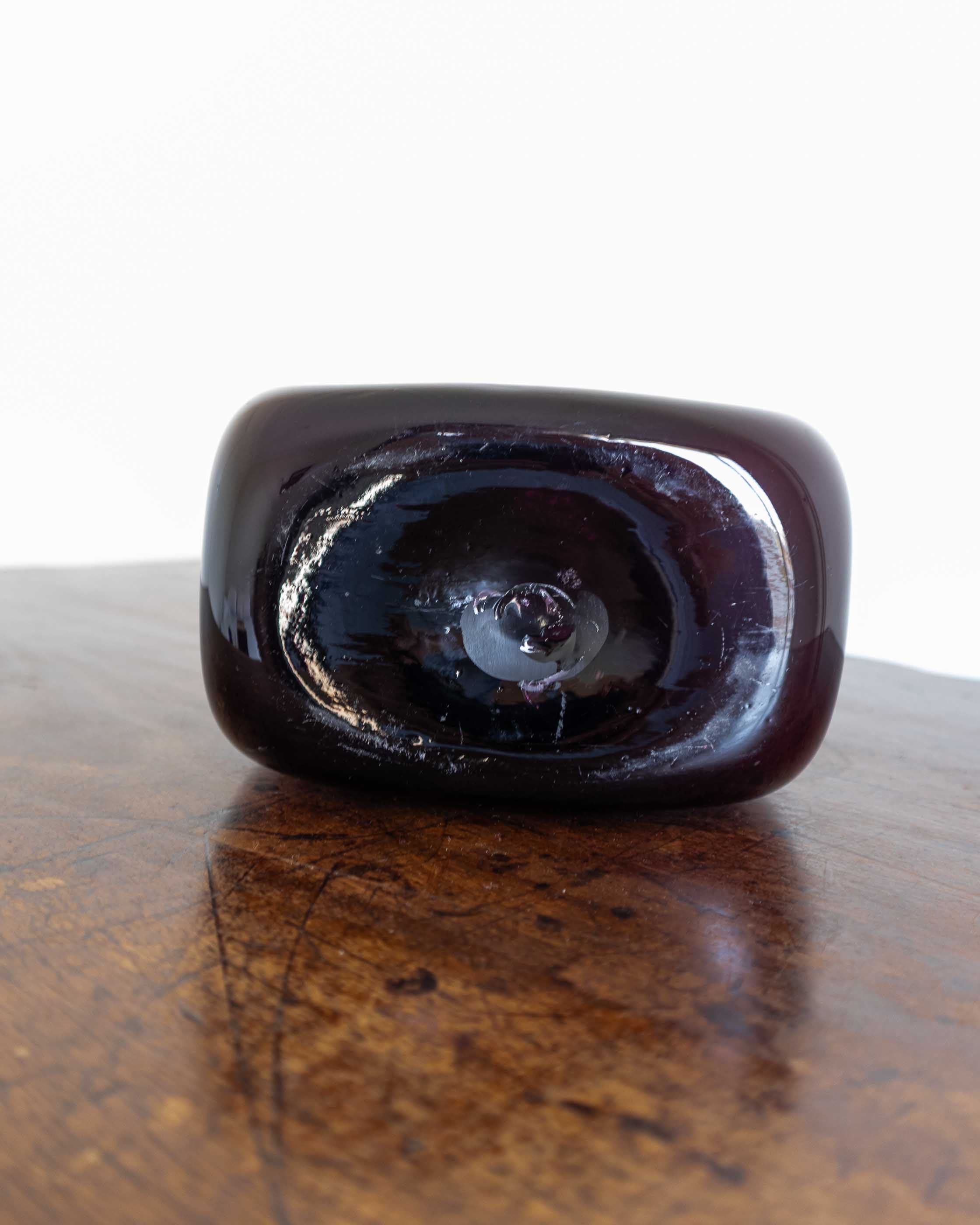
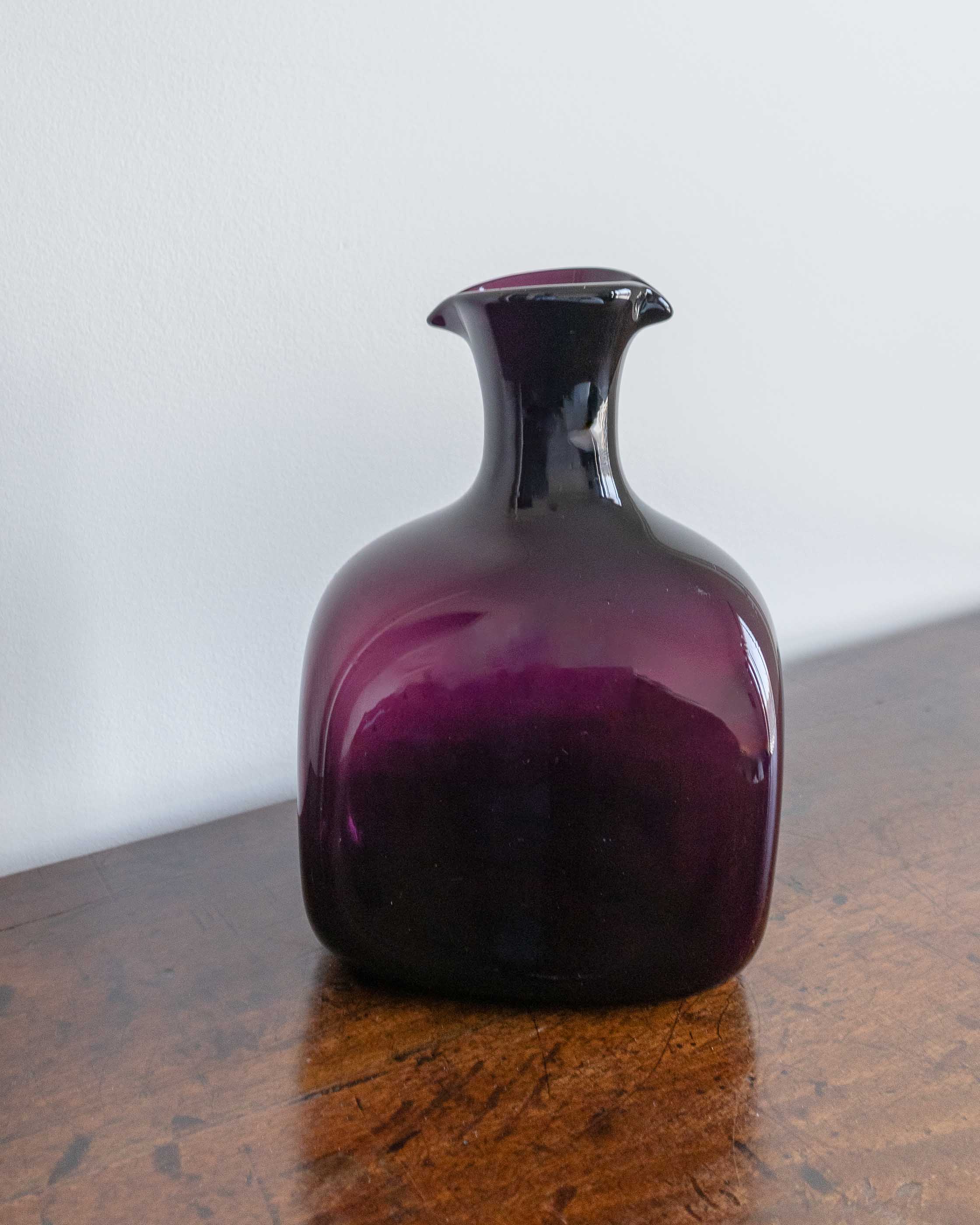
A unique antique nineteenth century Georgian Bristol amethyst glass decanter (see The Gen) of a wide body form and unusual flattened rectangular shape with a roughly ground pontil scar to the base. The unusual flat sides perhaps allude to it being made so it could more easily be stacked. The asymmetrical flared pouring lip sits on a short neck and has a spout to two sides. The Bristol glass decanter colour is a deep dark amethyst that refracts with a beautiful purple colour when it catches the light. A truly beautiful piece.
DIMENSIONS: Height 25 cm, Width 16 cm, Depth 10 cm.
CONDITION: In very good condition; wear consistent with an antique age and use, such as fine scratches and scuff marks which do not impact on the decanter’s visual appeal.
REFERENCES: For an amethyst glass decanter of a similar shade see Powerhouse Museum Object No. A4013 and a wine glass at the Victoria and Albert Museum Accession No. C.22-1925.
~~~~~~~~~~~
THE GEN
“19th century coloured decanters. Although not decanters in a strict sense, English coloured examples date from around 1810 and were made to hold spirits such as rum, brandy and Hollands (gin). The most usual colour for a decanter was blue, green was less common, and amethyst and amber were rare. Georgian coloured wine decanters are unusual as they do not enhance to appearance of wine; when they do occur, however, they are heavy and elegant.” (Millers Glass Antiques Checklist, Millers, 1994, Mark West, p. 116)
“The term ‘decanter’ was first employed in England c. 1710 to describe a type of bottle for serving wine (and later, other drinks such as spirits, ports and sherry) at the dining table. The liquid was previously canted, or tilted out, from its original bottle or container into the container so that it was free from sediment. Early types, known as serving or decanter bottles, appeared in dark-coloured soda glass c. 1630 in ‘shaft and globe’ form and c. 1677 in clear lead glass, with or without loose-fitting stoppers (indicating that the wine was consumed immediately). Late 17th and early 18th-century examples continued to reflect shaft and globe designs (these persisted until c. 1750) or, alternatively, were designed as jugs with wide pouring spouts and handles.” (The Illustrated Guide to Glass, Felice Mehlman, Peerage Books, 1985, pp 128–129)
~~~~~~~~~~~
Would you like to know more about this piece?
Make an enquiry via email here.