Victorian
Circa 1850 | England
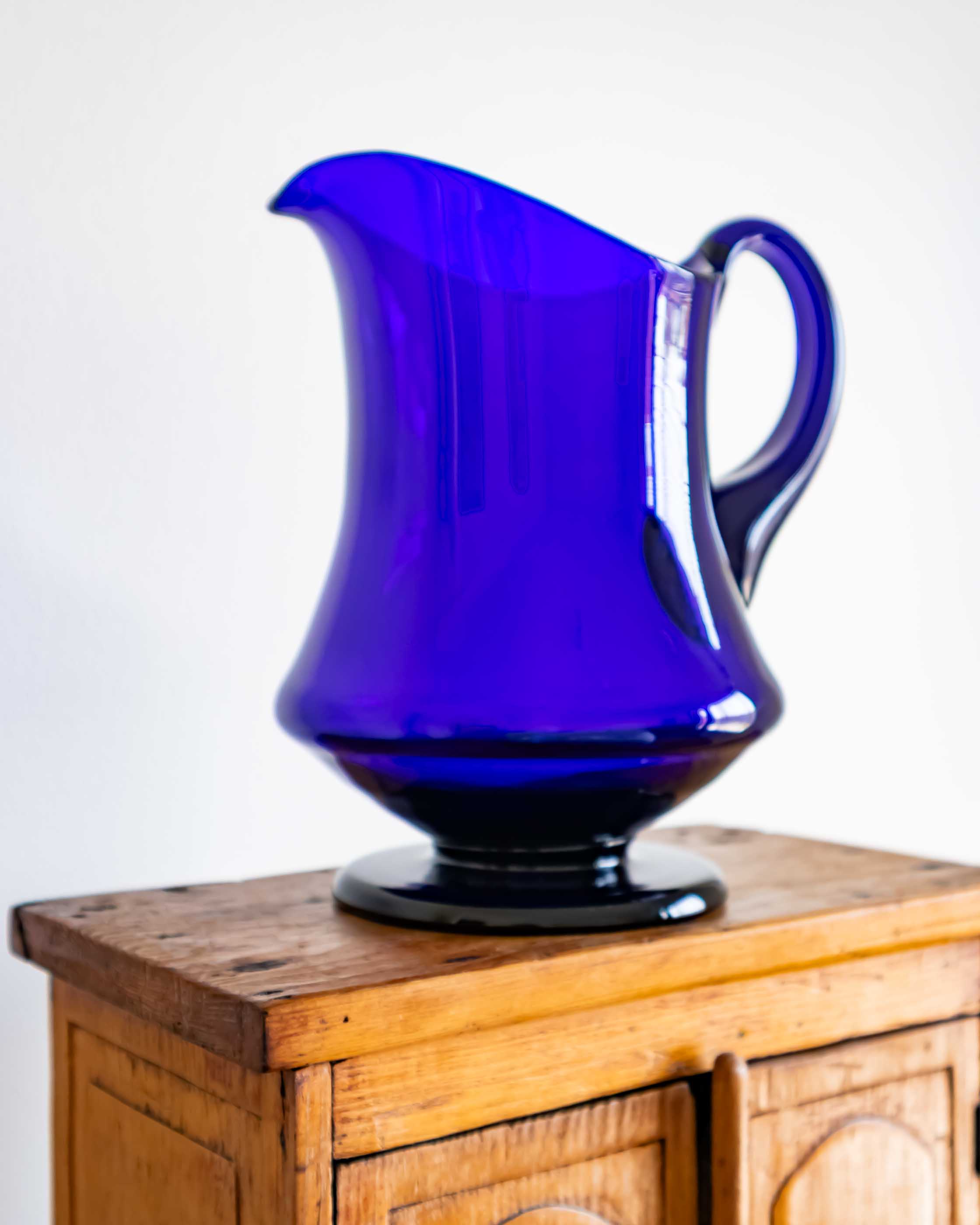
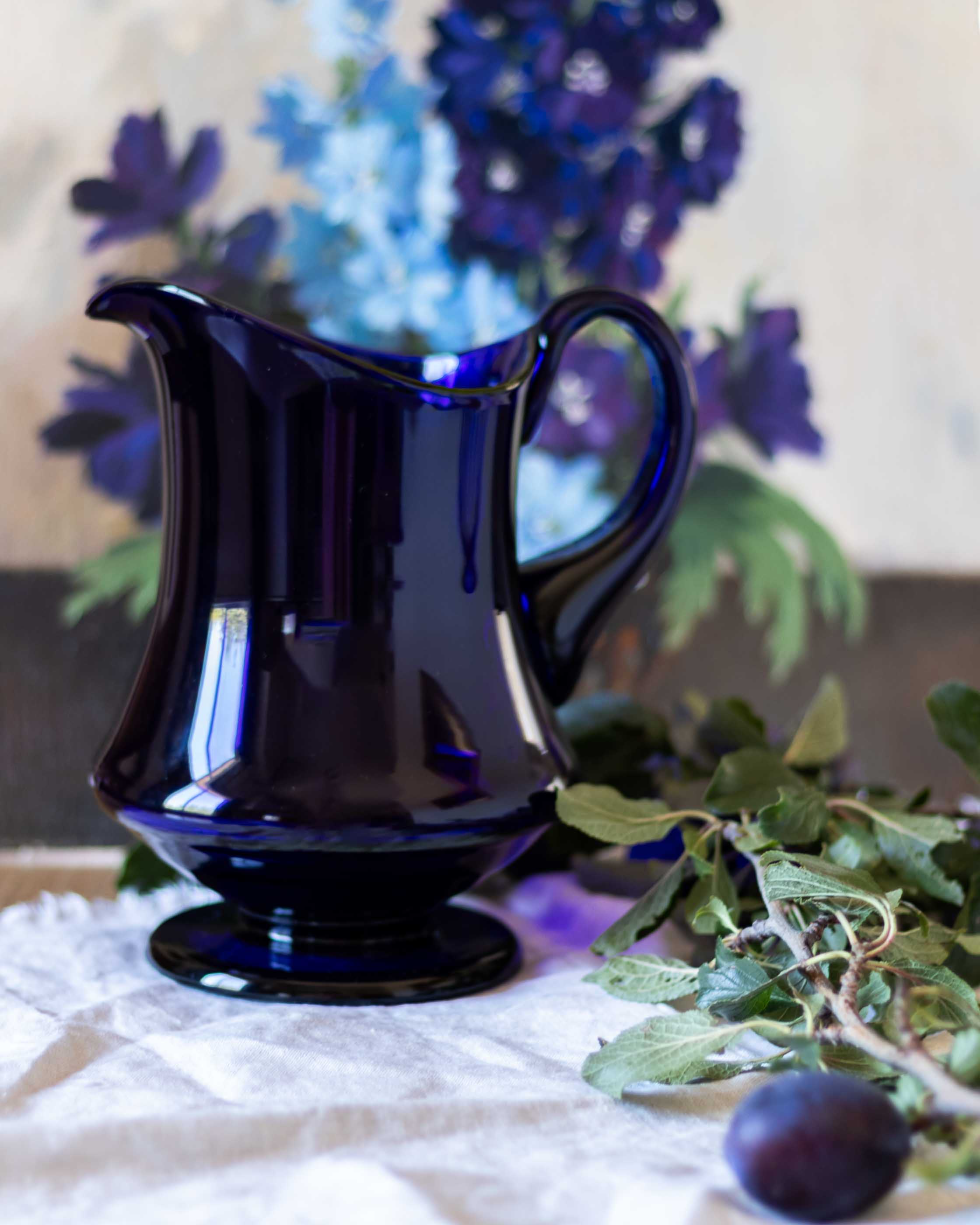
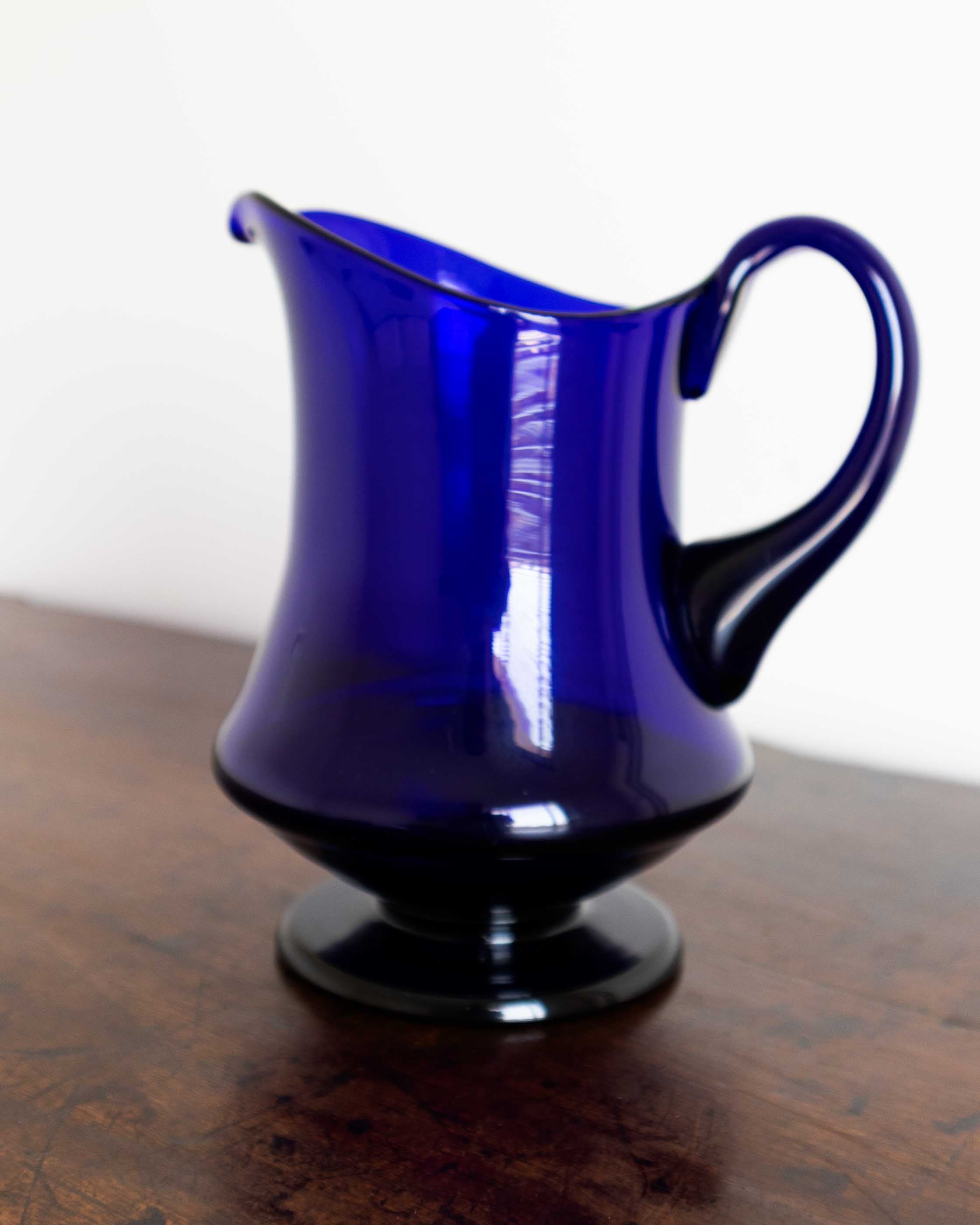
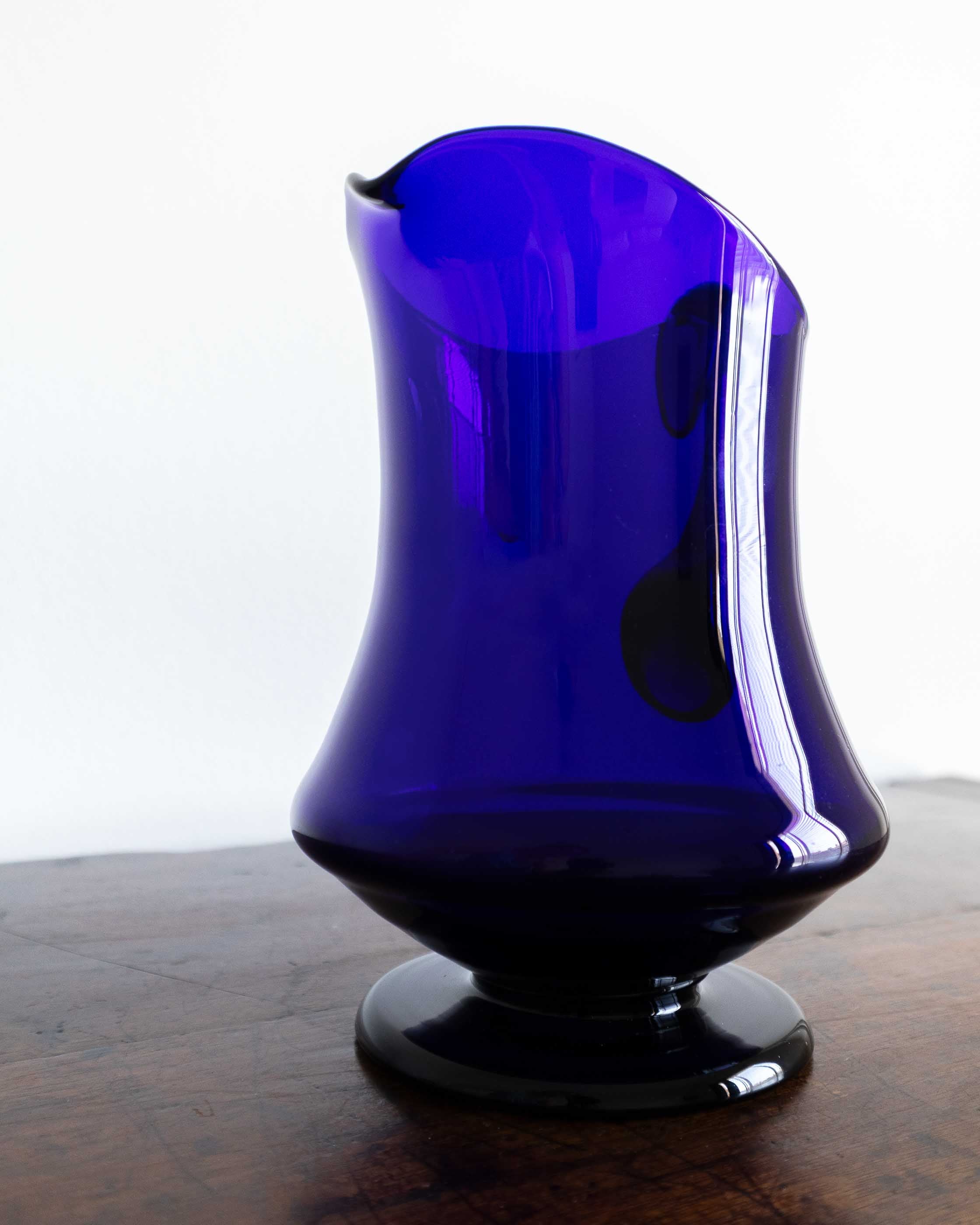
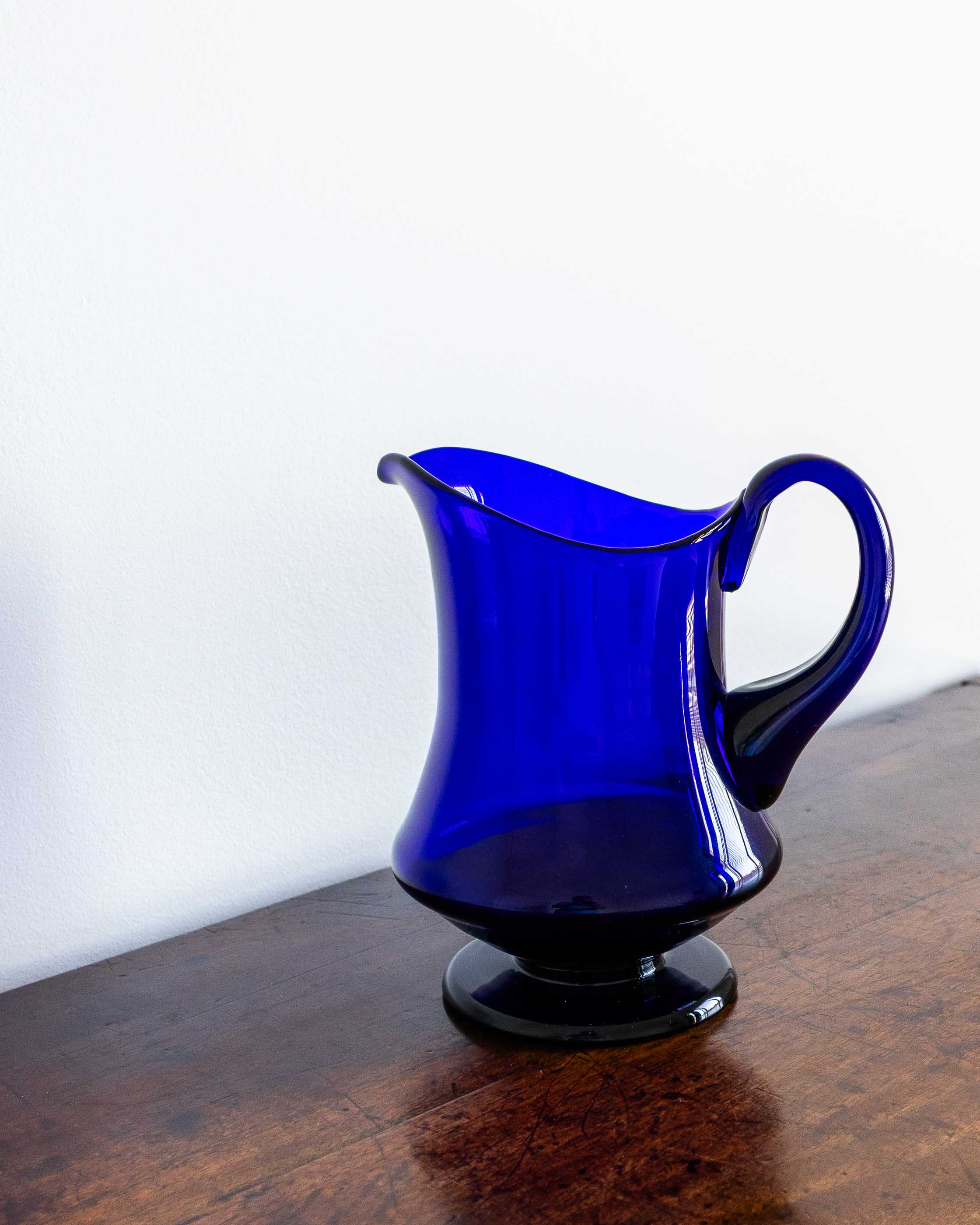
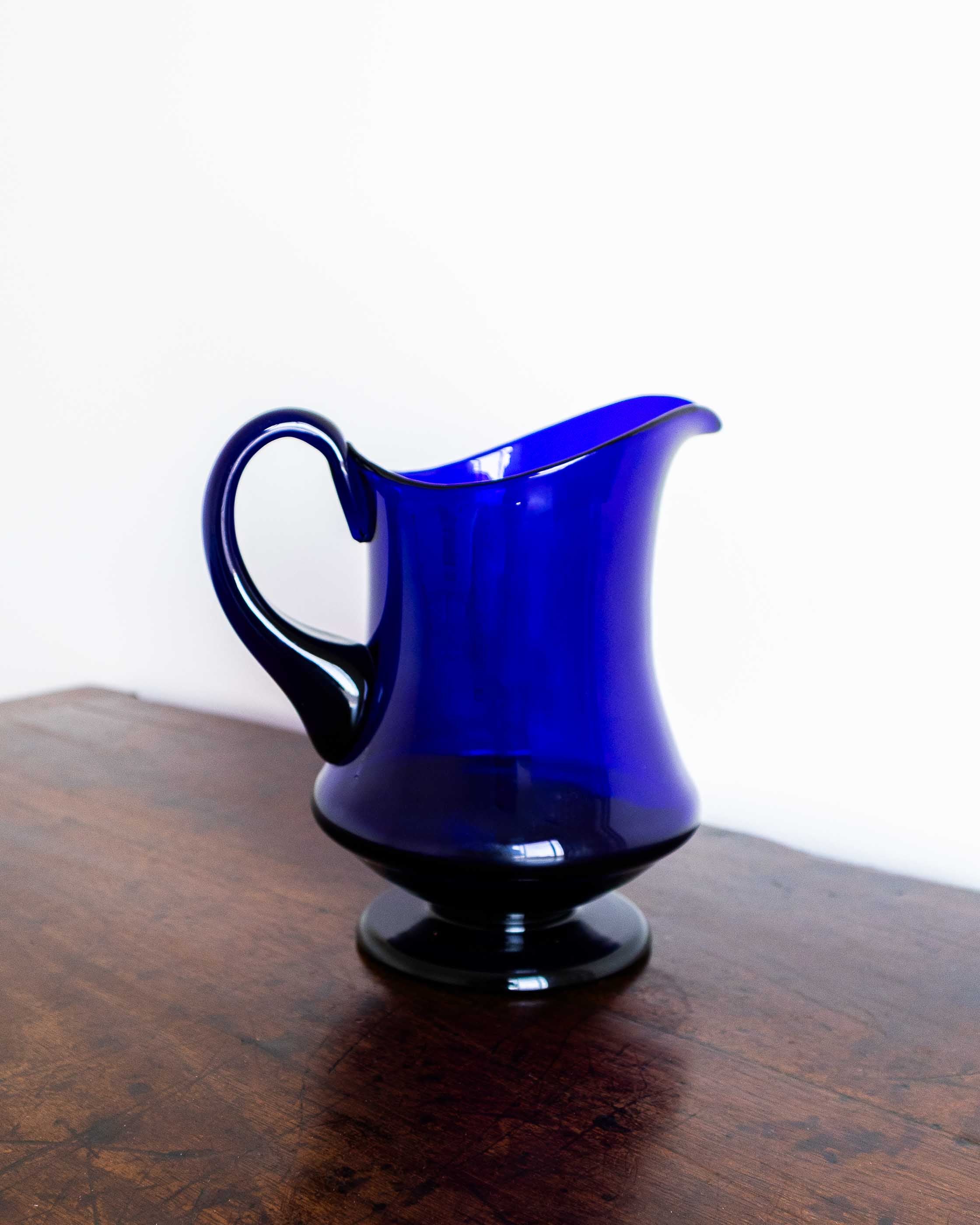
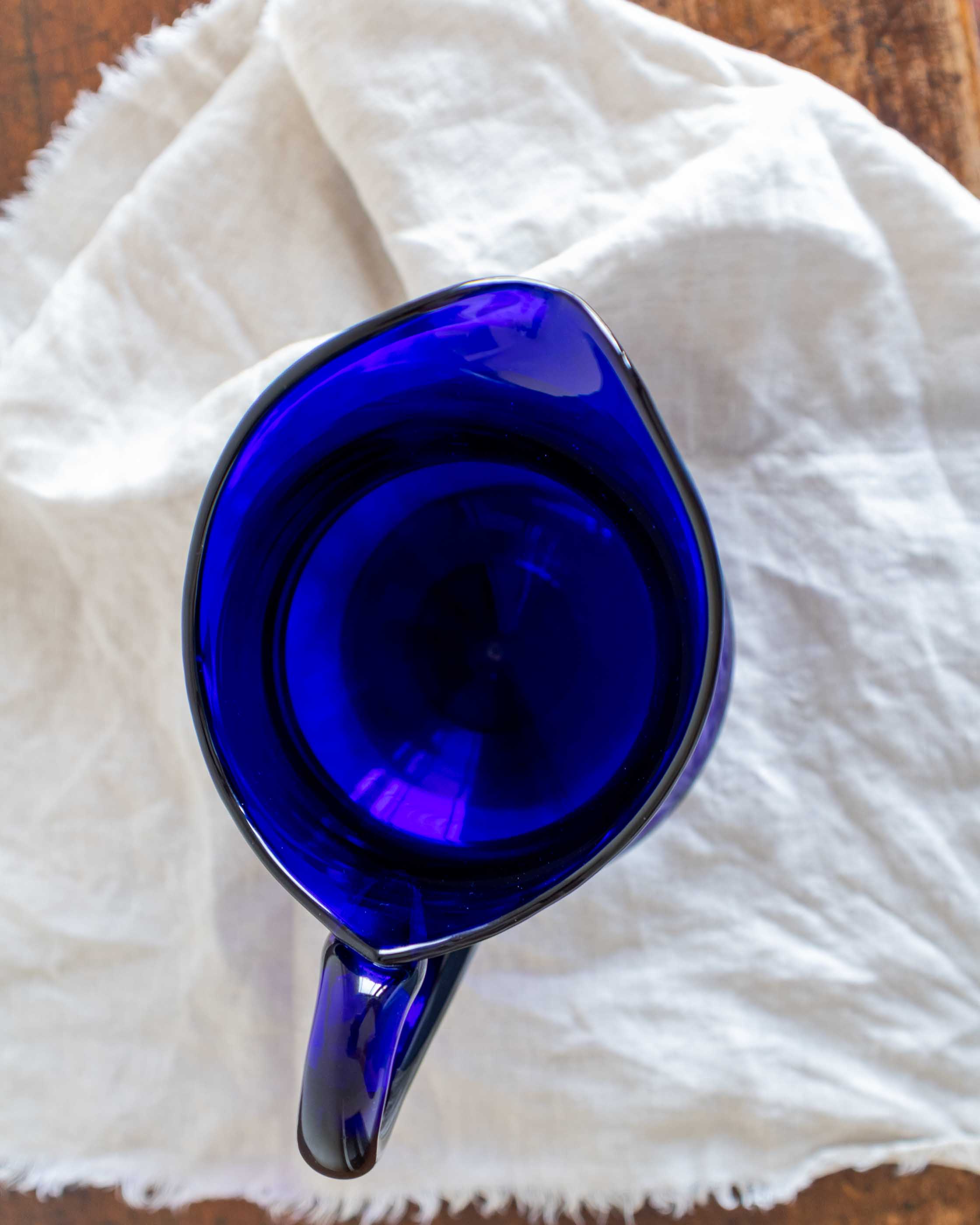
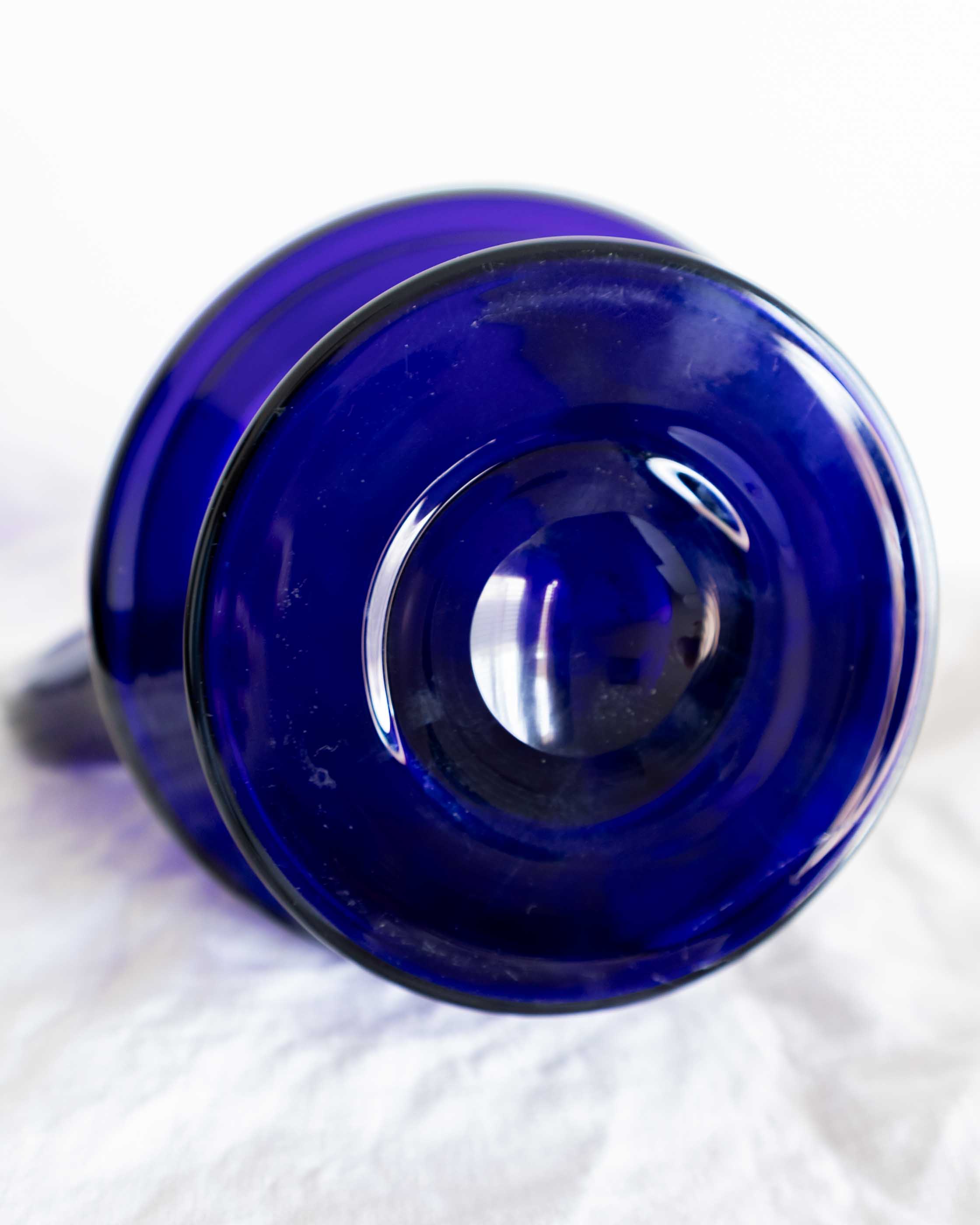
An antique nineteenth century Victorian Bristol blue glass water jug of neoclassical shape and raised on a round foot, with a ground pontil scar to base. This thick jug is an extremely attractive dark blue colour with a hint of purple (see The Gen).
DIMENSIONS: Height to top of handle 19 cm, Width 17.5 cm.
CONDITION: In very good condition; wear consistent with an antique age and use, such as fine scratches and minor marks which do not impact on the jug’s visual appeal.
REFERENCES: For a jug with a similar shape see Victoria and Albert Museum Accession Number CIRC.23-1911 and for a jug with a similar dark blue colour see this eighteenth century jug at the Met Museum Object Number 21.110.176.
~~~~~~~~~~~
THE GEN
“Bristol blue lead glass of a distinctive and extremely attractive deep blue, with a purplish tint where thick, sea-blue where thin, made with a colouring agent imported through Bristol. Hence, and hence only, its name, for ‘Bristol’ blue was made in many other parts of England. The colour was due to the addition of a particular form of cobalt oxide (zaffre) which was obtained from Dresden by the William Cookworthy who later pioneered English hard-paste porcelain at Plymouth and Bristol. (Zaffre, incidentally, was the source of the pigment cobalt-blue, much used on porcelain.) Its import (c. 1761–93) was interrupted by the Napoleonic wars, and England had to turn to native (Cornish) cobalt, which gave a harsher tint, and then (1804) to artificial aquamarine which had no purple in it and varied from greenish to reddish blue according to composition. Import was resumed c. 1820 and a fine ‘King's blue’ was made until 1840, when demand waned. Some say that true Bristol blue has an oily feel.” (The Observer’s Book of Glass, Mary & Geoffrey Payton, Frederick Warne & Co Ltd, 1976, pp 15–16)
~~~~~~~~~~~
Would you like to know more about this piece?
Make an enquiry via email here.