Early / Mid Georgian
Circa first half of the 18th century, 1720–1760 | England
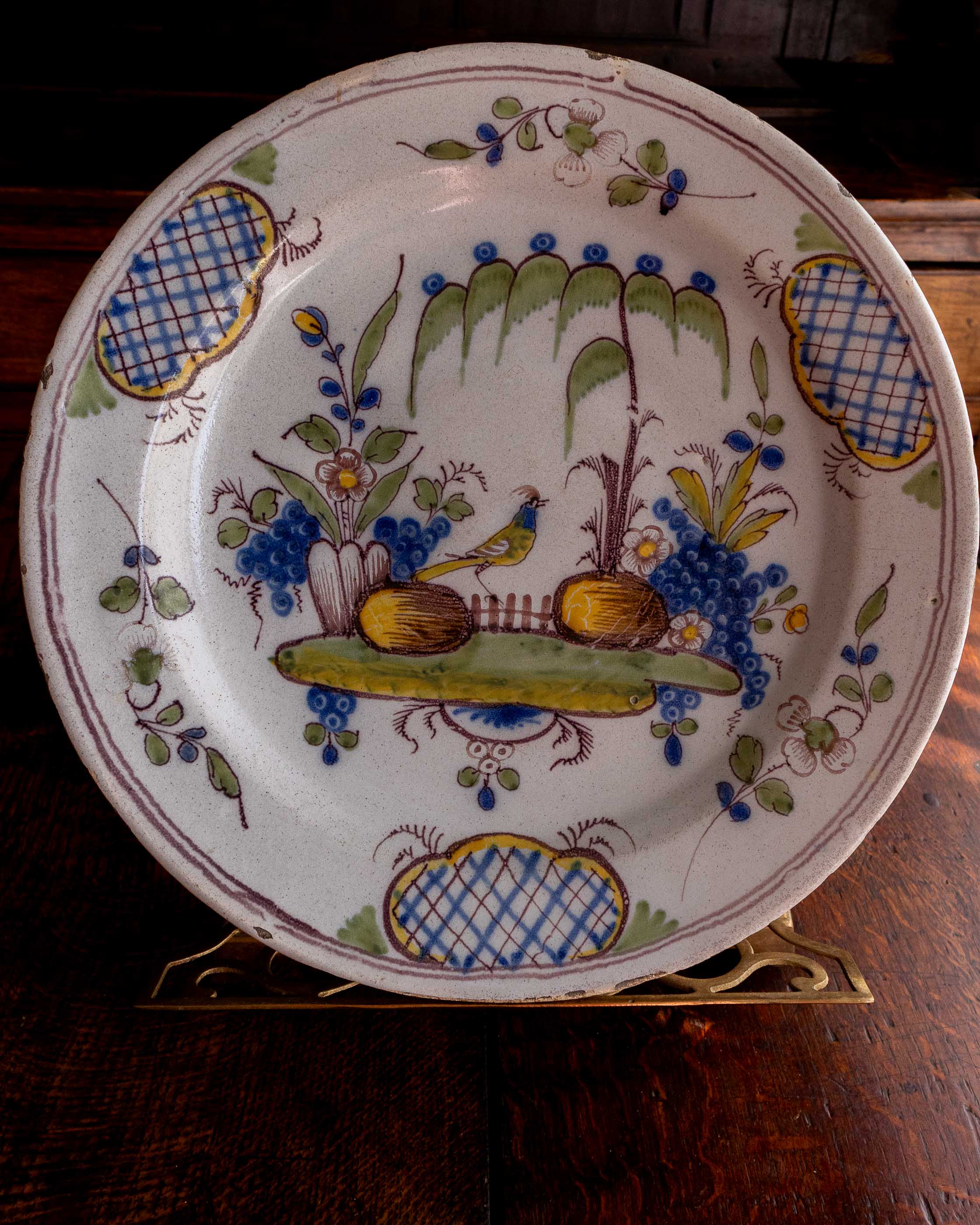
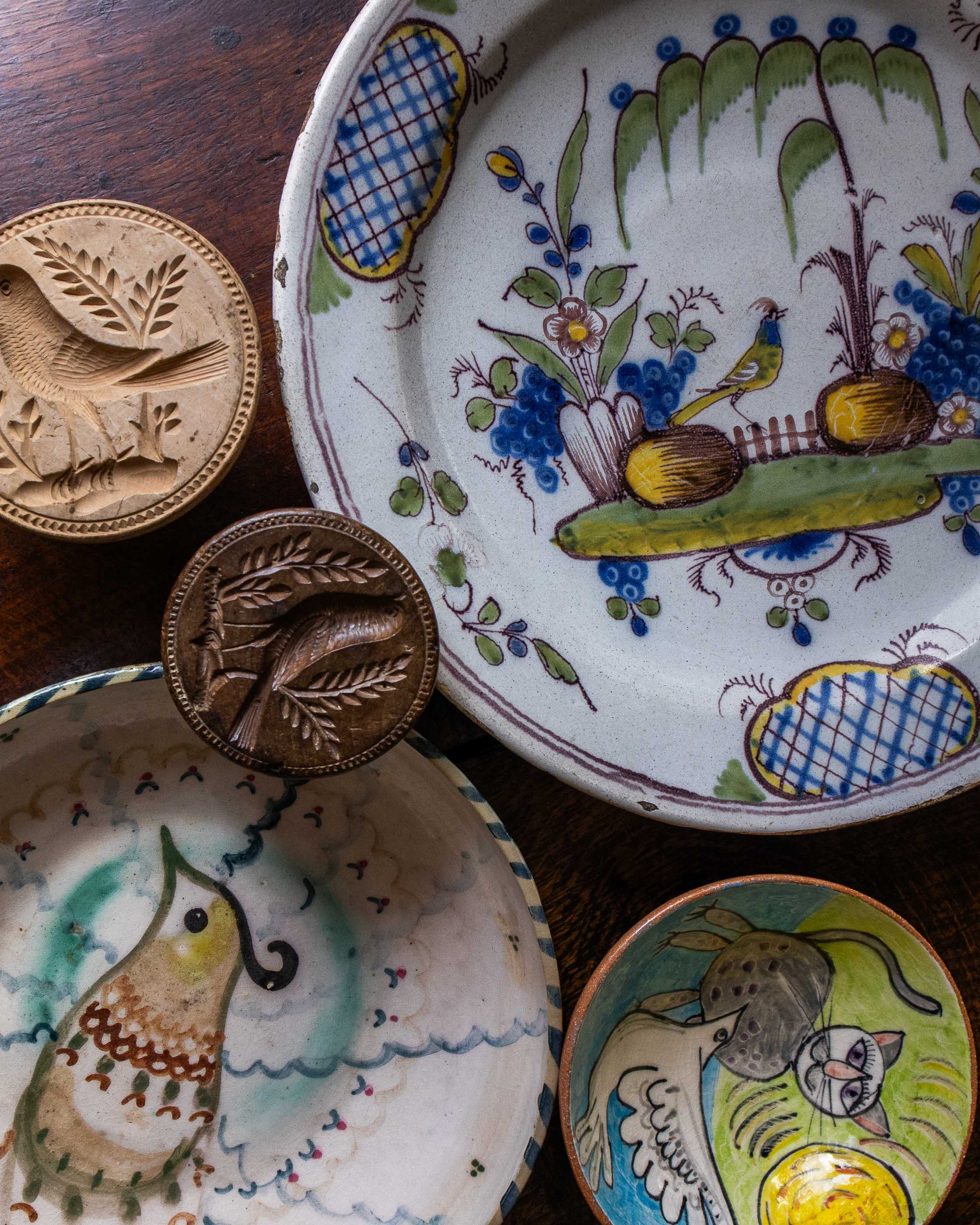
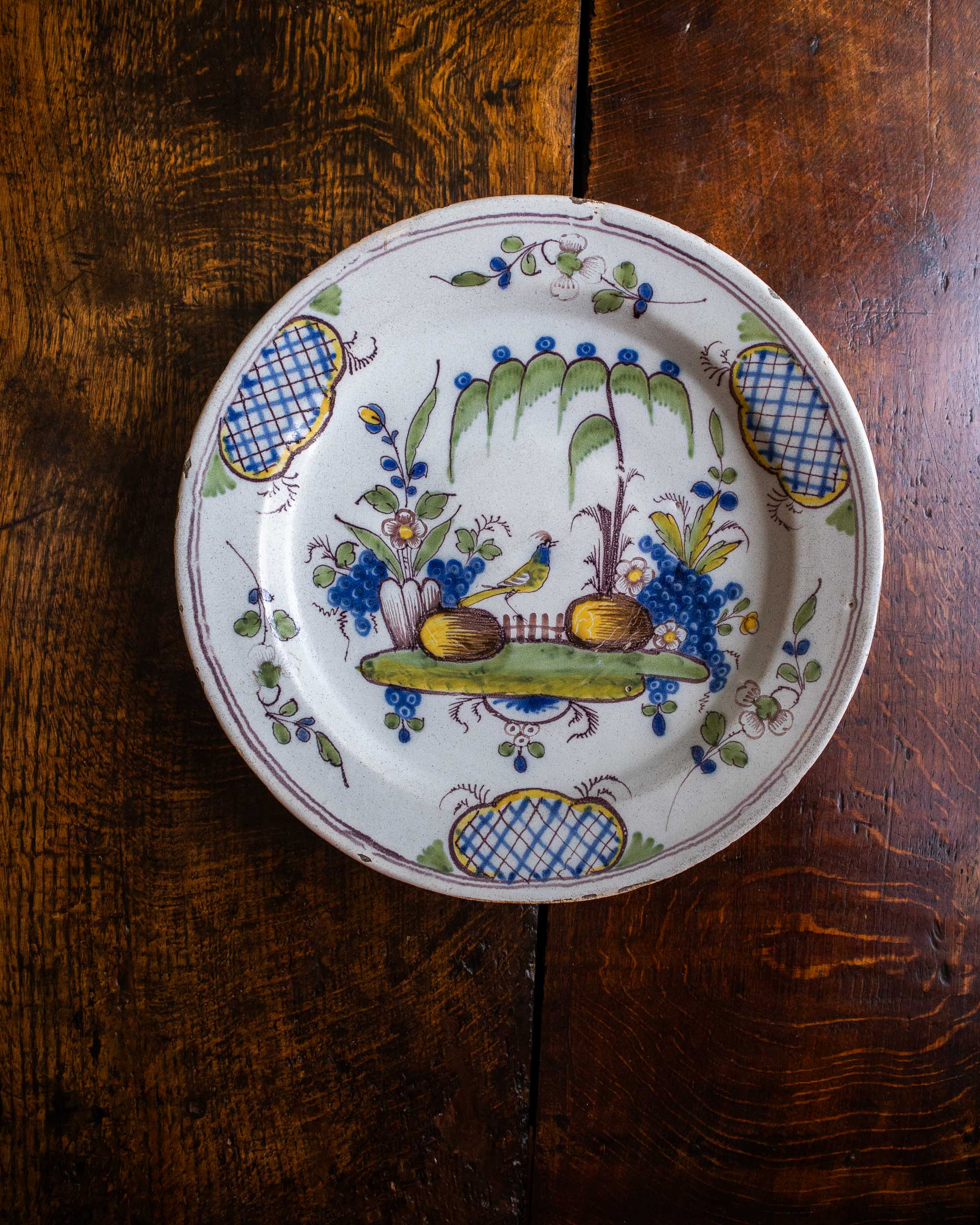
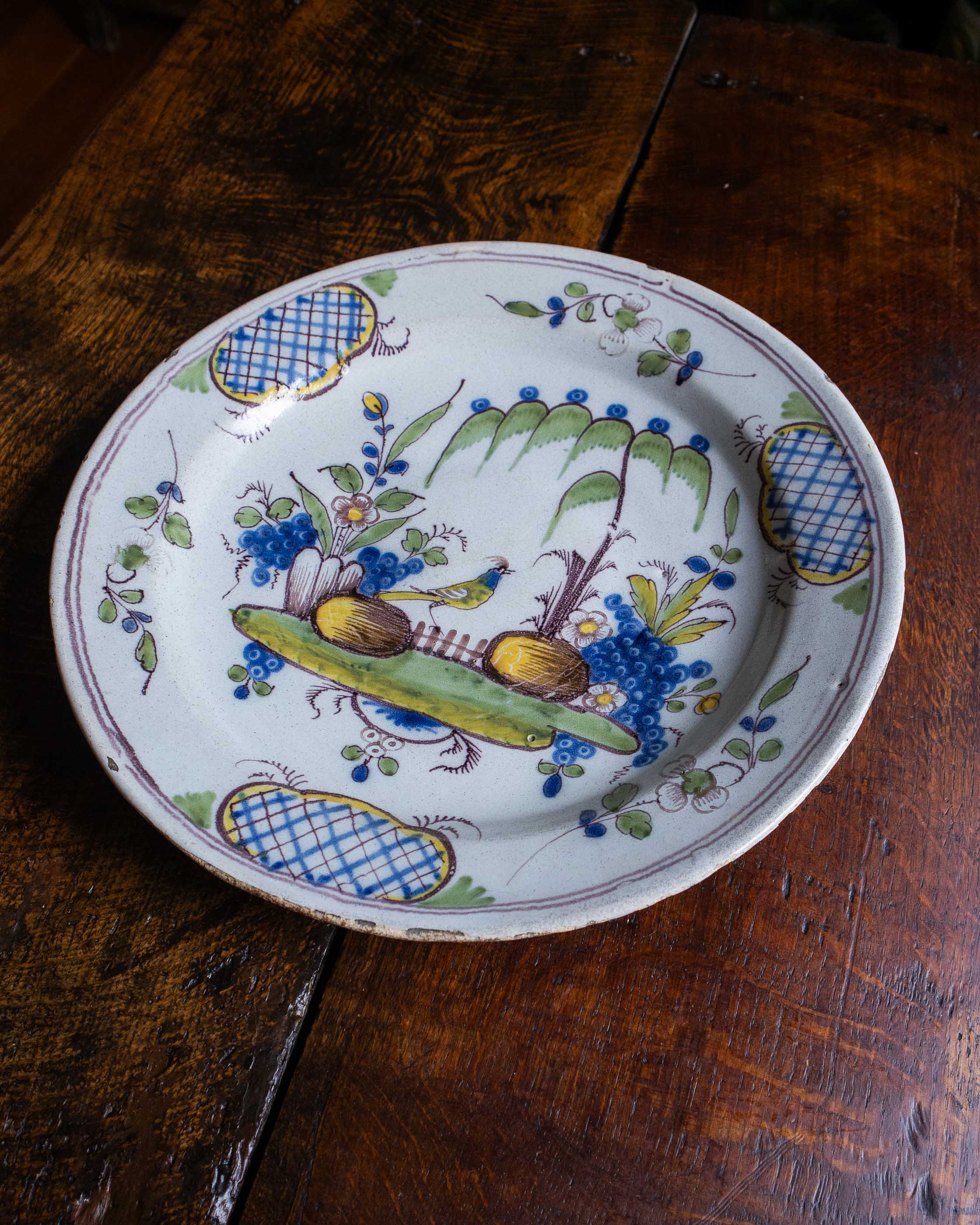
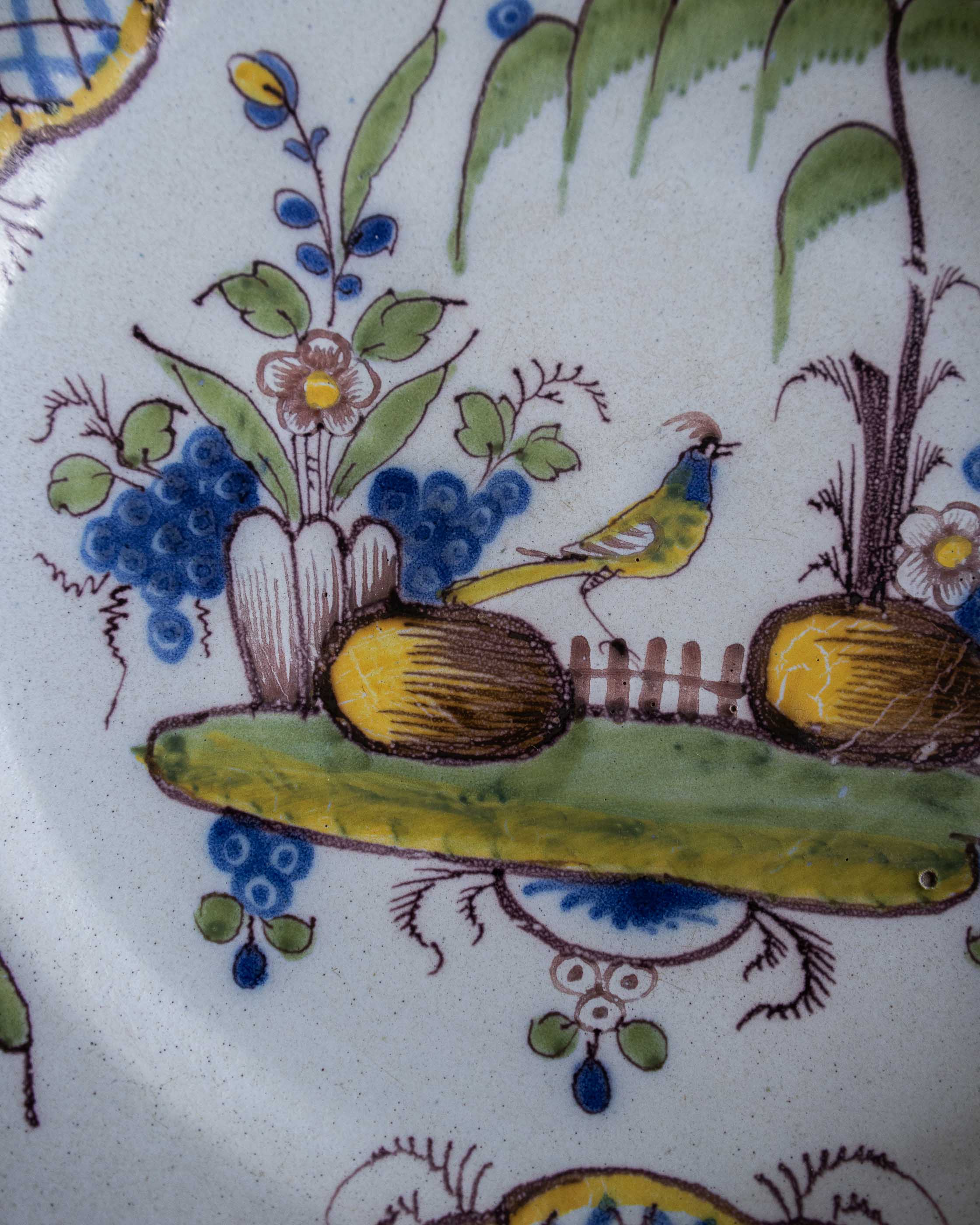
A fine antique eighteenth century English Bristol delftware polychrome dish of exceptionally high-quality artistic decoration (see The Gen). The scene is set in a whimsically enchanting English landscape of an exotic bird perched on a fence, surrounded by naturalistic flowers and fruit in measured, delicate abundance. Wonderfully English in style, with deftly subtle overlays of Chinoiserie influence including a willow tree, and a beautiful colour palette that is perfectly softened to allow the eye to wander the entire landscape. The dish is rimmed with a border of floral and latticed cartouches (see The Gen). A truly unique and beautiful piece of Bristol delftware.
DIMENSIONS: Diameter 34.5 cm, height 6 cm.
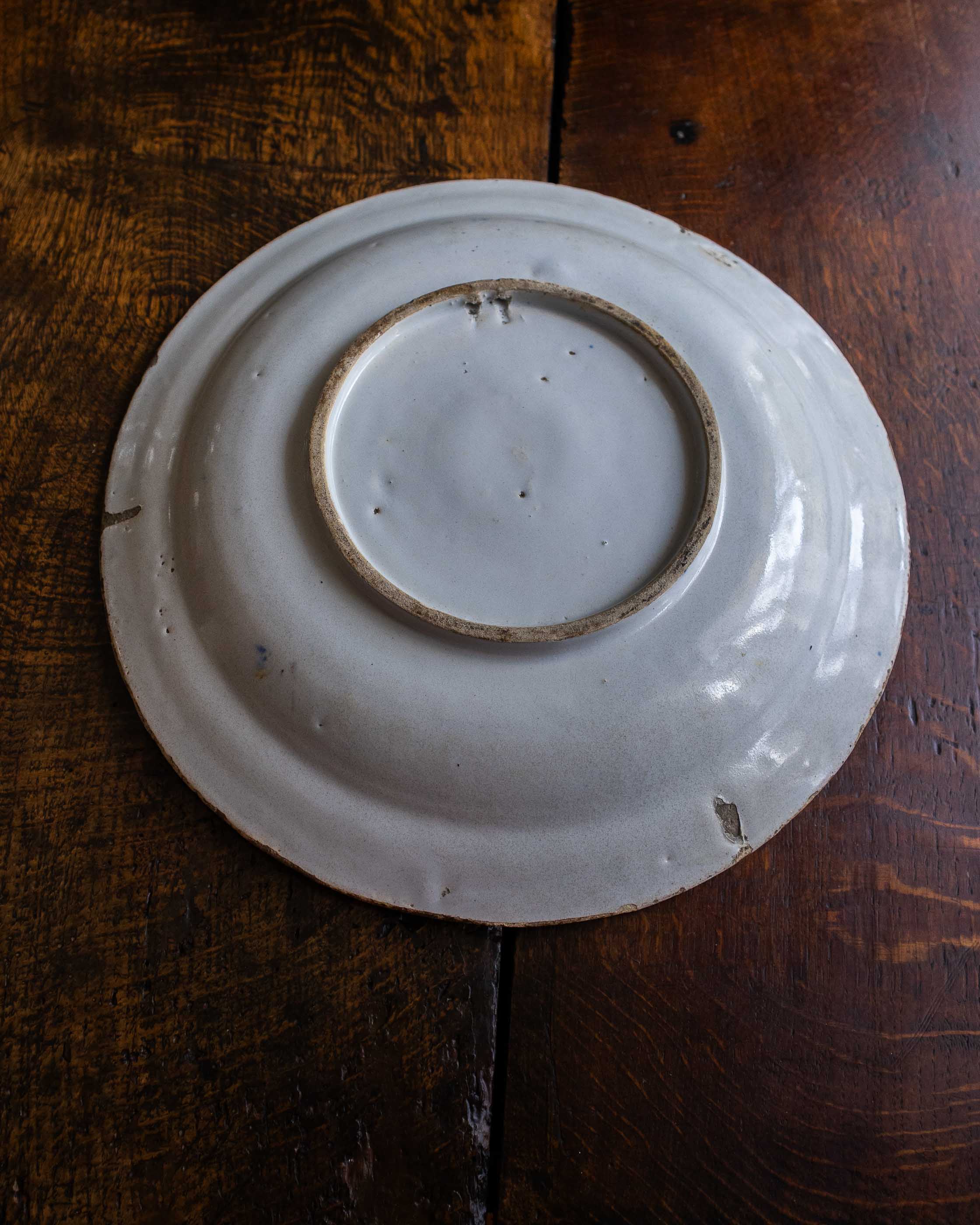
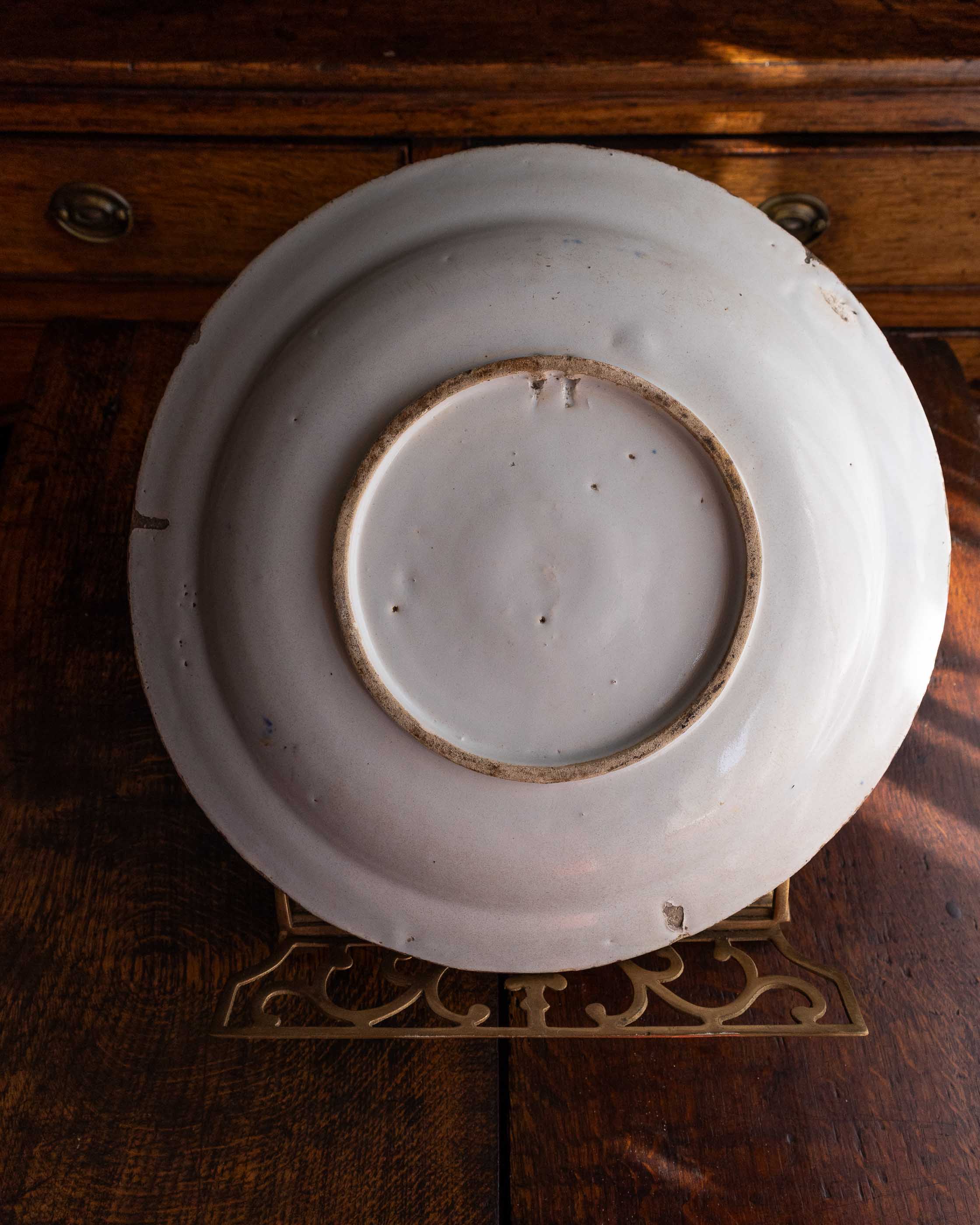
SIGNATURES, MARKINGS & INSCRIPTIONS: Unmarked. The charger is unmarked as is often the case with Bristol delftware pieces from this period. The attribution of makers of Bristol delftware is difficult, however there were two known makers during the eighteenth century, Joseph Flower and Richard Frank (see The Gen).
CONDITION: The dish is in good original, unrestored condition, with wear commensurate with antique age and use. There are some chips and fritting to the rims, some pitting and hairline cracks typical for these types of pieces.
REFERENCES: For an example of a similar dish see the Bristol earthernware dish at the Powerhouse Museum, Object No. A6976 and also a dish with similarly coloured glazes at Christie's, 11 June 2010, Lot 1218.
For examples of highly decorative landscape dishes, such as this, see The Longridge Collection of English Slipware and Delftware, Volume 2, Leslie B. Grigsby, Jonathan Horne Publications London, 2000, Item D121 p. 153, Item D124 p. 155 and Item D125 p. 156.
~~~~~~~~~~~
THE GEN
“Borders with elongated oval (usually floral) reserves against variously patterned, comparative narrow bands were inspired by edge motifs on Chinese export porcelain and are found on fragments excavated from Bristol and London and on dishes attributed to Liverpool. Delftware dishes with borders of this general pattern bear dates from the 1720s through the mid-1760s, with the greatest concentration being from the 1730s.” (The Longridge Collection of English Slipware and Delftware, Volume 2, Leslie B. Grigsby, Jonathan Horne Publications London, 2000, p.153)
“The names of the first potters are not known, but in the early part of the last century the works belonged to Richard Frank, who employed, along with other workmen, a Thomas Patience, and a family of the name of Hope.” (The Ceramic Art of Great Britain, Llewellynn Jewitt, J.S. Virtue & Co Limited, 1883, p. 209)
“Joseph Flower, who, in 1775 lived at No. 2 on the Quay, and in 1777 removed to 3 Corn Street, where he put a sign-board, painted with ‘Flower, Potter’, in gold letters. Flower’s ware, says Mr Owen, is thinner and neater in make than most British Delft; the glaze good, and the colour clear and brilliant in tone — indeed, in no respect inferior to Dutch.” (The Ceramic Art of Great Britain, Llewellynn Jewitt, J.S. Virtue & Co Limited, 1883, p. 201)
~~~~~~~~~~~
Would you like to know more about this piece?
Make an enquiry via email here.