Victorian
Circa 1834–1903 | England
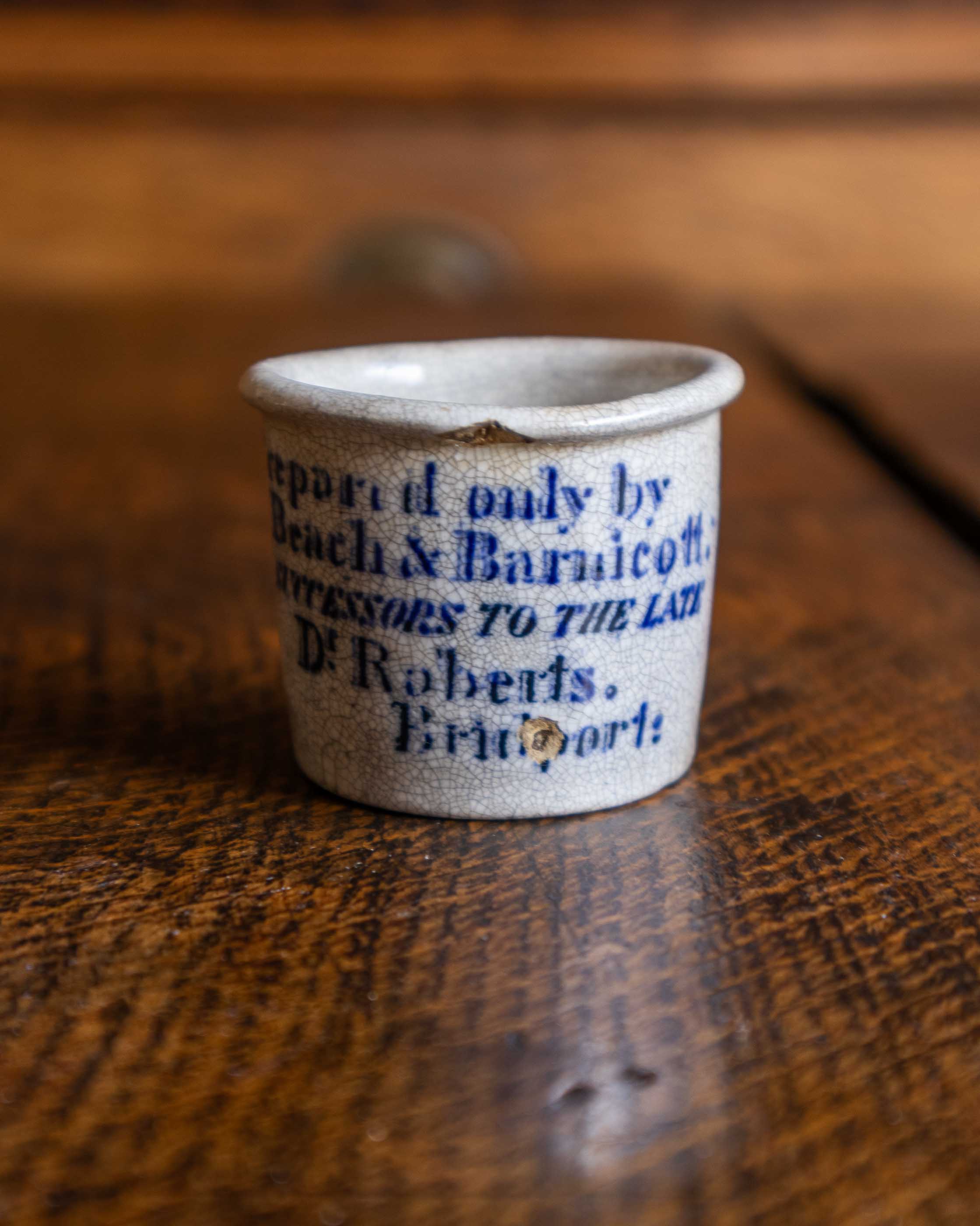
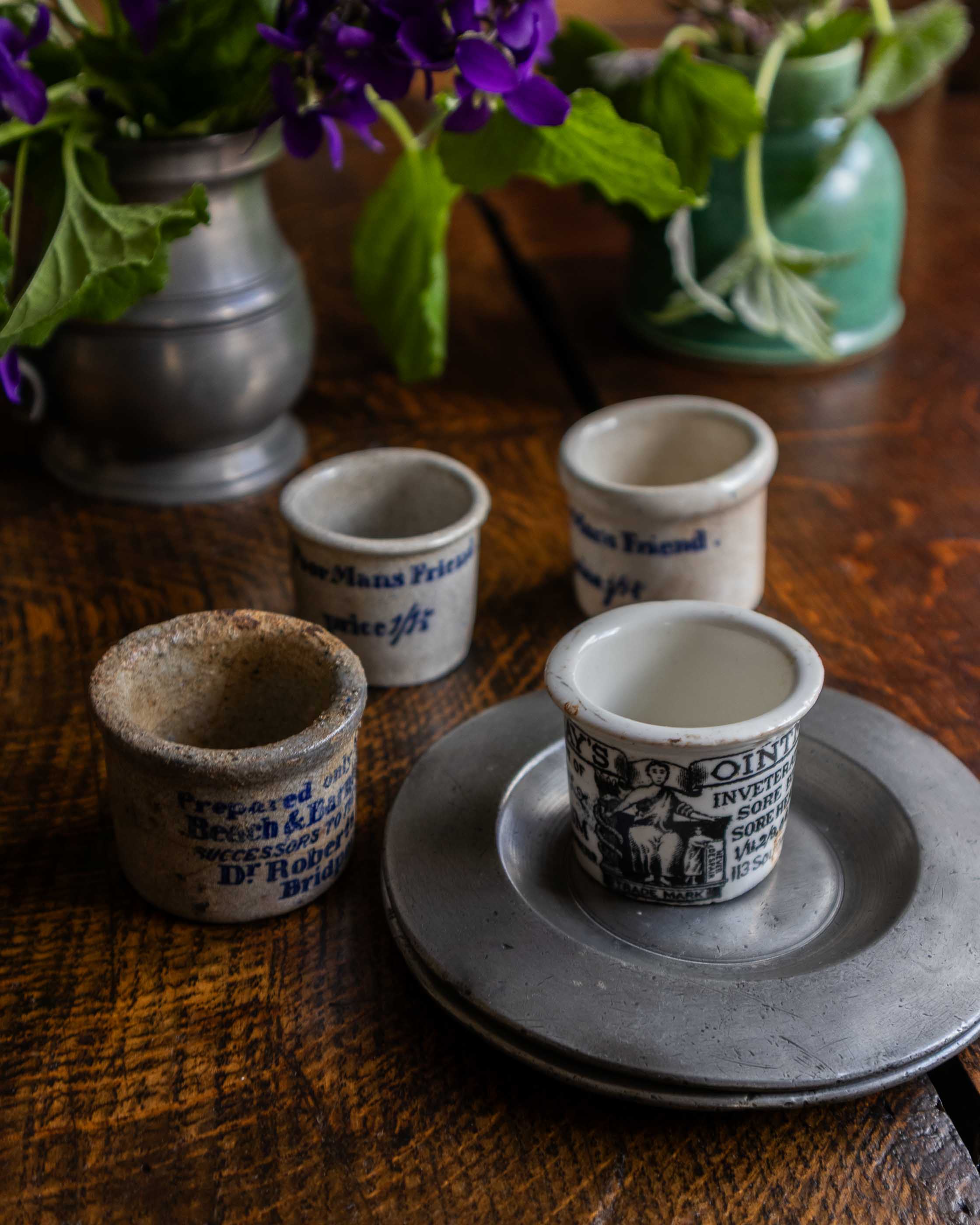
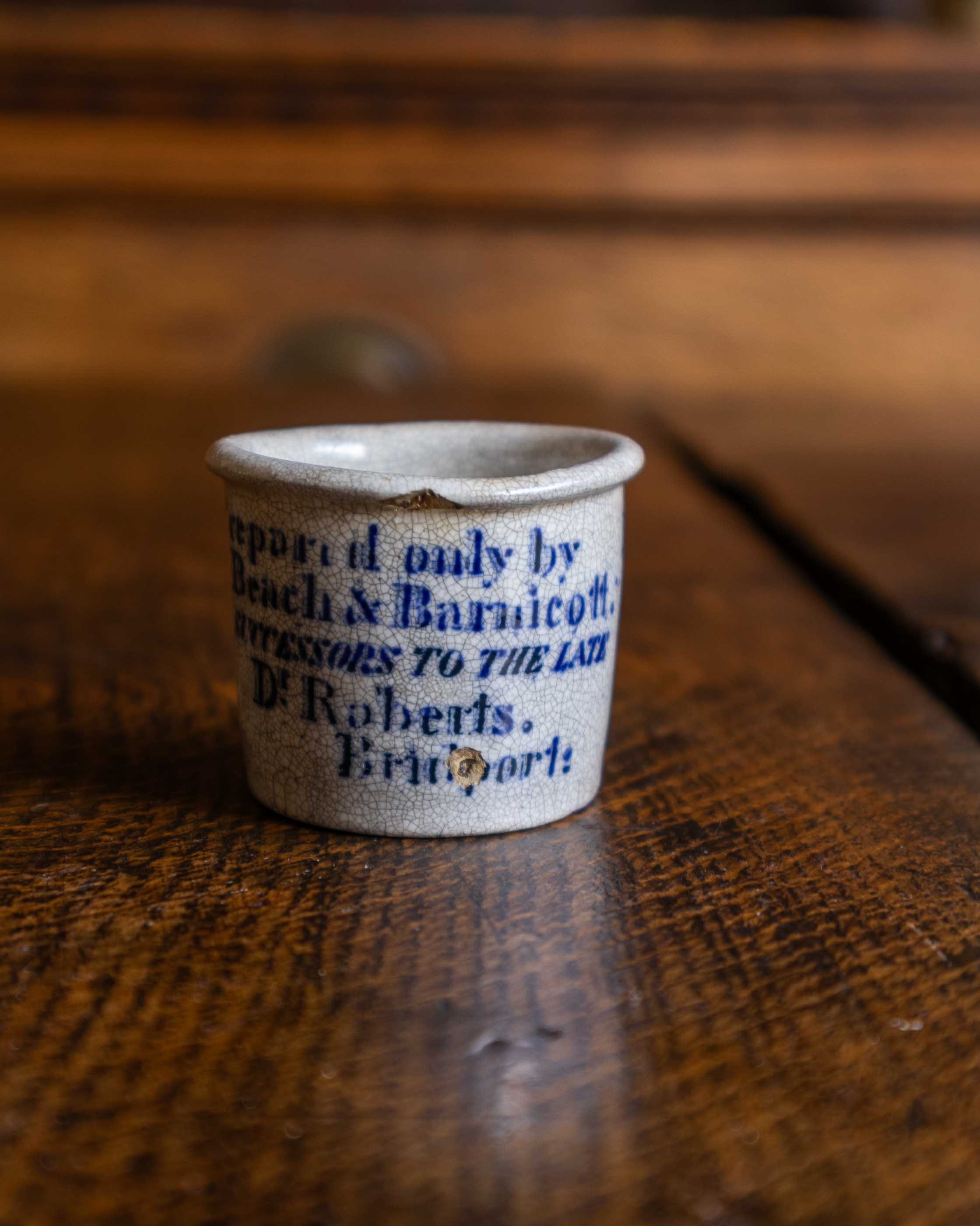
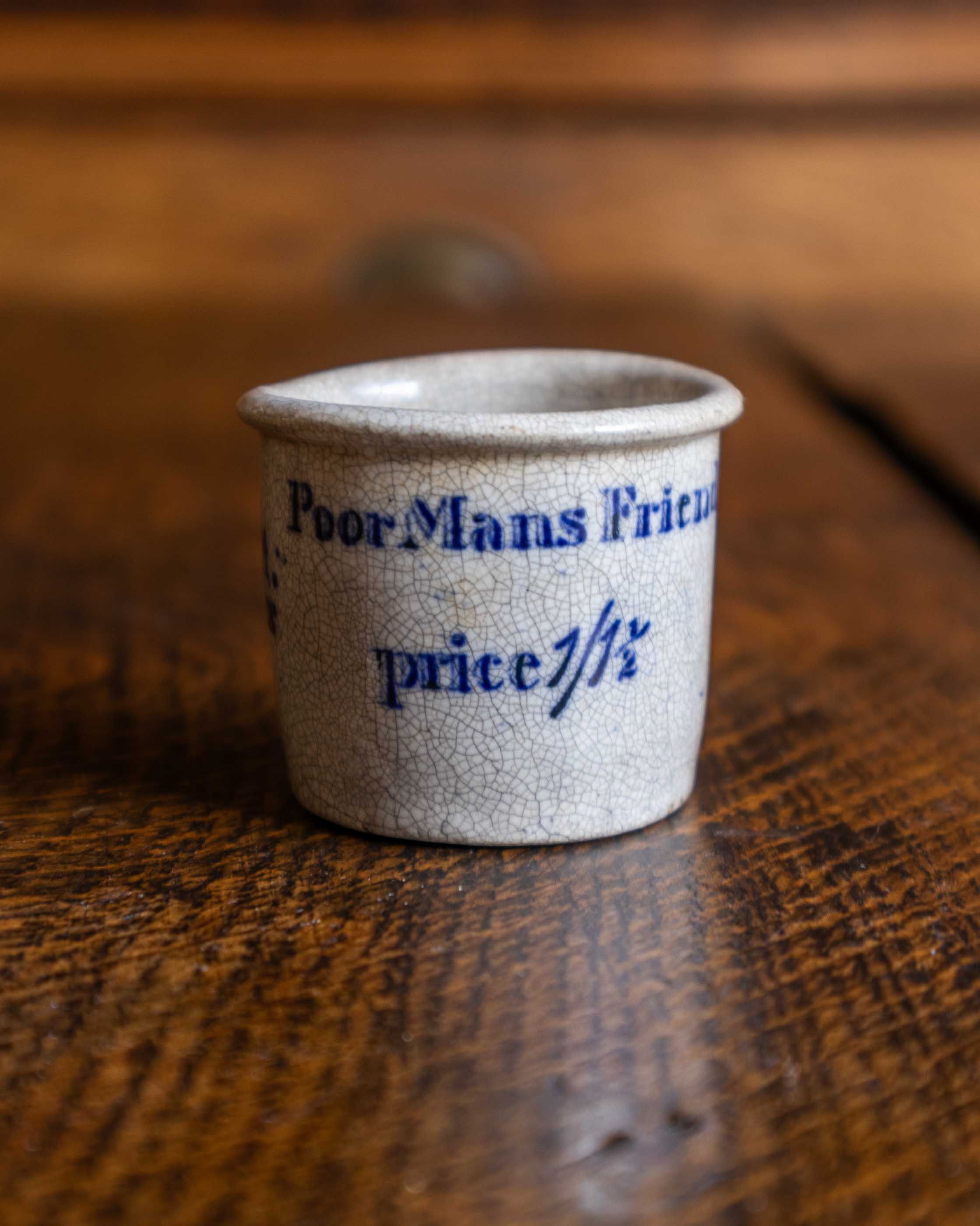
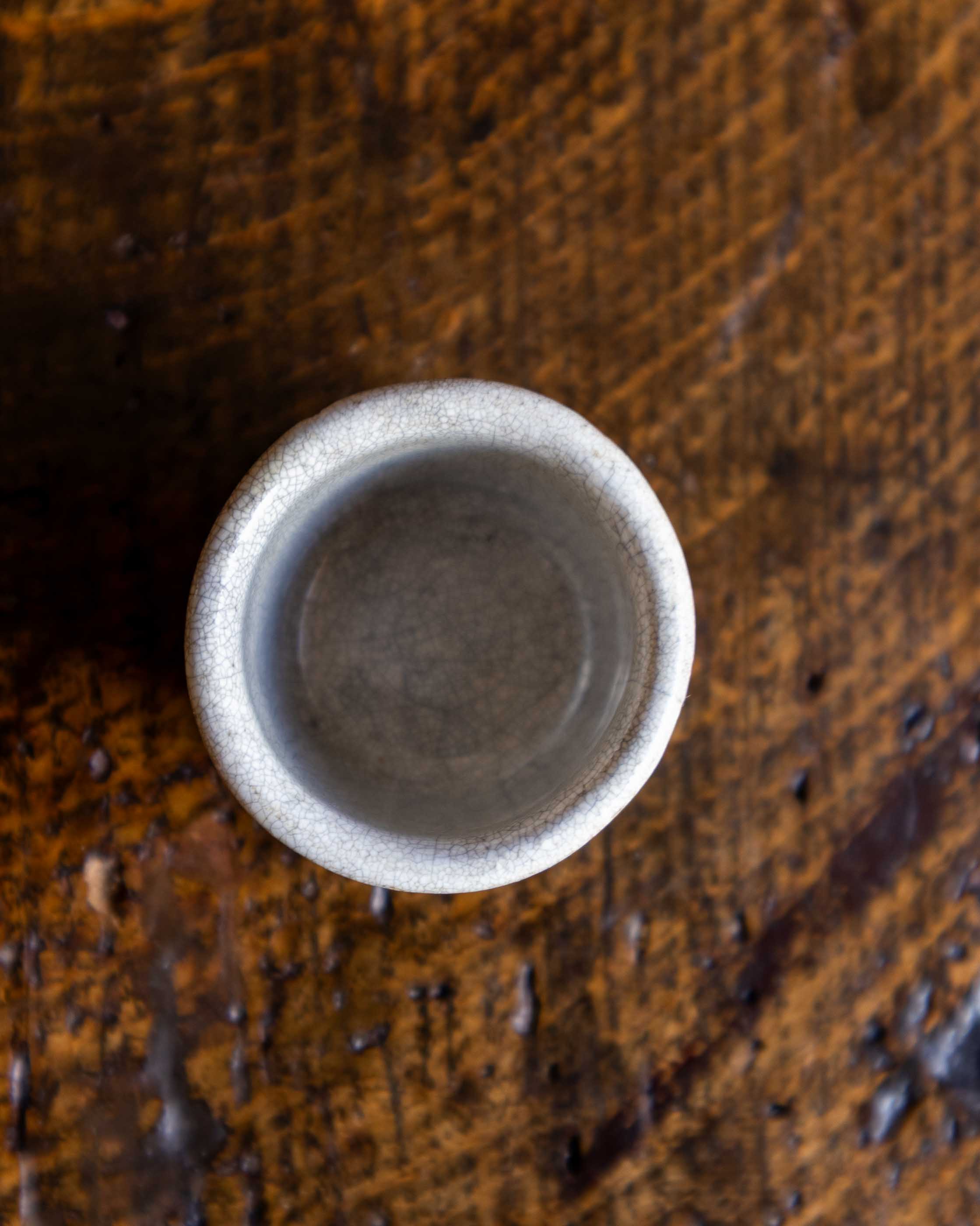
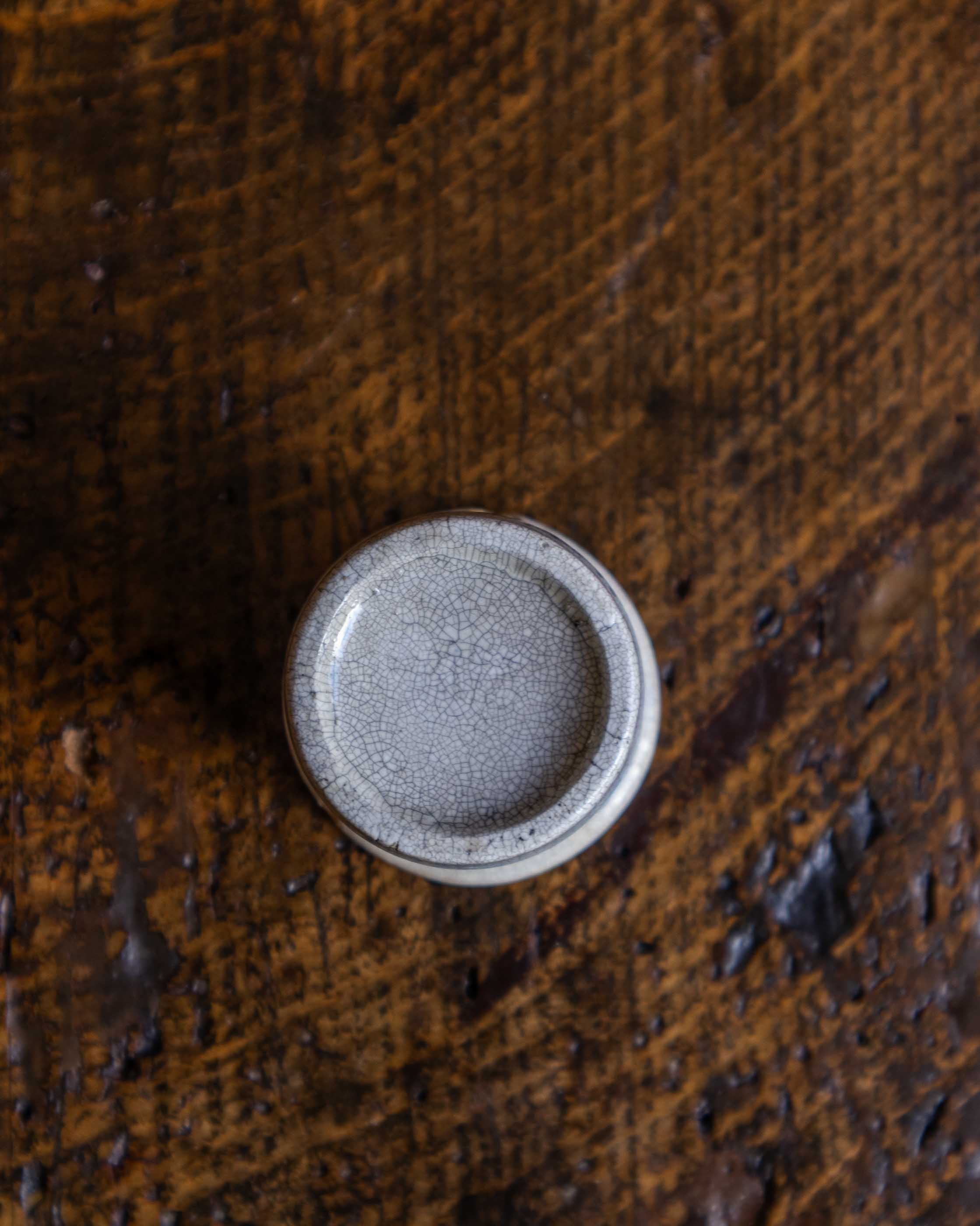
An antique Victorian Dr. Roberts Poor Man’s Friend ointment pot from the nineteenth century by the successors to Dr. Roberts, Beach & Barnicott (see The Gen). Transfer printed in blue hollow lettering on cream earthenware with a flared lip.
Perfect to use today as a pinch pot for salt or pepper, or spice pots.
DIMENSIONS: Height 4 cm, Width 4.5 cm.
SIGNATURES, MARKINGS & INSCRIPTIONS: Unmarked.
CONDITION: In very good condition, with wear commensurate with antique age and use of such a piece. It has a fine feel to it. There are a couple of flakes to the outer rim. Small potter's blowout to the p of Bridport. Hairline or two. Heavily discoloured with dark crazing throughout. These all add to the history of the piece and wonder of the stories it could tell.
REFERENCES: For an example of a similar pot see Science Museum Group.
~~~~~~~~~~~
THE GEN
Giles Roberts was born in 1766 in Bridport Harbour, England. His early childhood was difficult. He contracted smallpox when he was less than a year old, recovered, and then got rickets which left him unable to walk until he was five years of age. Thankfully, Roberts’ setbacks all came at an early age, and it was perhaps those early experiences that set the foundation for what became his great interest in plant-based medicine. Despite no formal training or background in apothecary, by the age of 18 he had set up shop as a chemist in Bridport, making and selling pure and cheap ointments and pills that he claimed would cure a host of ailments. Roberts would achieve local success as a chemist in Bridport, especially for his cures for fever and flu.
Interestingly, unlike many others who’d find their way into the “cure all” industry, Roberts actually went on to receive a formal medical education and training. So trusted was Roberts locally, that in 1794 the people of Bridport raised money for him to study at Guy’s and St Thomas Hospitals in London and he eventually became a Doctor of Medicine. Within a few years of his return to Bridport, Dr Roberts came up with a cure all ointment that he gave an ingenious name, “The Poor Man’s Friend”. The “cure” became a raging success and made Roberts very wealthy, becoming the second best-selling patent medicine in Britain.
Dr Roberts would prove to be a generous and helpful man to the needy and poor. He provided the poor with free meals, gifts, payments and free medical services. He was appointed medical attendant to the poor of Bridport in 1807 and used the position to campaign for better living conditions and better hygiene.
~~~~~~~~~~~
Would you like to know more about this piece?
Make an enquiry via email here.