Circa first half of the 18th century, 1700–1750 | Netherlands
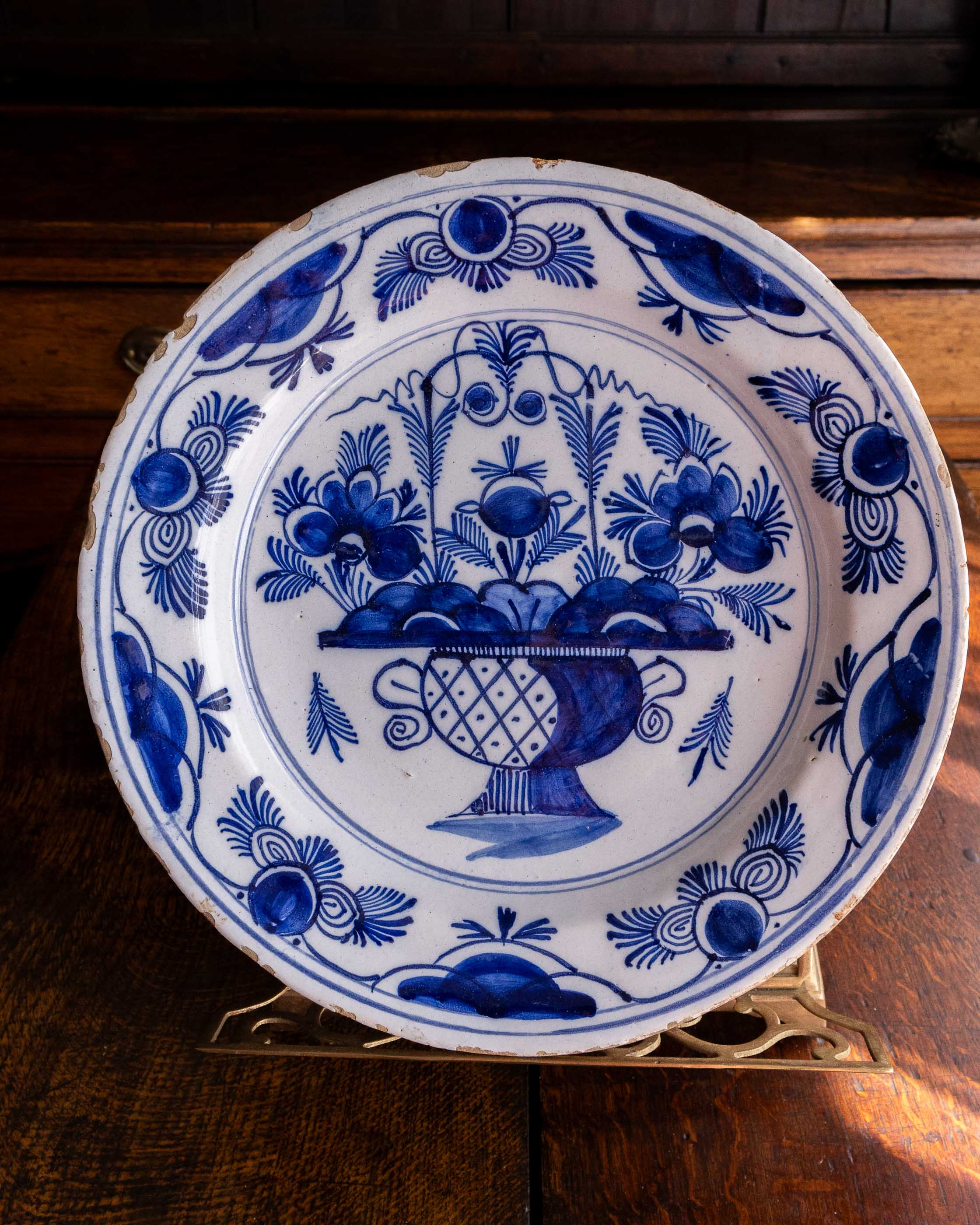
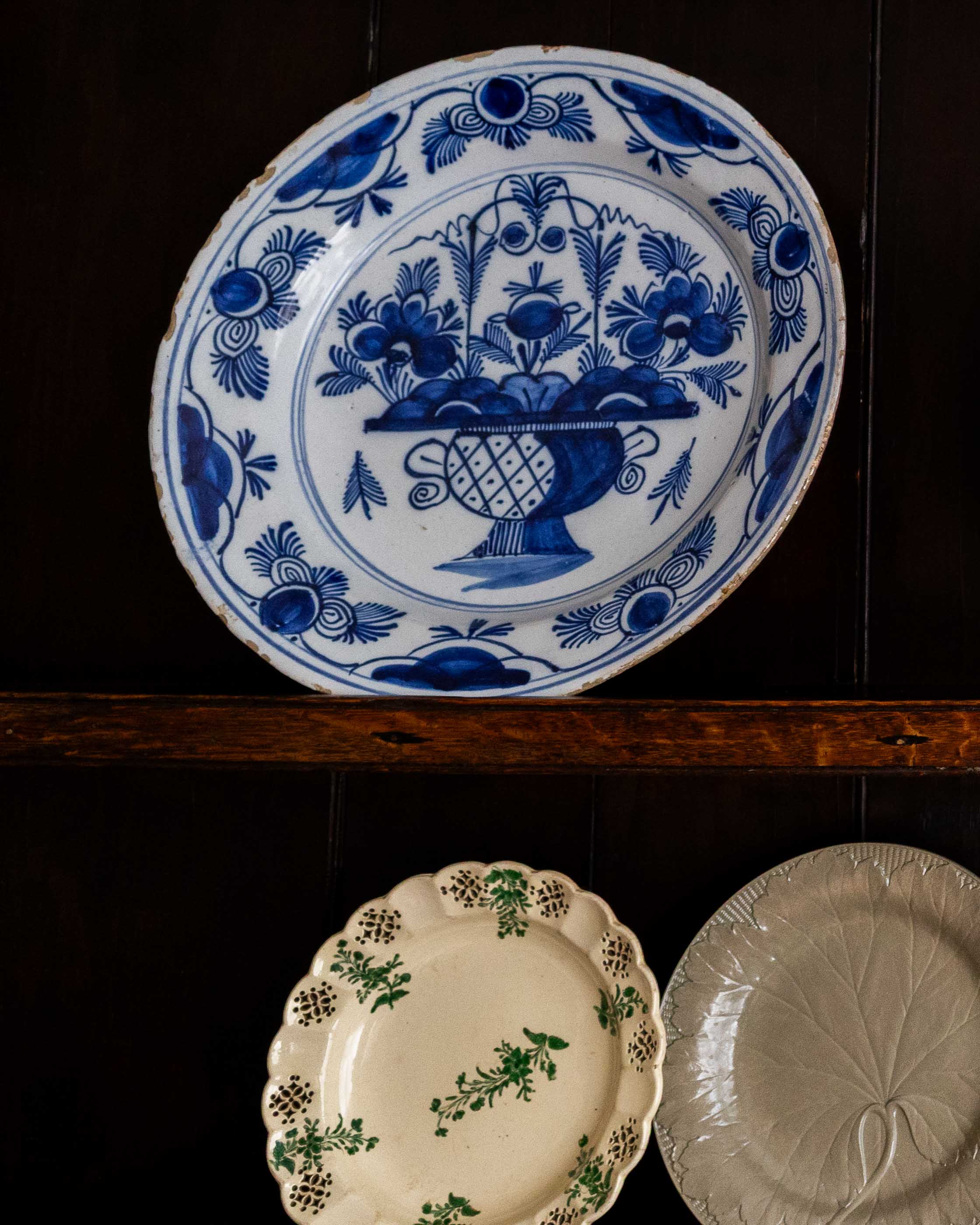
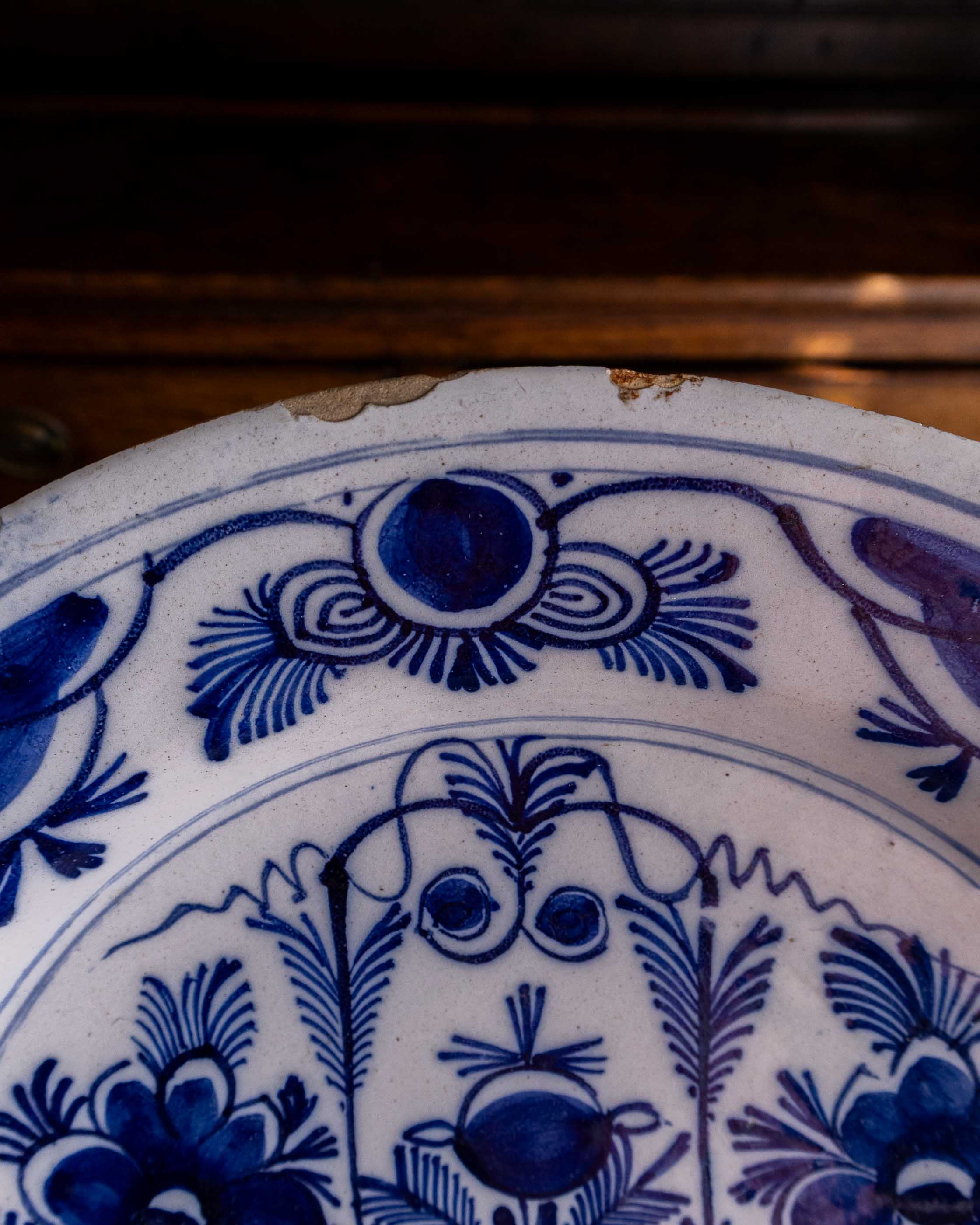
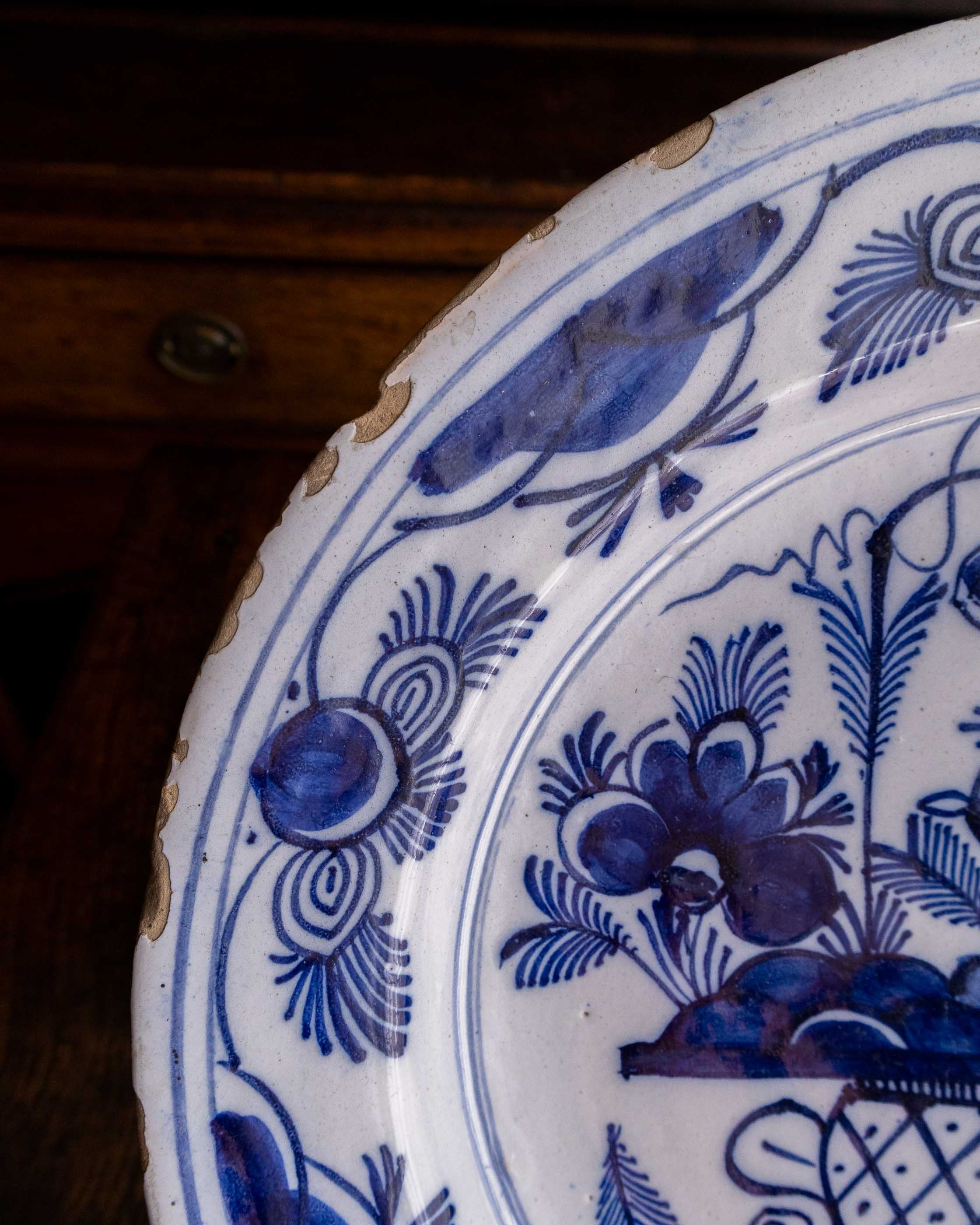
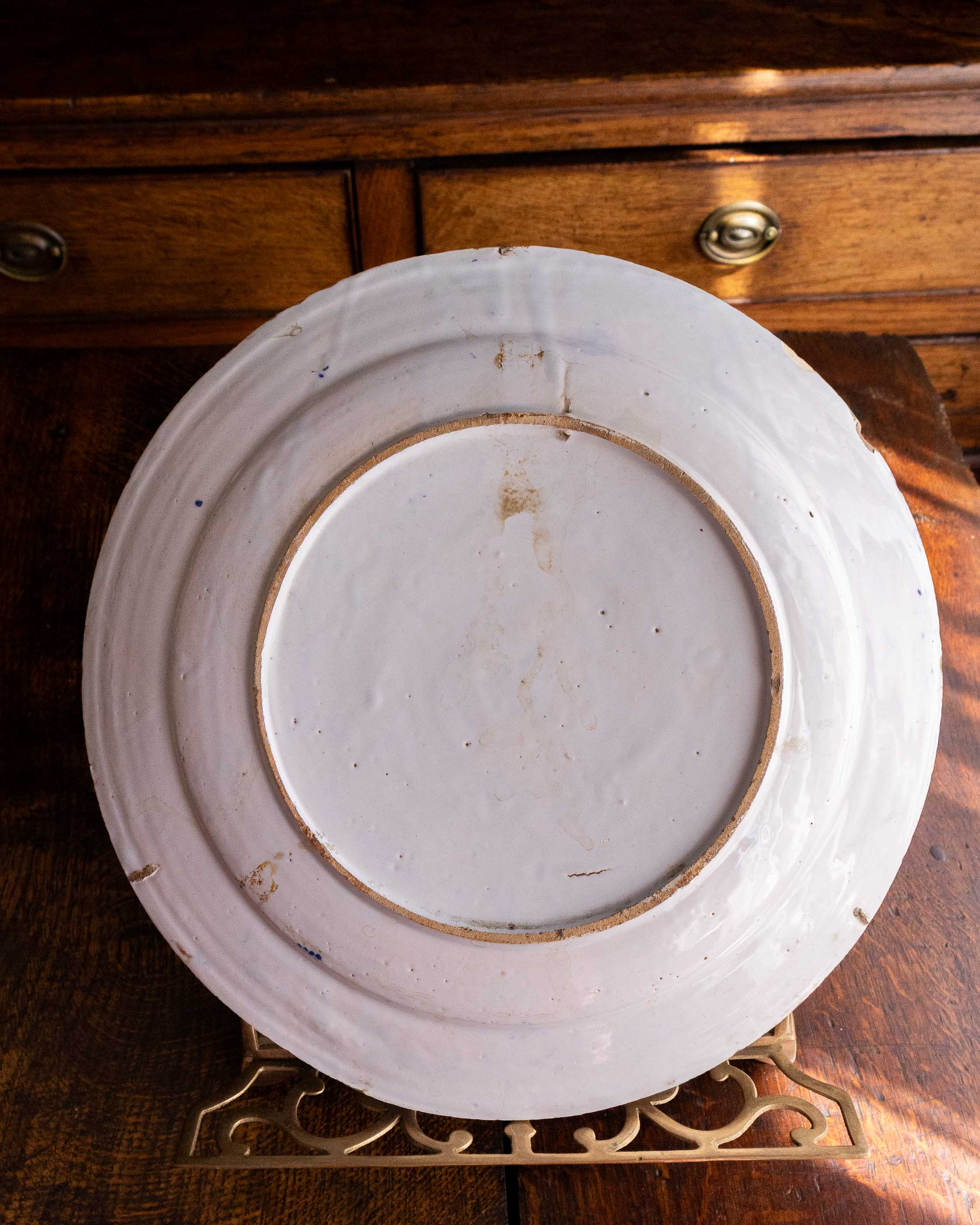
An antique eighteenth century Dutch Delft dish, beautifully hand painted with a floral cornucopia of a vase with flowers and foliage, surrounded by a stylish floral border. Rich and vibrant cobalt blue colour on white tin glaze (see The Gen).
DIMENSIONS: Diameter 34.5 cm.
SIGNATURES, MARKINGS & INSCRIPTIONS: Unmarked. The dish is unmarked as is often the case with Dutch Delft pieces from this period.
CONDITION: The dish is in good original, unrestored condition, with wear commensurate with antique age and use. There are some chips and fritting to the rim and some pitting typical for this type of piece.
~~~~~~~~~~~
THE GEN
“‘Old Delft’, properly speaking, is that faience made in Holland during the seventeenth and eighteenth centuries, covered with a heavy opaque glaze of tin, which has many tiny holes in its surface. It is very friable, and chips and scales easily, as nearly all pieces of genuine old Delft will testify.” (The Old China Book: Including Staffordshire, Wedgwood, Lustre, and Other English Pottery and Porcelain, Moore N. Hudson, Rutland, Vt.: C.E. Tuttle Co., 1974, p. 125)
The beautiful blue and white ceramics associated with Dutch Delft, have become a national symbol and icon for the Netherlands. However, although pioneered and introduced to the world by the Dutch, and especially the city of Delft, delftware’s origins traverse a rich global path of influence. An eclectic mix of factors and influences shaped what became the Dutch Delft potteries.
It was inspired by early Italian and Spanish majolica, and especially by the intricately detailed Chinese porcelain that was being collected by the European elite from the late sixteenth century onwards. The beautiful Chinese porcelain was decorated almost exclusively in blue and white. As the saying goes, ‘imitation is the sincerest form of flattery’, and the growth and popularity of Chinese porcelain in Europe provided fertile ground for imitators. The potteries and ceramic artists from the Dutch city of Delft proved exceptional at this. Initially imitating the Chinese designs and decorations, the Dutch Delft artists would gradually expand their creative horizons to incorporate their own designs influenced by the Dutch landscape and daily life.
Although initially intended as a cheaper alternative for the middle classes of Europe, relative to the more expensive Chinese porcelain, Dutch Delft became extraordinarily popular and renowned as decorative objects of the finest quality in Europe, finding favour even amongst the elite and nobility of Europe and the United Kingdom. Indeed, delftware was such a sensation throughout Europe and the United Kingdom during the seventeenth and eighteenth centuries, that it was also produced in the United Kingdom and Continental Europe, each with their own unique styles.
~~~~~~~~~~~
Would you like to know more about this piece?
Make an enquiry via email here.