Late Victorian
Circa 19th century | France
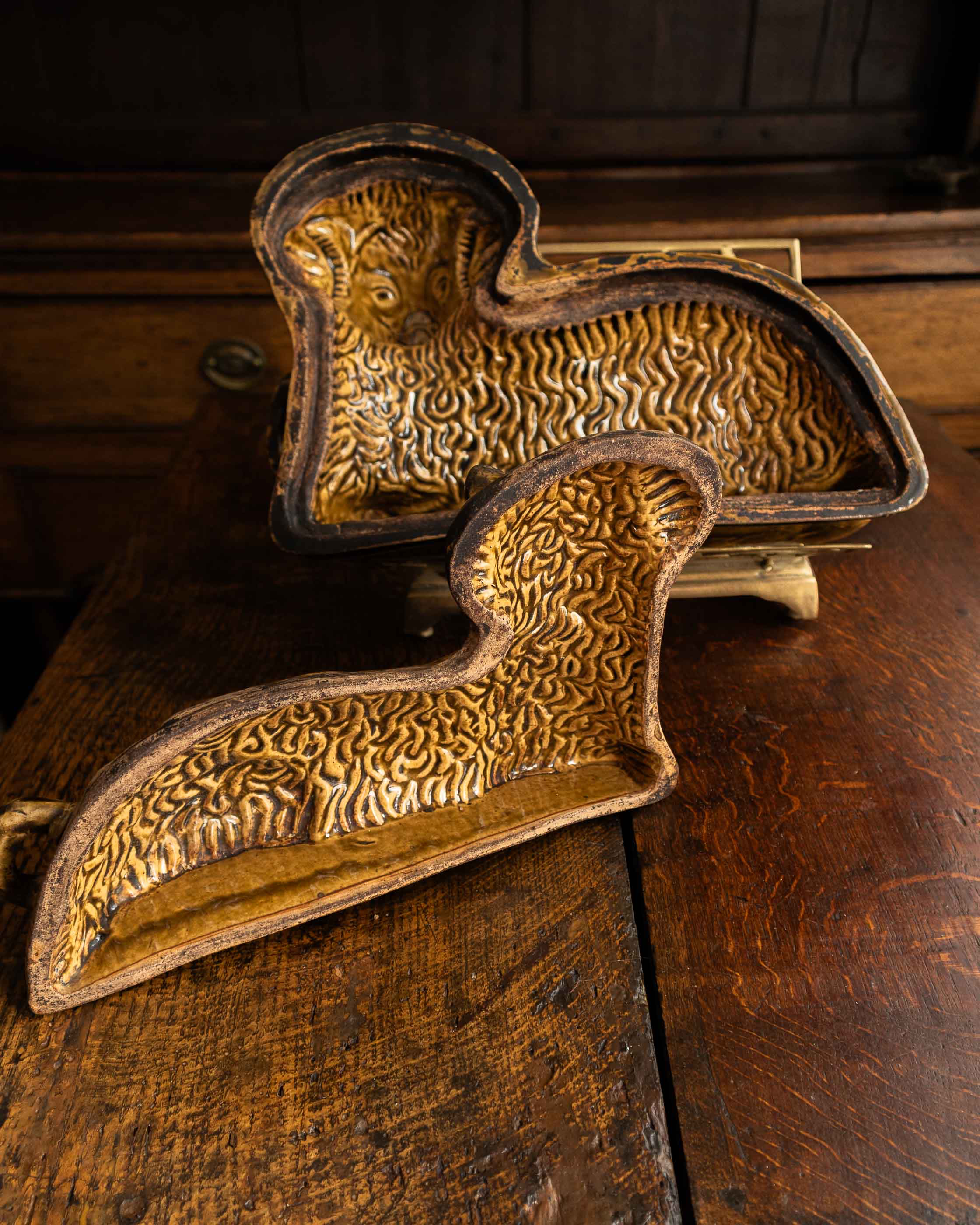
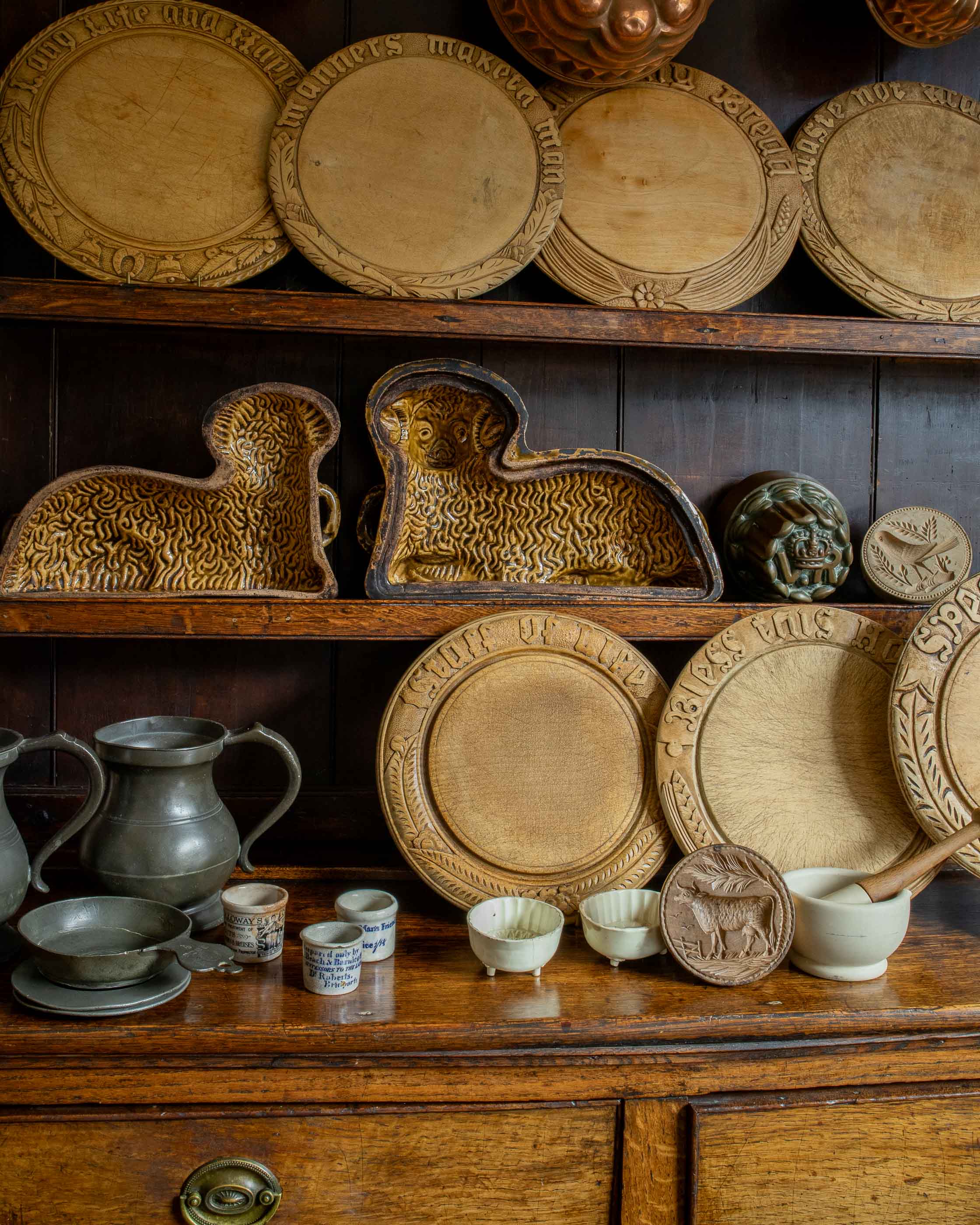
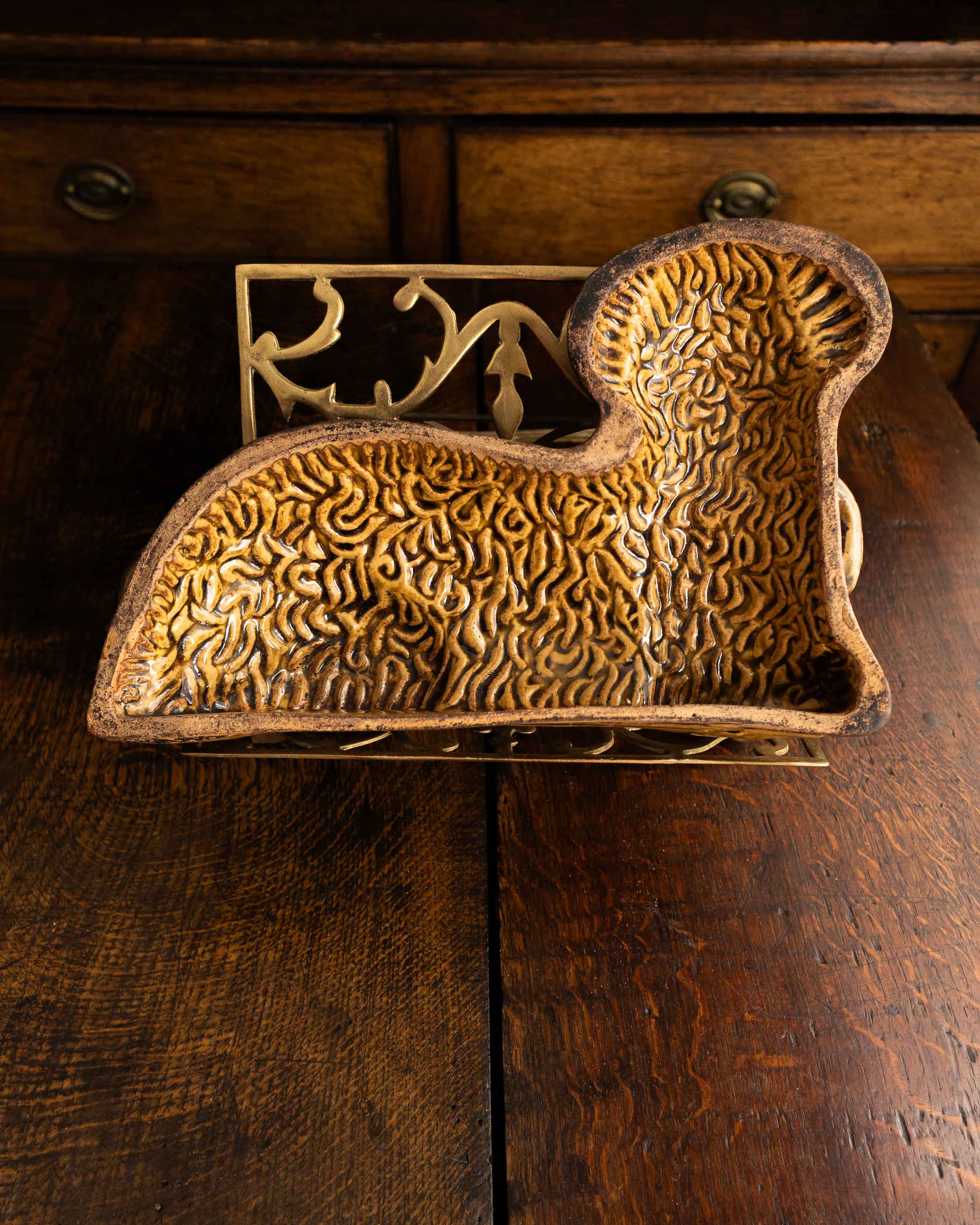
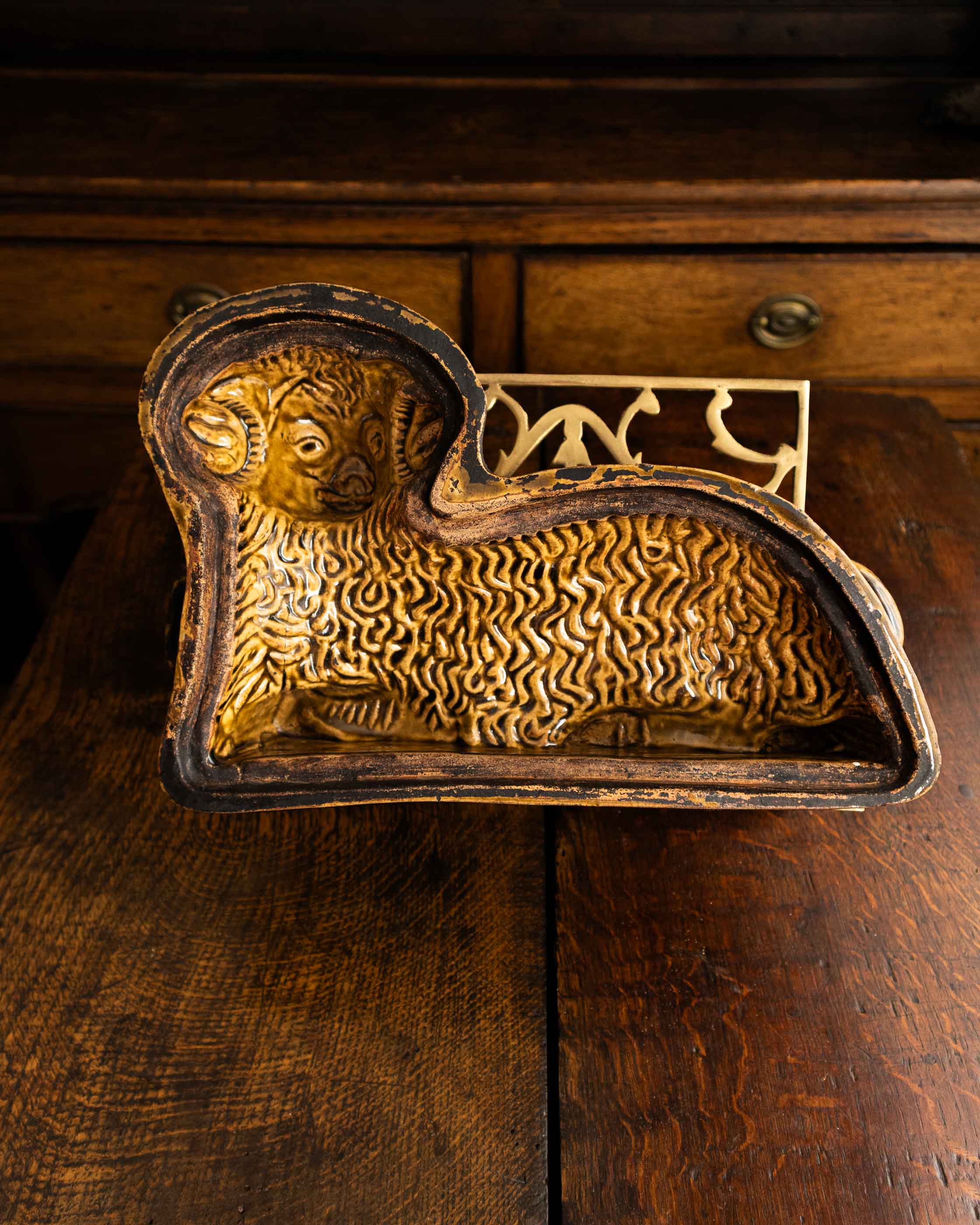
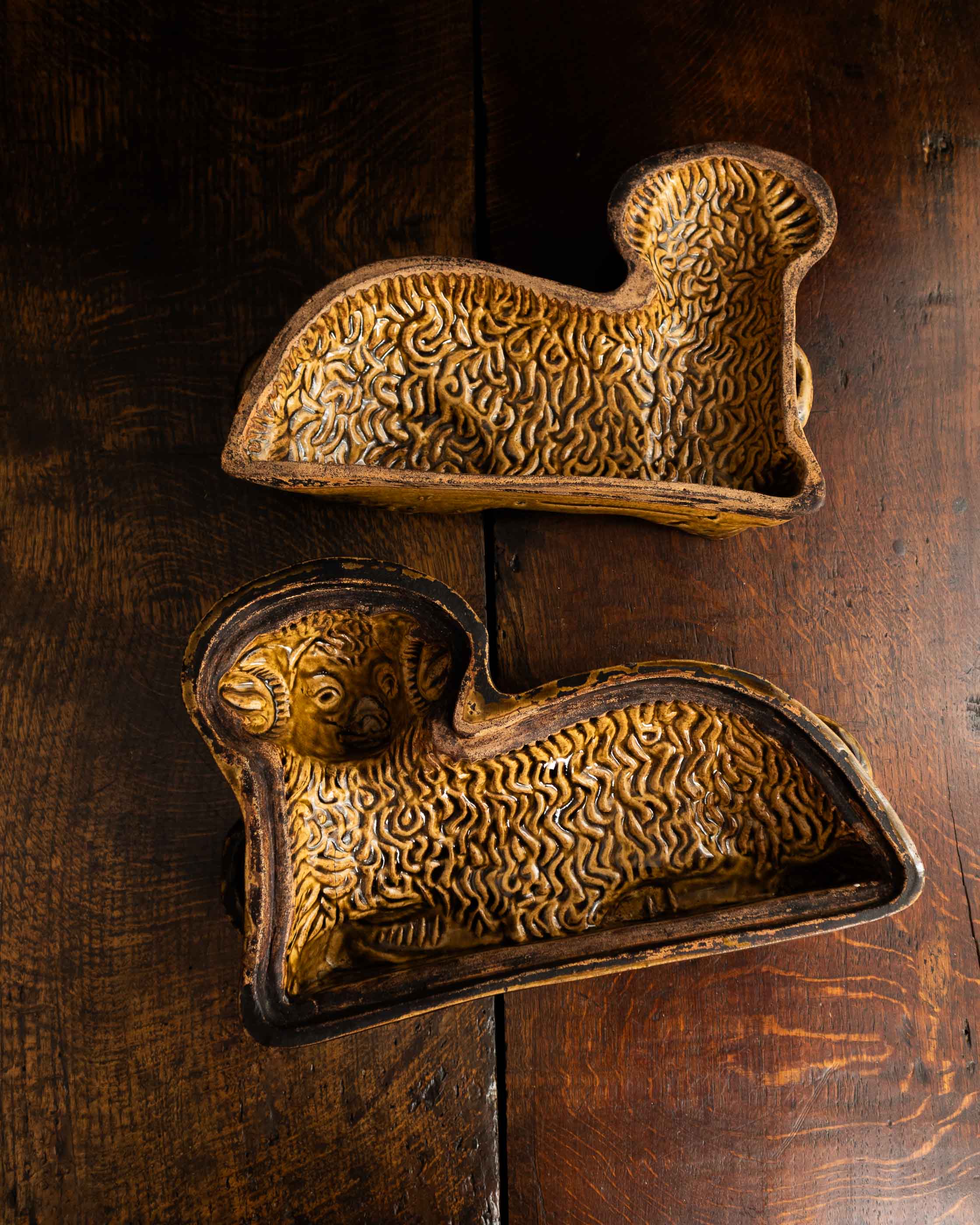
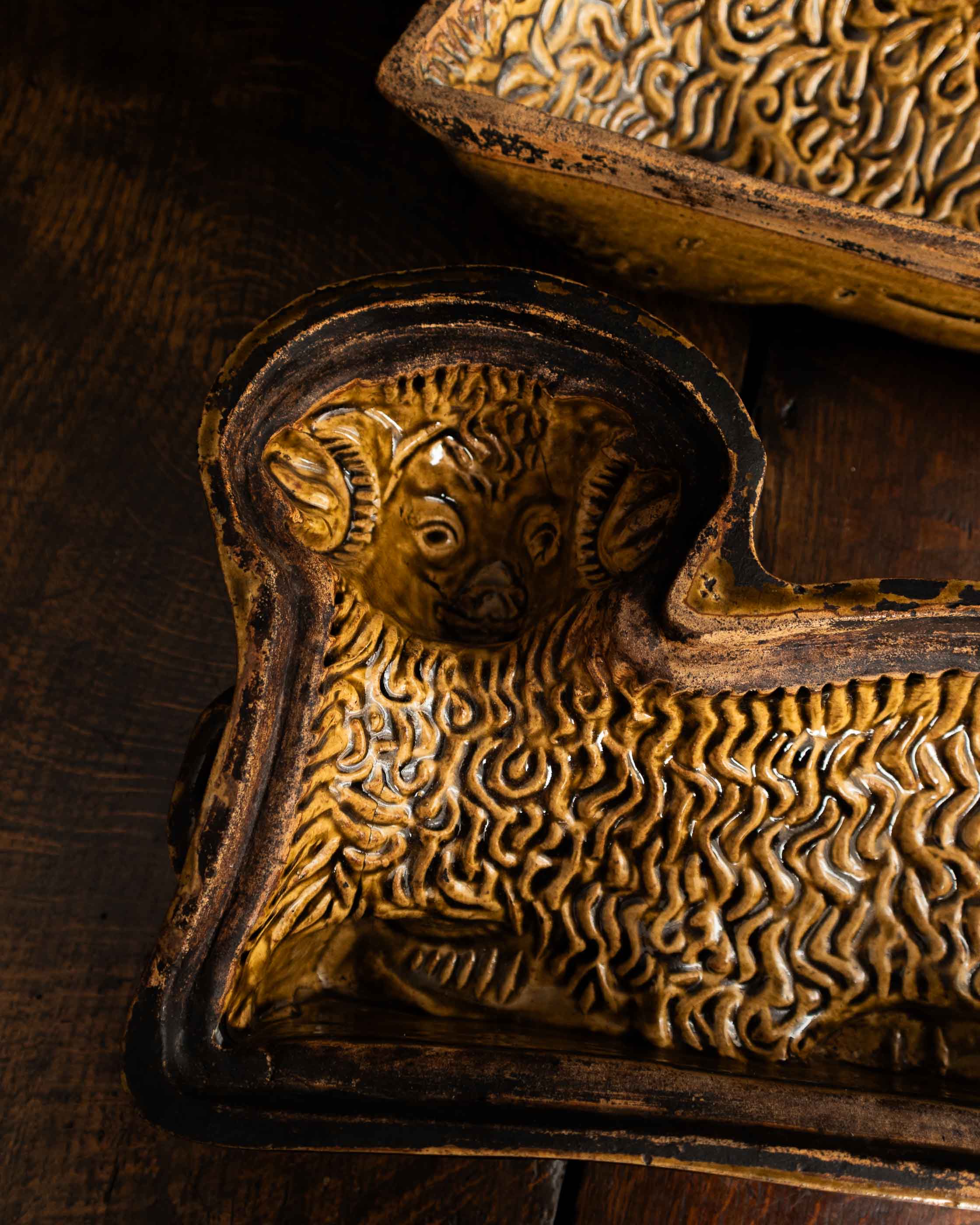
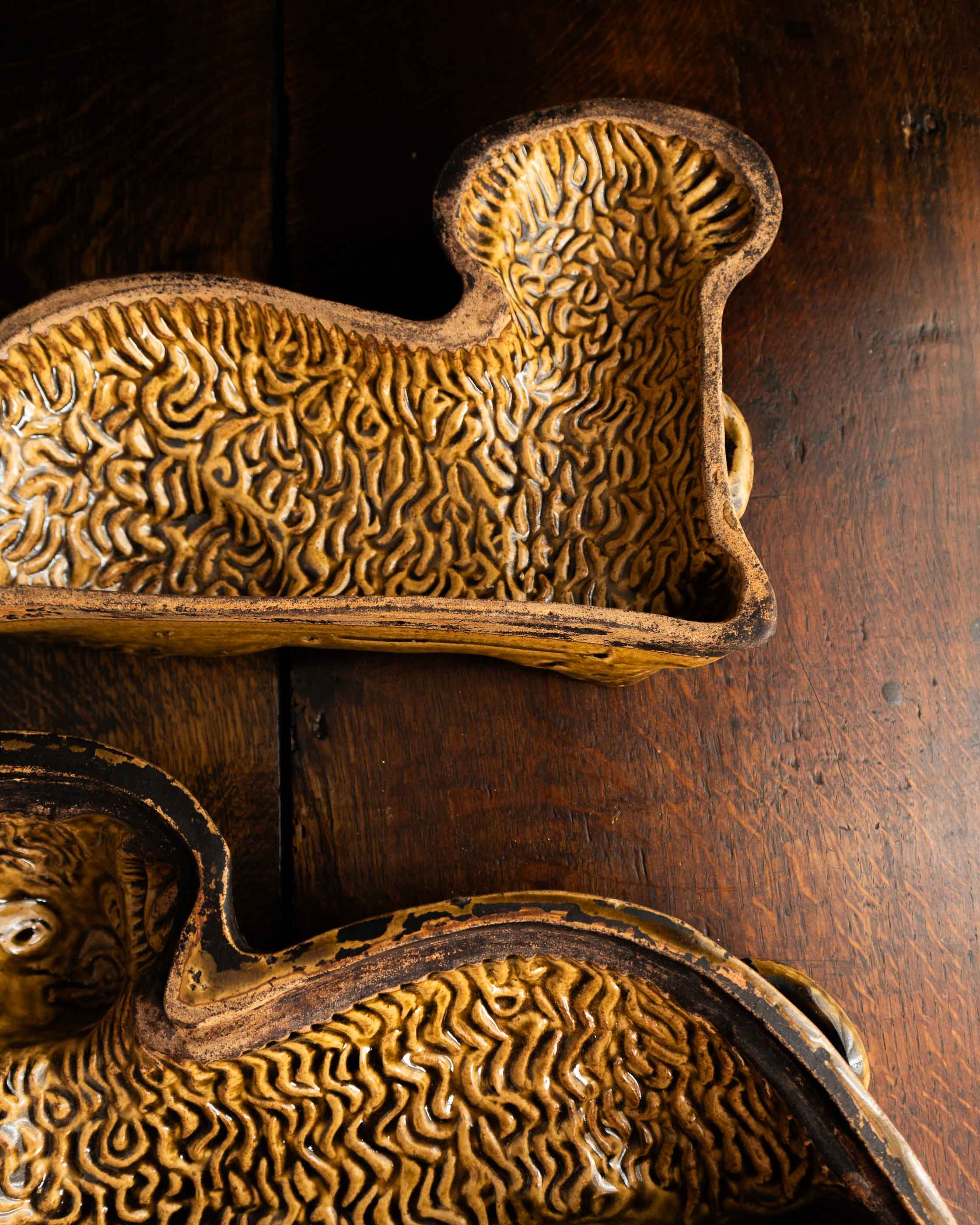
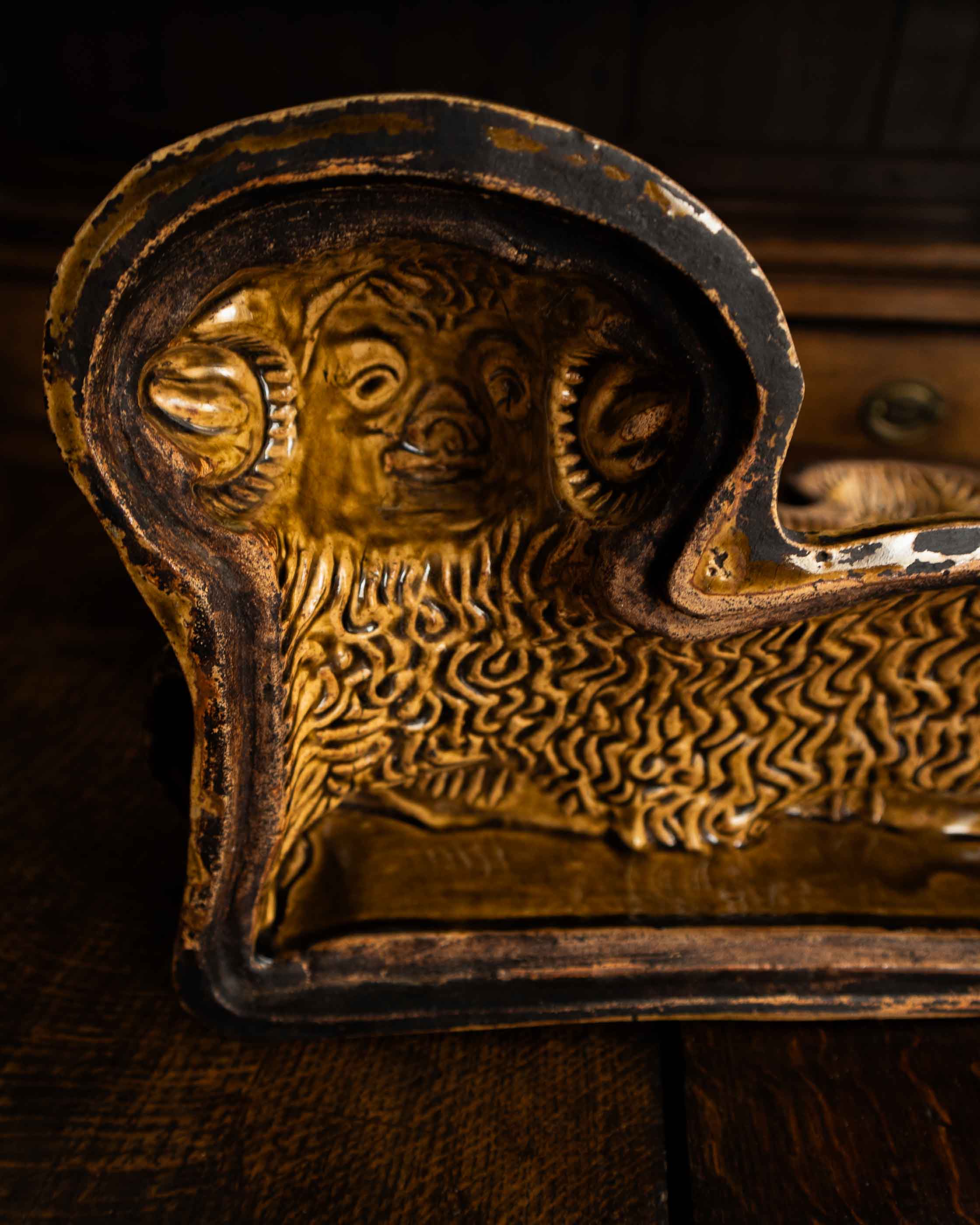
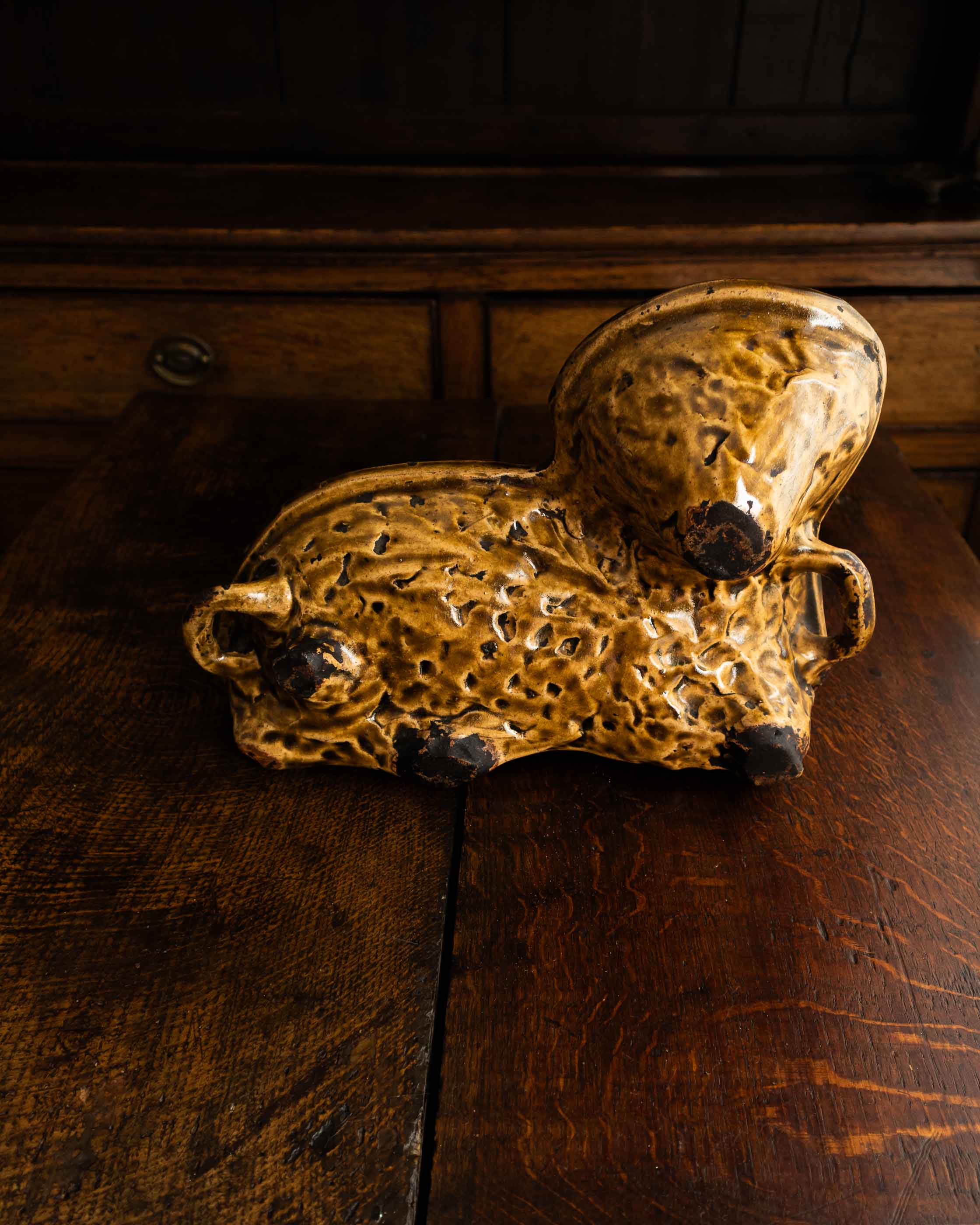
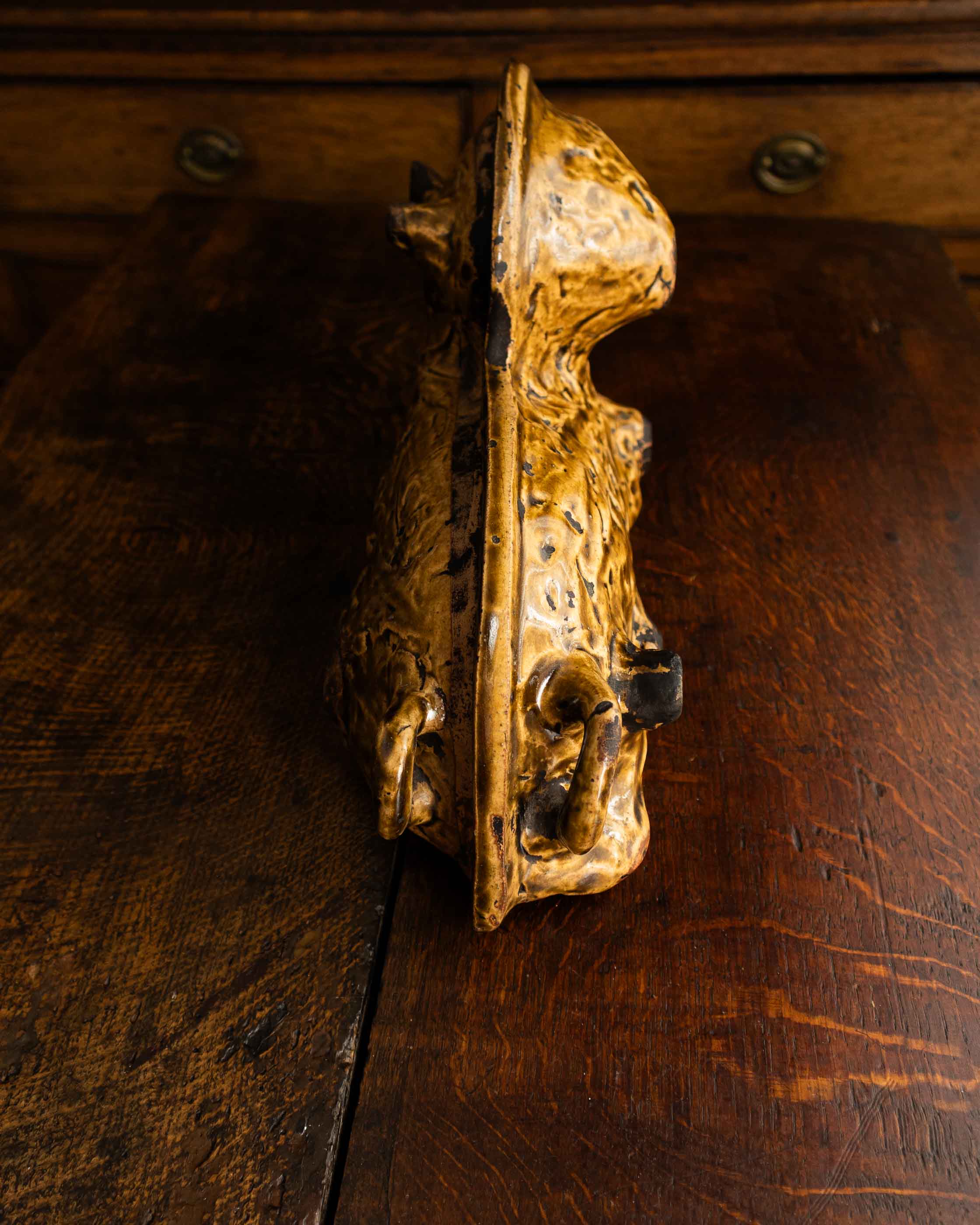
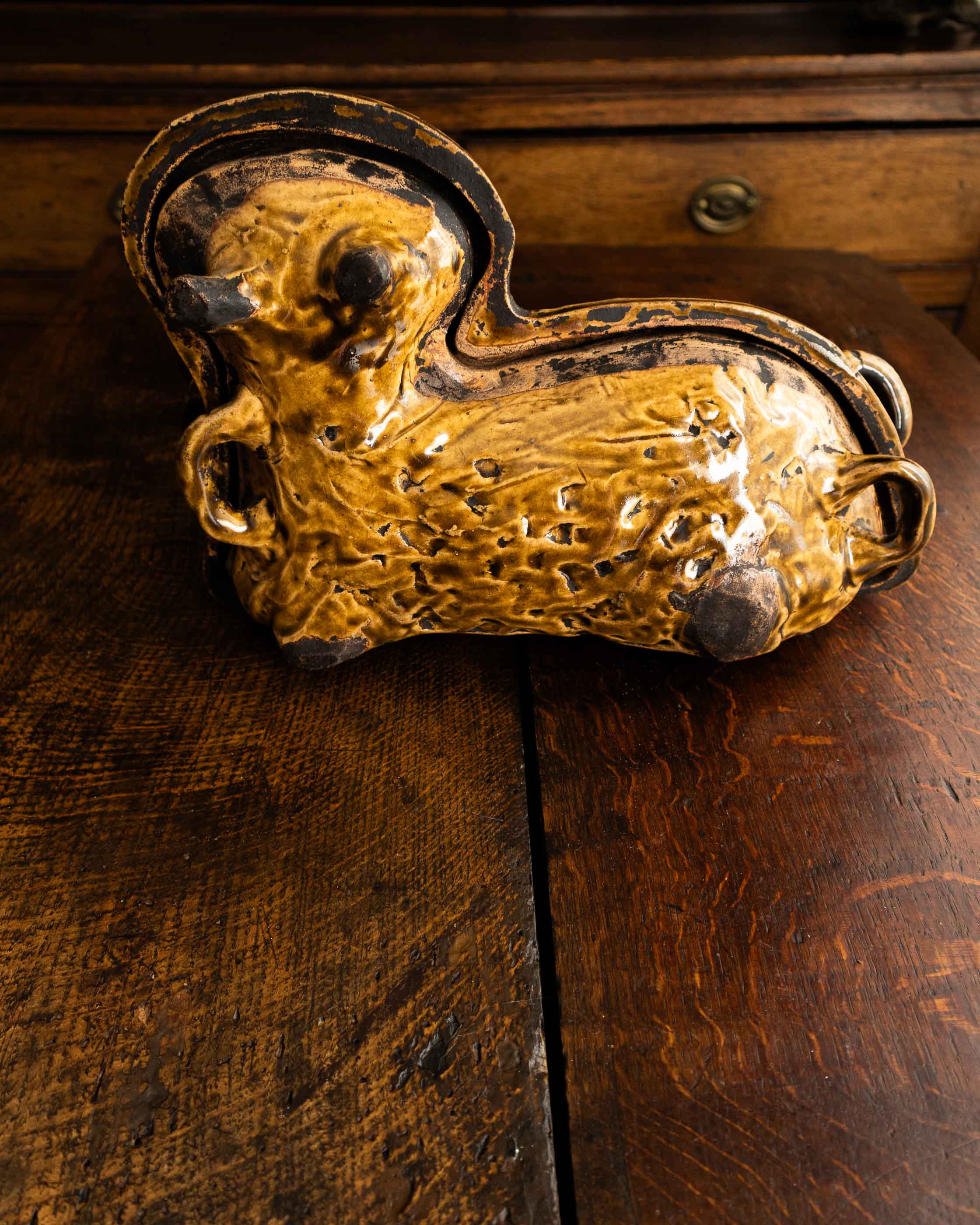
An exceptional example of the nineteenth century terracotta earthenware mould used to bake the traditional Easter paschal lamb cake (see The Gen). The cake is popular throughout Europe, especially in the Alsace region of northern France, where it is known as “lammele”; in Germany it is known as “osterlammele”; the Czechs call it “beránek”; and the Italians “torta di agnello”. The origin of this mould is unknown but it was probably made in Alsace which is well-known for its terracotta potteries of Soufflenheim. It is exceptionally moulded in naturalistic style with great detail for the face and lamb’s wool. The heavy mould is glazed in a striking brown glaze. It would make a great decorative item or is as useful today as when it was first made.
DIMENSIONS: Length 34 cm, Height 14 cm, Width 22 cm.
SIGNATURES, MARKINGS & INSCRIPTIONS: Unmarked.
CONDITION: In excellent condition, with wear commensurate with antique age and use of such a piece. The mould has a lovely dark patina on the edges from the wood fired oven in which it was once used. This all adds to the history of the item and wonder of the stories it could tell.
REFERENCES: For a similar terracotta mould from the era see Object No. A7653 at the Powerhouse Museum.
~~~~~~~~~~~
THE GEN
“The first year there was a modest breakfast for friends in our floor-through flat in New York City, up the street from Grace Mansion. This was the perfect way to entertain — casual, inexpensive and special—an ambling sort of party. Nobody’s ravenous, there’s a languor in the air — it’s Sunday, it’s Spring! People like to wander, punch cup or wineglass in hand, nibble on strawberries here, asparagus there, cadge a bit of pastry on their way to chatting with someone in another corner. Although Easter breakfast is ideally set in a garden, all we had in Yorkville were pots of herbs on the windowsill. To compensate I bought Easter “grass” at the dime store, strewed it through the apartment, and brought it alive with yellow-marshmallow chickens, pink-marshmallow rabbits, foil covered chocolate, and speckled jelly-bean eggs — the place shimmered like the Emerald City.
For maximum festiveness I strung the party through the apartment as well — setting the punch bowl on the counter in the kitchen, where everyone entered. My husband had offered to make Bowle. “What’s that?” I asked. He explained that one spring in Heidelberg he was planning a party to welcome his sister, and a friend said, "We must make Bowle — I’ll show you how." He did, it was fabulous, and it has been our Easter punch since that first New York celebration. Composed of equal parts of Champagne and white wine and ladled up with fresh pineapple soaked overnight in triple sec, maraschino liqueur, and brandy, Bowle slips down all too easily!
I laid everyone’s Easter eggs in heaps along the mantel, put the platter of sweet pastries by the window next to a wing chair, planted the huge basket of strawberries on the fire escape, and gave the paskha a place of honor on the coffee table, with spoons and dishes for sampling. The cold buffet — turkey, red potatoes, asparagus, fluffy cream cheese with caviar, Dijon mustard, and French bread — was set up in the portion of the living room next to the kitchen, which was the study. Dessert, a paschal “lamb” cake, was in regal repose on a silver platter on the typewriter stand (the typewriter, in New York City fashion, was stashed for the day in the shower). Did Norah have a lamb cake? I can't remember. But I do remember that my mother had a two-piece cast-iron lamb mold among her baking things while I was growing up. Though we didn’t entertain at Easter and though my mother has never been much of a baker, I’m sure she bought the mold with good intentions. When I wrote that I was planning our first Easter breakfast mother surprised me by sending the mold so I could make the cake. We haven’t had an Easter since without it.” (‘Come to Easter Breakfast’, Sylvia Thompson, Gourmet, April 1988, p. 164)
~~~~~~~~~~~
Would you like to know more about this piece?
Make an enquiry via email here.