| PRICE ON APPLICATION |
Victorian
Circa 1875 | England
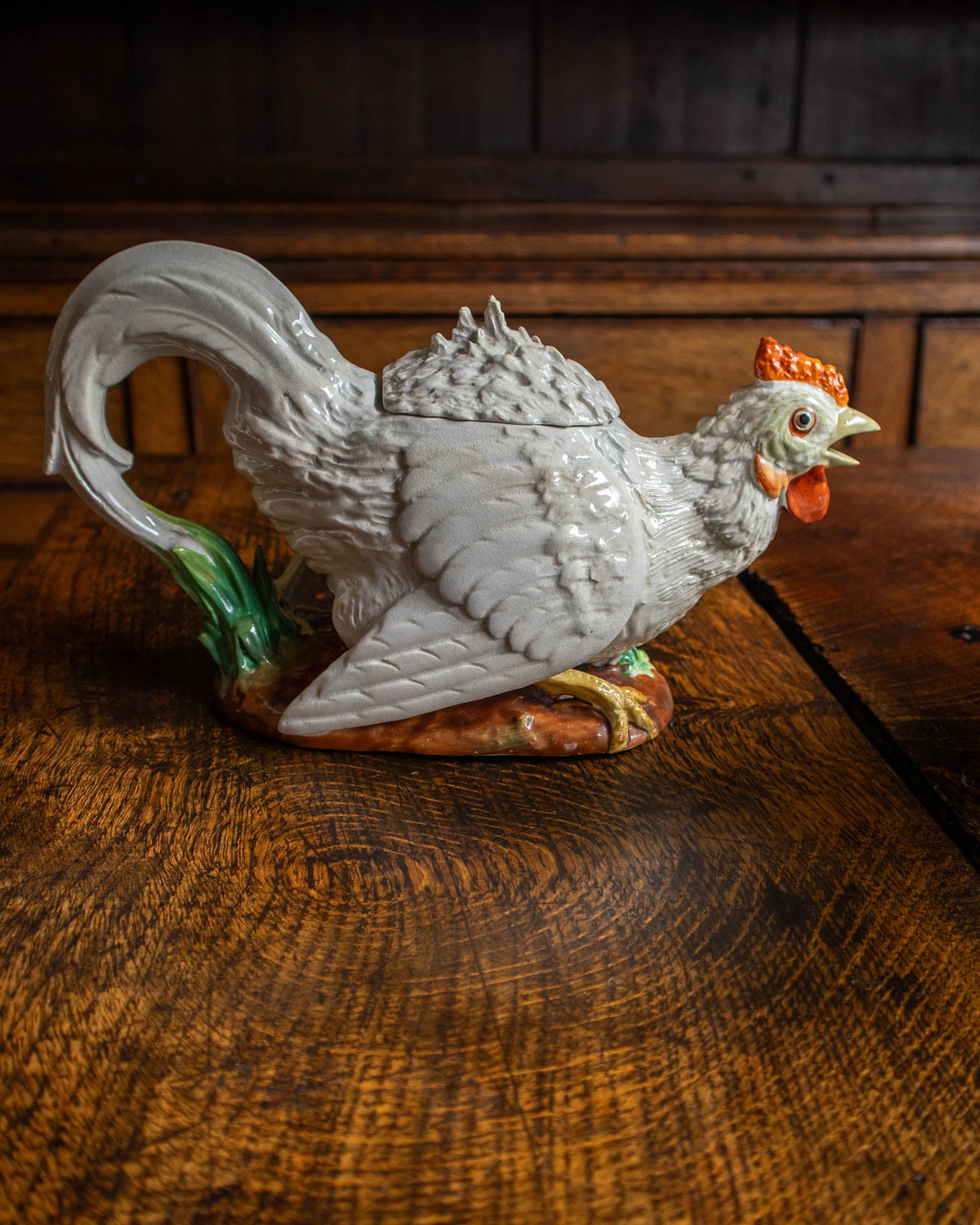
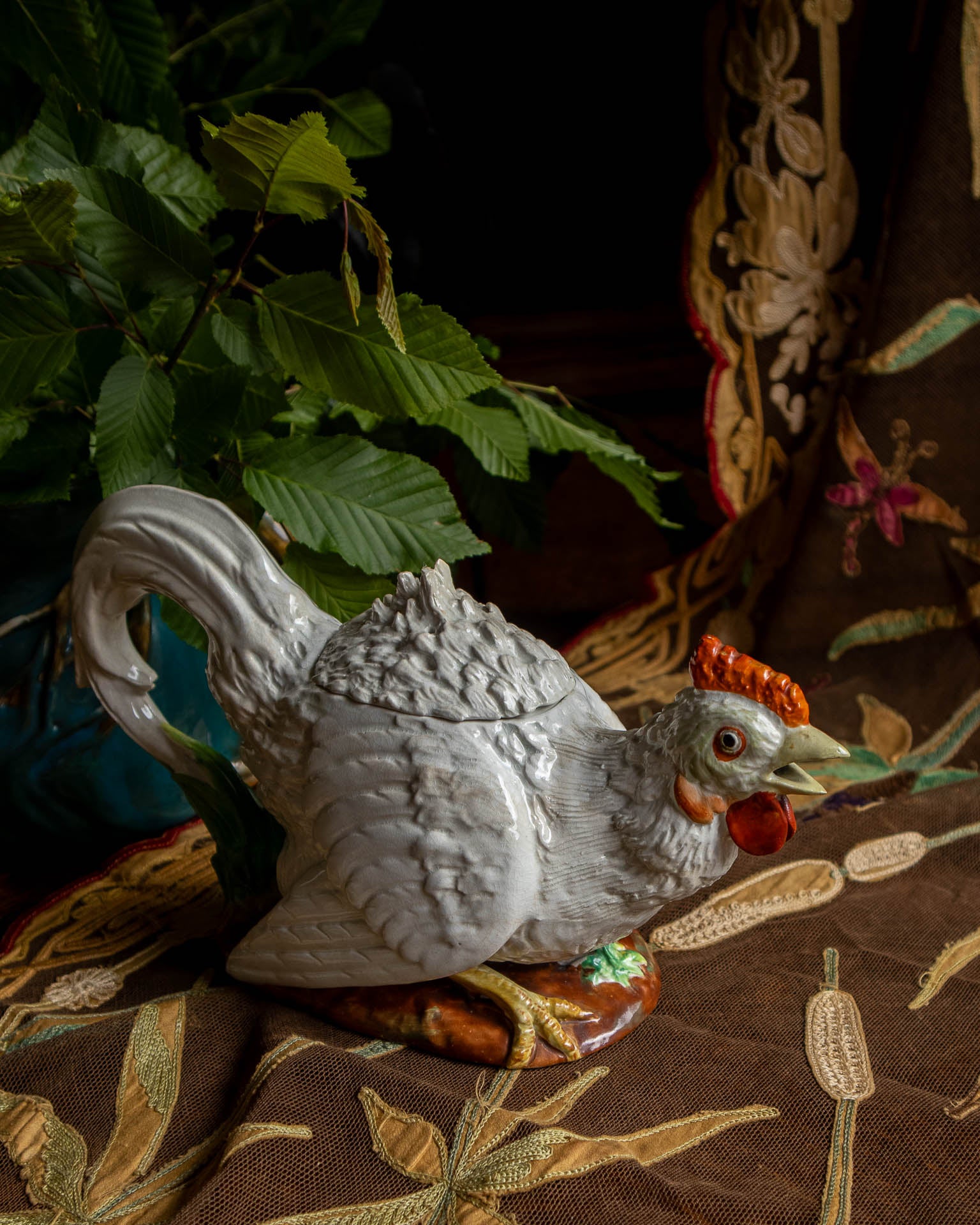
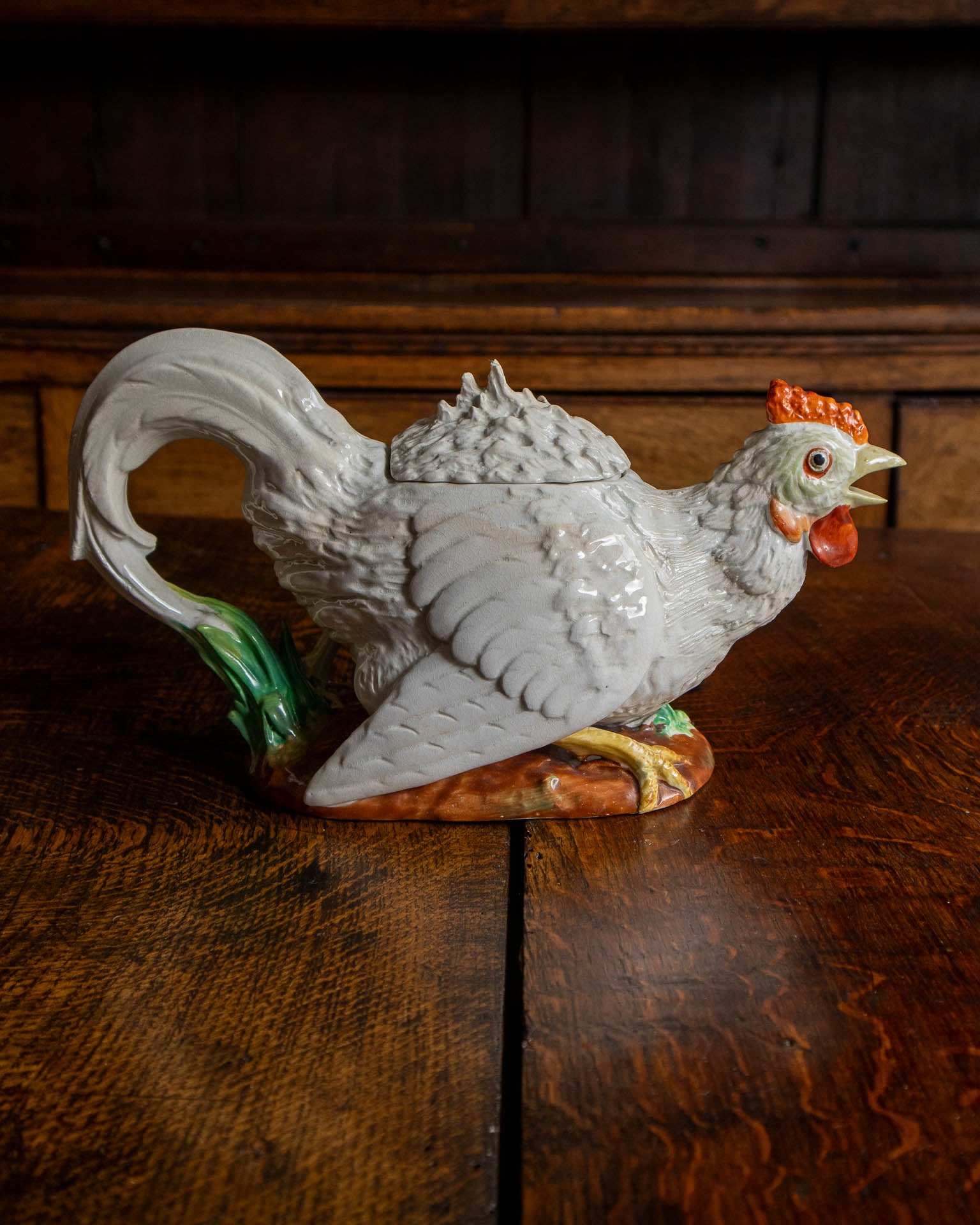
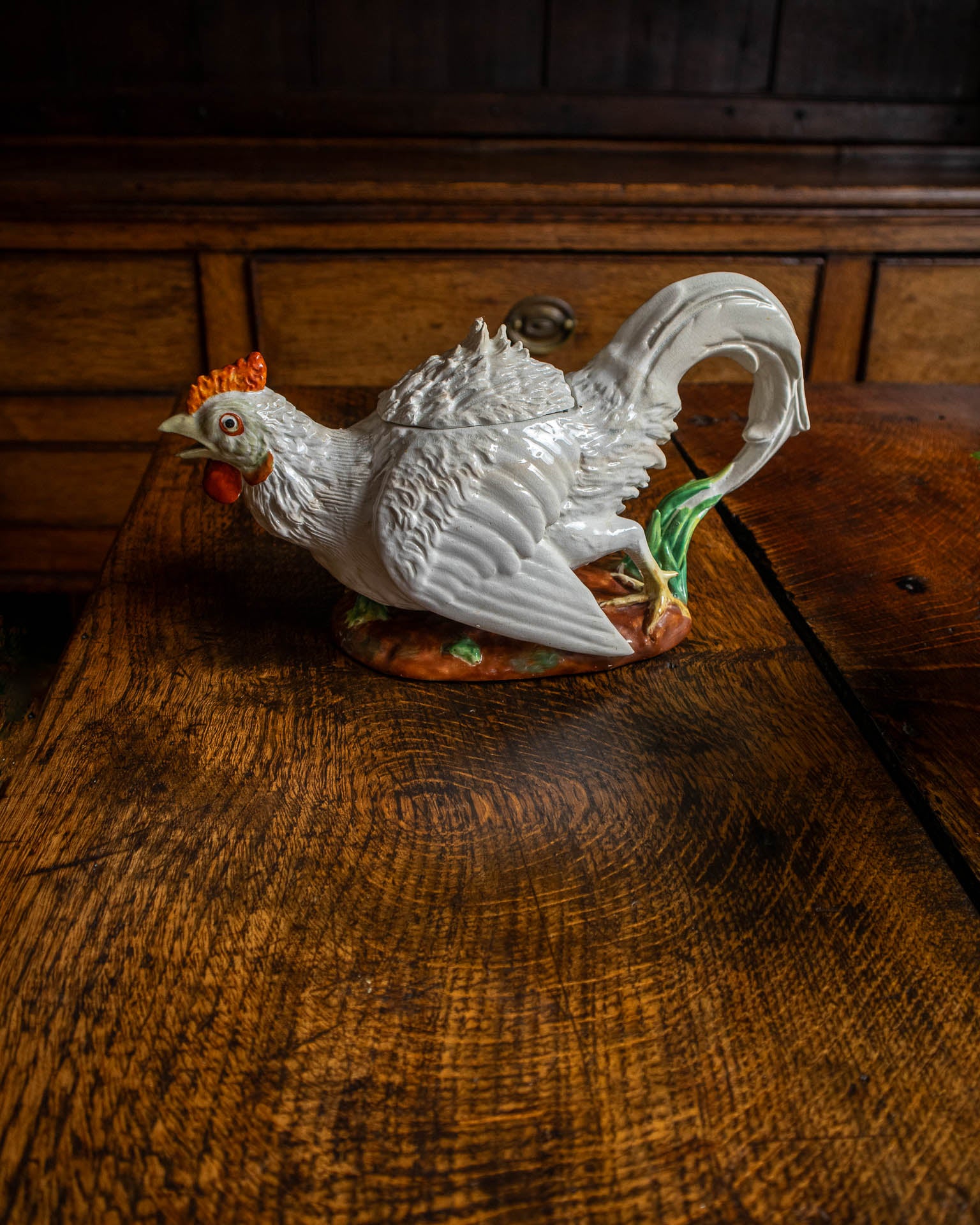
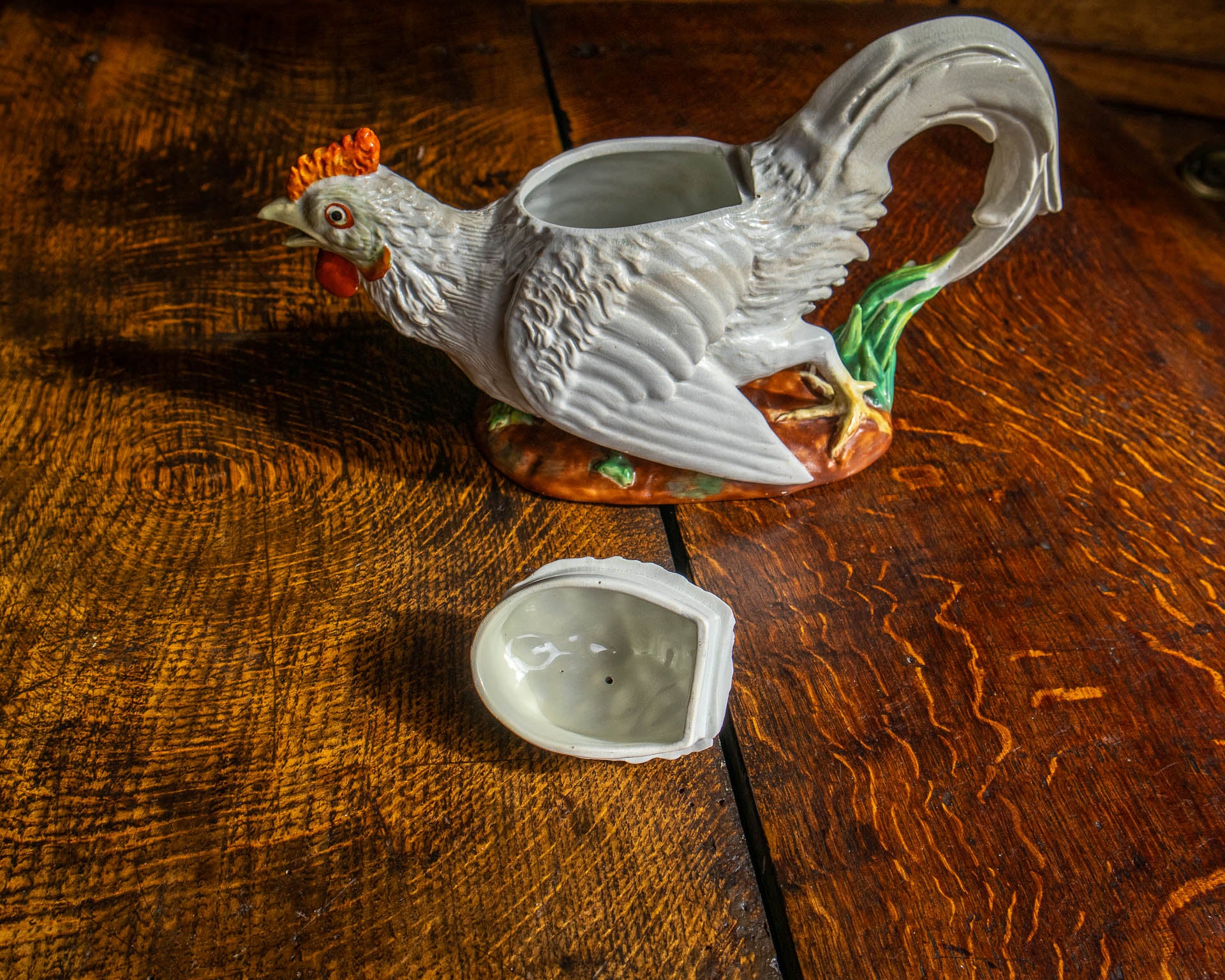
An exceptionally rare piece of George Jones majolica (see The Gen) in the form of a white rooster teapot. Occasionally these teapots are found in a brown glaze but very rarely white. The teapot is an exemplary example of the best of George Jones majolica.
The rooster is in an animated pose, crouching and crowing with a wide-open beak which forms the spout. The cox comb and wattle are picked out in red and there is great detailing in the modelling of the feathers. In true whimsy, that George Jones majolica is renowned for, the upswept tail feathers form the handle and finally it sits on an oval base in signature mottled green and brown glazes (see The Gen).
DIMENSIONS: Width 29 cm.
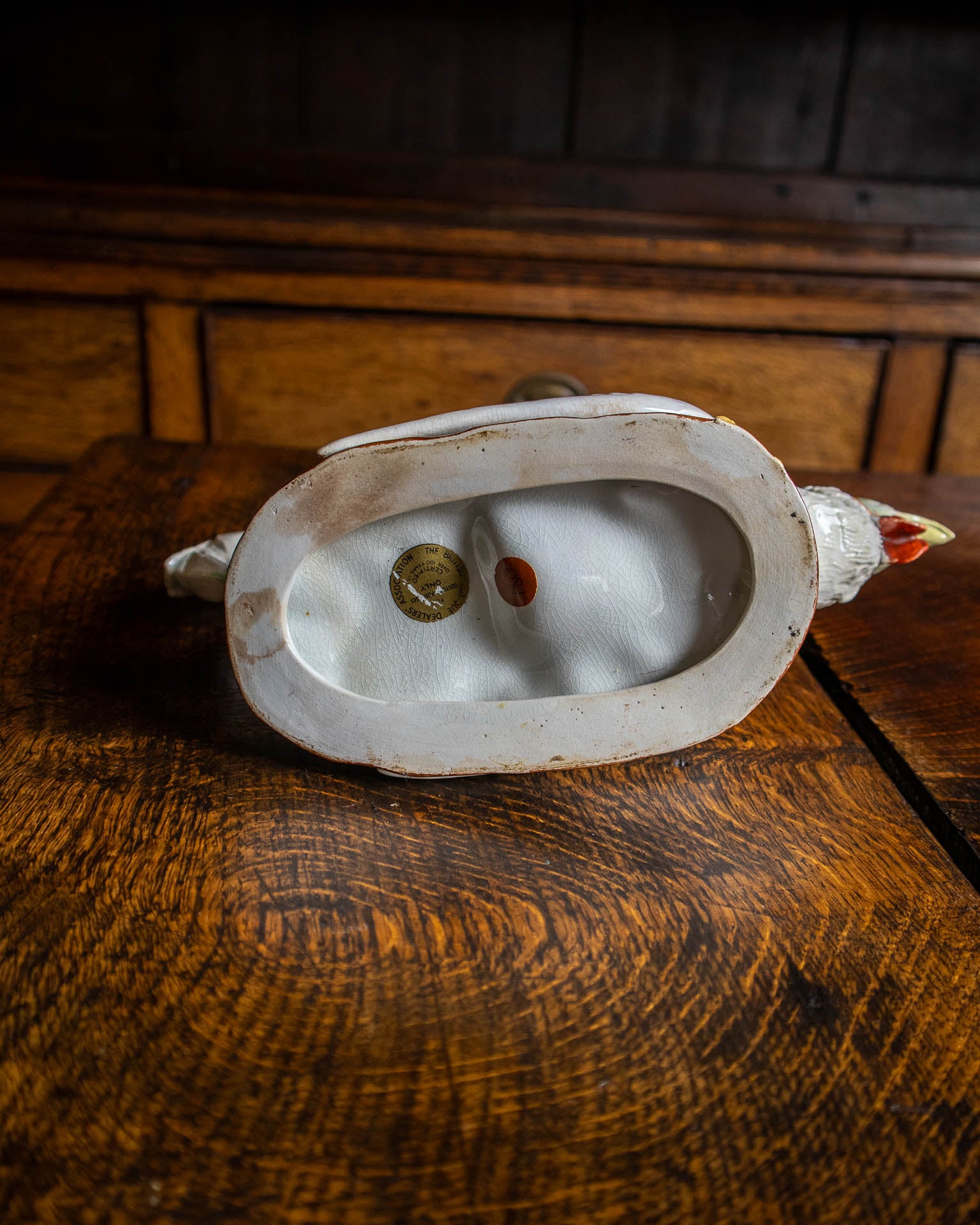
SIGNATURES, MARKINGS & INSCRIPTIONS: Unmarked. Not all pieces of George Jones were marked. “The company marks and the British registry mark were on the undersurface of some, but not all, Jones pieces.” Majolica: A Complete History and Illustrated Survey, Marilyn G. Karmason with Joan B. Stacke, Harry N. Abrams Inc., 1989, p. 101. There is a BADA authentication sticker on the base.
CONDITION: The teapot is in excellent condition, wear consistent with an antique age and use. There is no evident restoration.
REFERENCES: For an example of this extremely rare teapot in white glaze see Christie’s, 29 October 2002, Lot 197.
Book references for examples of the still rare, but more readily found, teapot in a brown colourway can be found in Majolica: British, Continental and America Wares, 1851–1915, Victoria Bergensen, Barrie & Jenkins Ltd, 1989, p. 77; and Majolica, Nicholas M. Dawes, Crown Publishers, 1990, p. 121; and Majolica: A Complete History and Illustrated Survey, Marilyn G. Karmason with Joan B. Stacke, Harry N. Abrams Inc., 1989, p. 93.
~~~~~~~~~~~
THE GEN
George Jones was known as an exceptional maker of quality majolica wares in the league of Minton and Wedgwood. However, what set him apart from the other potters was that he almost exclusively produced majolica wares with over 70 percent of his production in 1875 being ‘true majolica’. His talent was such that he exhibited at all the International Expositions held in the 19th Century including Paris (1867), London (1871), Vienna (1873) and Sydney (1876). George Jones was born in 1824 and died in 1893. He was apprenticed to Minton’s in the early 1850s. He established his own firm in 1861 and it ran until 1951, almost 90 years. George Jones was inspired perhaps by his son Horace, who studied at the South Kensington Art School, to be more creative in his designs and Horace worked as a designer and modeller from the mid 1870s.
“The versatility of George Jones’s designers is evident in the many whimsical models produced in majolica, which represent an inspired Victorian culture, unaffected at the conception stage by traditional or imposed guidelines upon design. These include the models that evoke a pun, the source of great amusement for Victorians ‘at home,’ notably the delightful ‘Punch’ bowl. Along with whimsy, George Jones’s majolica excels in the depiction of naturalistic motifs, especially common British birds, which have perhaps never found more sympathetic treatment in the history of decorative earthenware.” (Majolica, Nicholas M. Dawes, Crown Publishers, 1990, p. 115)
~~~~~~~~~~~
Would you like to know more about this piece?
Make an enquiry via email here.