



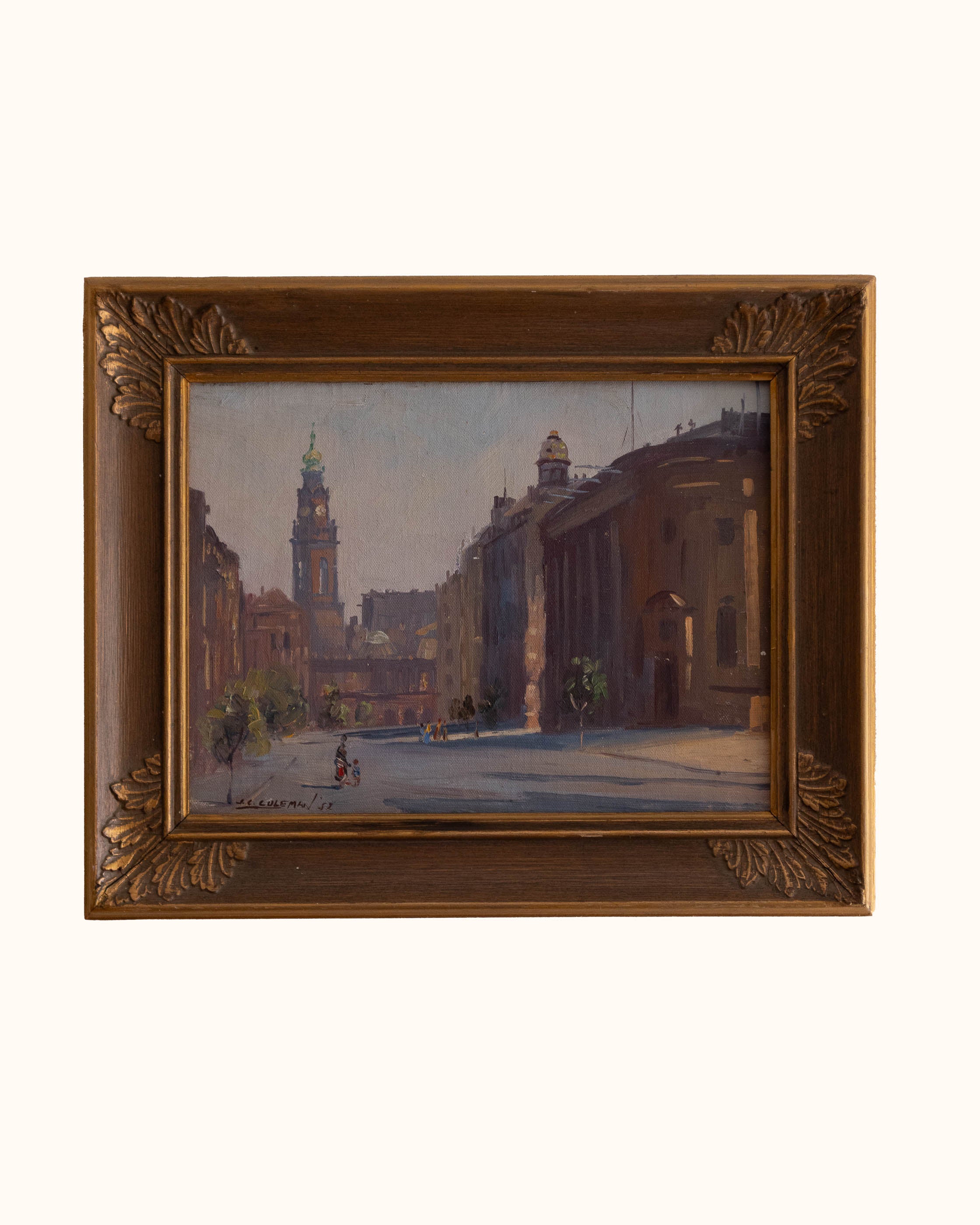
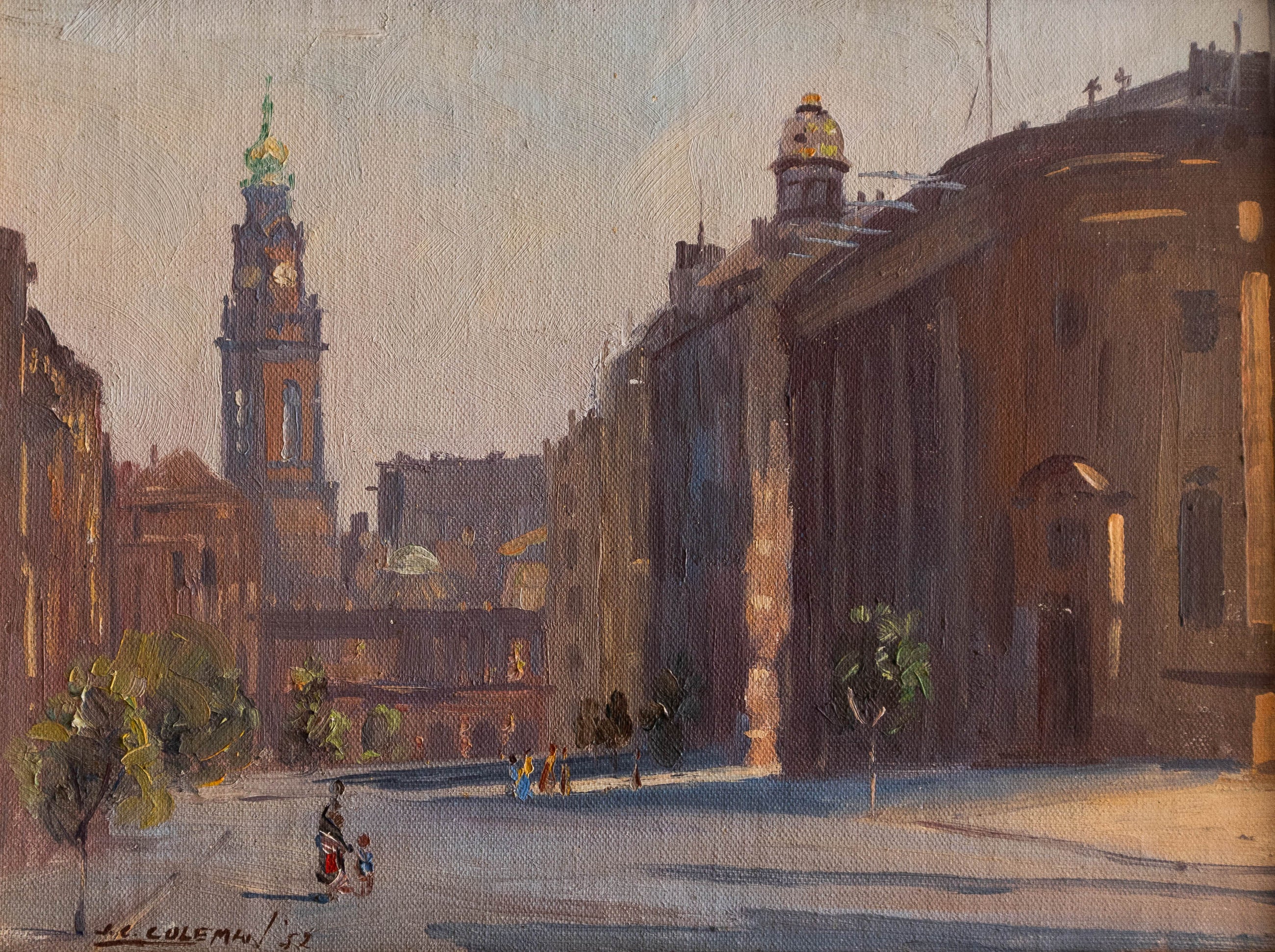
James Carson Coleman (1920–1976)
James Carson Coleman (1920–1976)
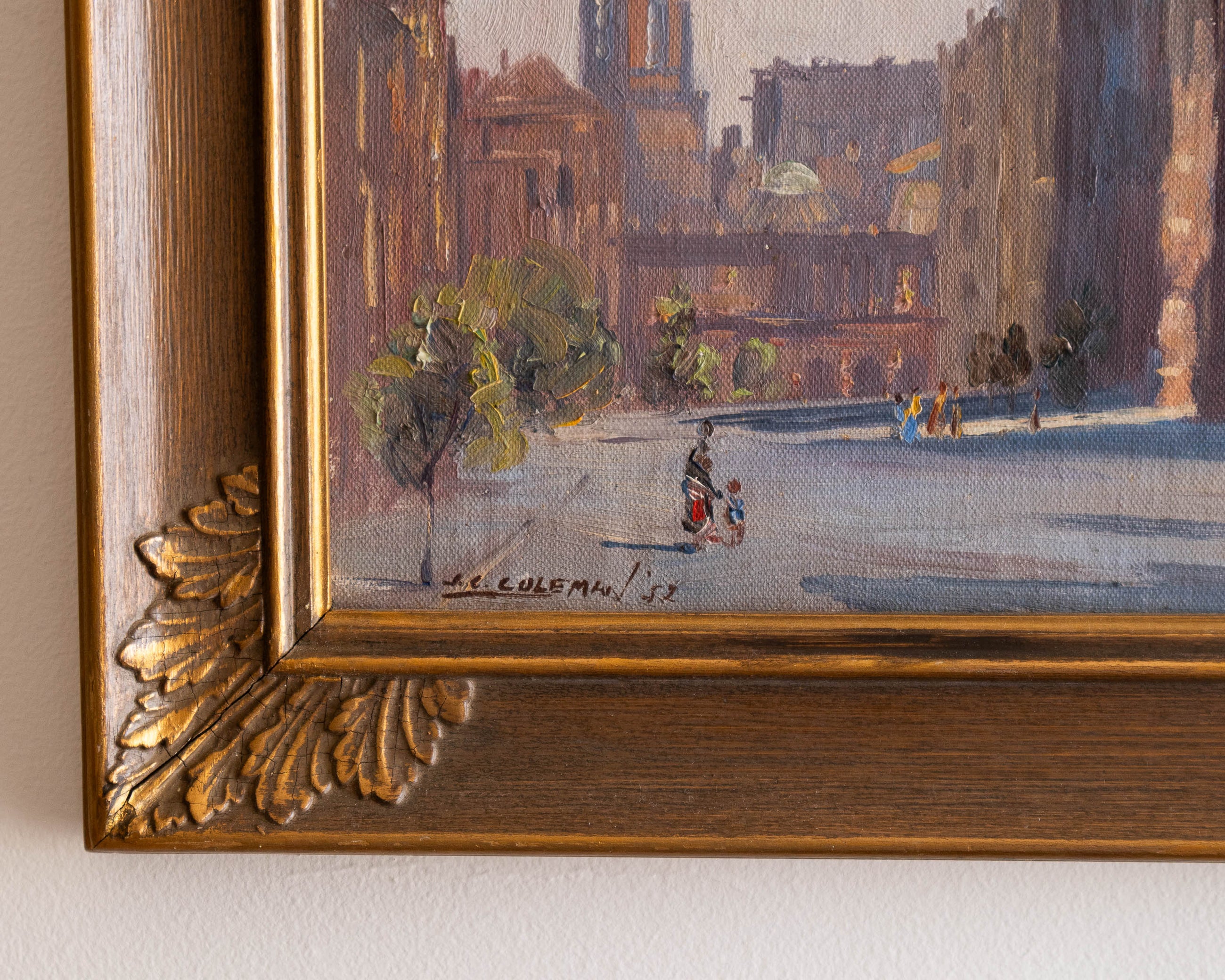
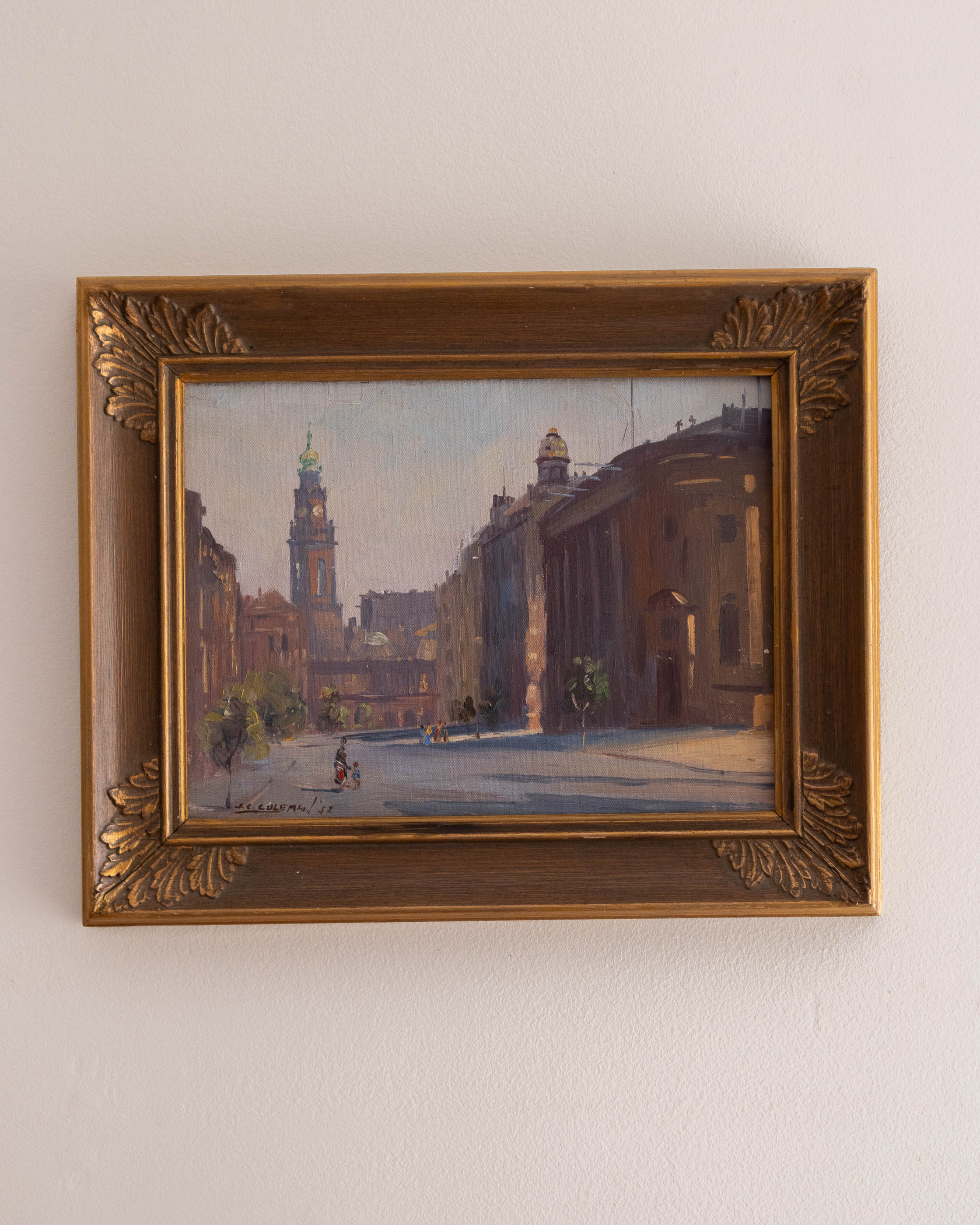
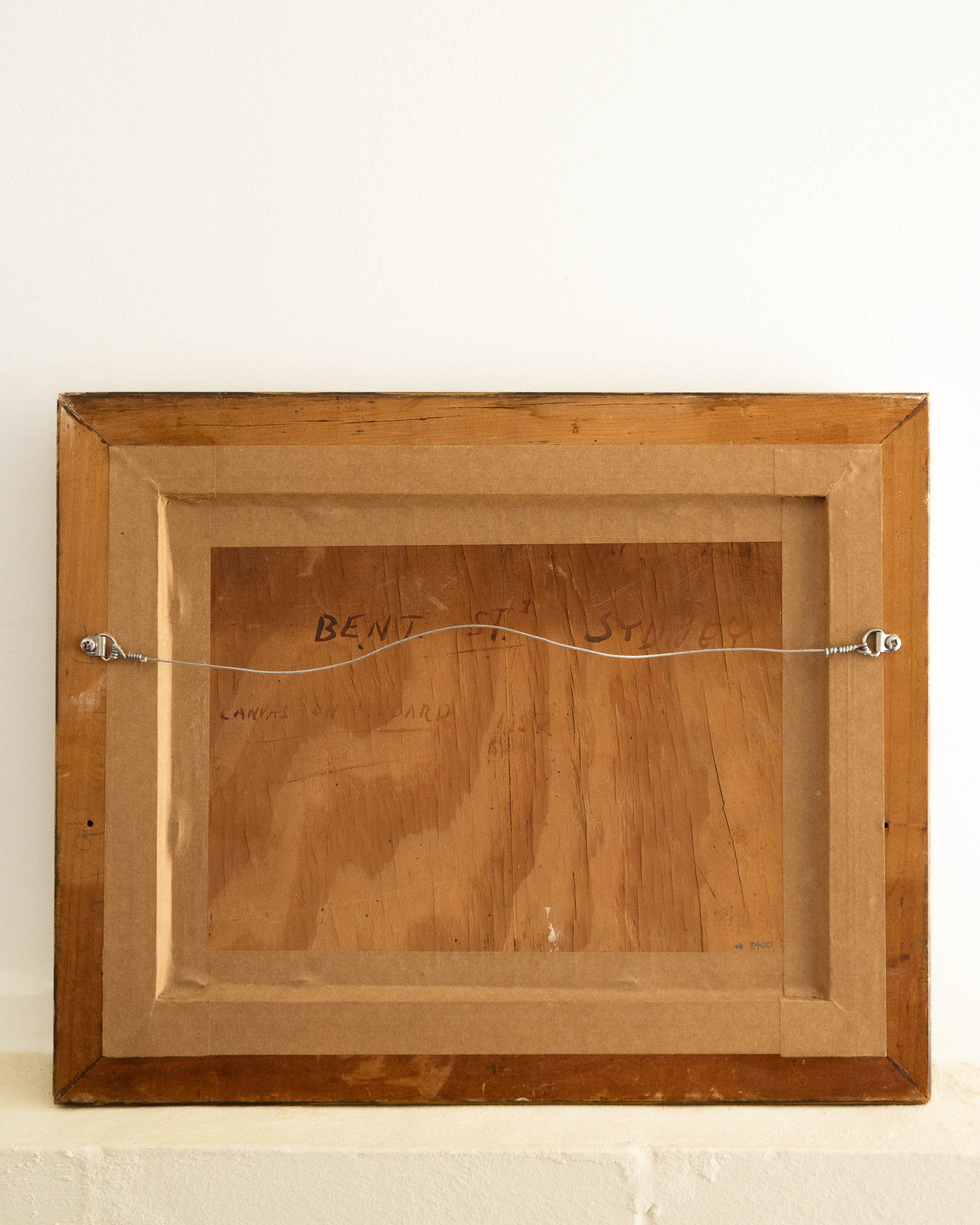
Bent Street Sydney, 1952
Oil on canvas on board
21.5 x 29 cm (frame 32.5 x 40 cm)
Signed and dated lower left, inscribed verso.
~~~~~~~~~~~
THE GEN
The Cycle of his Life, Taking to the Road to Live and Share Art
James Carson Coleman was born in Sydney in 1920. He became interested in paint and colour when he was apprenticed to a coach painter and began studies at the Sydney Art School in 1936. James studied landscape painting with James R. Jackson and Will Ashton and figure painting with Norman Lindsay. He was a member of the Australian Art Society, the North Shore Art Society and the Royal Art Society.
For almost ten years, James was both an artist and a champion cyclist. He painted during the day and at night he earned his living in track races: “Strange as it may seem, Jimmy Coleman is equally at home grasping the handle bars of a racing bike, or wielding a brush and a palette of oils. Tomorrow he will show 16 of his oils and pencil drawings at the Sydney Art Group exhibition at Blaxland Galleries, and on Wednesday night he will ride in a motor-paced race at the Sports Arena.” (Sun, 15 October 1945, p. 10) After becoming too tired to continue, James retired from racing in 1946 and then did odd jobs at night. By 1949, he was trying to manage financially on sales of his paintings alone. He lived with his family in a flat at Lyons Boatshed, The Spit in Sydney.
On more than one occasion, James jointly exhibited paintings with Jack Johnson. One of the exhibitions was held at Murdoch‘s Art Salon in October 1946 and was opened by Clive Evatt, Minister for Tourist Activities. James’ two-year-old daughter, Dianne, was present for the opening and joined in the applause. Another exhibition of 35 paintings was held at the Trocadero annexe in Grafton in May 1951. It was opened by the Mayor of Grafton, W.R. Weiley. The two artists were touring North Coast districts with their work and also visited Bellingen, Coffs Harbour, Macksville and Nambucca Heads. They showed school children around their exhibitions and gave them a lecture on Australian art.
Between 1943 and 1953, James had numerous landscapes accepted as entries in the prestigious Wynne Prize. The titles of some of the entries were: Morning Greys; Suburbia; Dredging off Clifton Gardens; Dee Why; Sunny Morning, Burragorang Valley; Cloud Shadows, French’s Forest; Captain’s Flat and After Rain, Windsor. He also exhibited his landscapes at David Jones’ Walk Gallery in 1952. The exhibition was opened by A.O. Romano. Kathryn Billings, who was visiting the Romano’s from California, bought a painting of Middle Harbour on the opening day. Other paintings in this exhibition included: Low Tide, Mosman Bay; The Pine Tree; Reflections in the Pond and The Cillian Crouch.
In September 1953 James and his wife, Dorothy, left Sydney for a twelve-month camping tour of Australia. They travelled, by panel van and trailer, up the North Coast of New South Wales to Queensland and then finished in Alice Springs. James painted landscapes in each district that they visited, held an exhibition and then moved onto another district. He also promoted art by giving lectures to community groups and clubs, local art societies and schools. Dorothy, formerly the deputy director of the Double Bay kindergarten, took care of the business side of the exhibitions.
The camping tour did not finish within the anticipated twelve months. James explained why the trip was extended for a couple of years: “We find you can interest people in art by way of the local view. People are drawn not only by good paintings, but also by their local theme. That has been our difficulty … we arrive in a town to spend a week and finish up spending a month or so.” (South Coast News, 18 September 1954, p. 7)
James and Dorothy divorced in 1961. He later remarried to Margaret. In 1964, James completed 65 portraits. He also entered a portrait of Port Lincoln’s Mayor, P.L. Puckridge, in the Archibald Prize. James stayed in Port Lincoln with his wife and four children for two months. The family travelled in two station wagons and two caravans: “The Coleman menage is an unusual one. They travel throughout Australia, living in their caravans, while artist Coleman paints. Mr. Coleman has been ‘on the road’ for 20 years. His address is where he pulls up the caravans. The family travel about 30,000 miles a year. They have covered most of Australia.” (Port Lincoln Times, 19 November 1964, p. 1) In 1972, the family settled in Brisbane and later moved to Maroochydore.
James died from cancer in 1976, aged 55 years, and was interred at Buderim Cemetery. He was survived by his wife, Margaret, and his children: Dianne, Louise, Anne, Jill, James, Peter and Simon. “The painter’s main idea as I see it is to pass through life attempting to create things which may be interesting, or beautiful and which he leaves behind for you, and those who come after you, to enjoy.” (Kyogle Examiner, 22 June 1954, p. 1)
© 2026 Georgegen. All rights reserved.
~~~~~~~~~~~
Would you like more information?
Make an enquiry via email here.
All delivery costs are calculated by the size and weight of the items in your order and confirmed at checkout. All items are sent with a fully insured service. See our full shipping policy here.
~~~~~~~~~~~
Australian Delivery
Charges start at $19, with delivery taking 3 to 5 business days.
~~~~~~~~~~~
International Delivery
Is available on most items, with charges automatically calculated in the cart, except for fine art where a custom quote can be requested.
~~~~~~~~~~~
Returns
Items may be returned for a full refund. More information and full details can be found here.
