Victorian
Circa second half 19th century | England
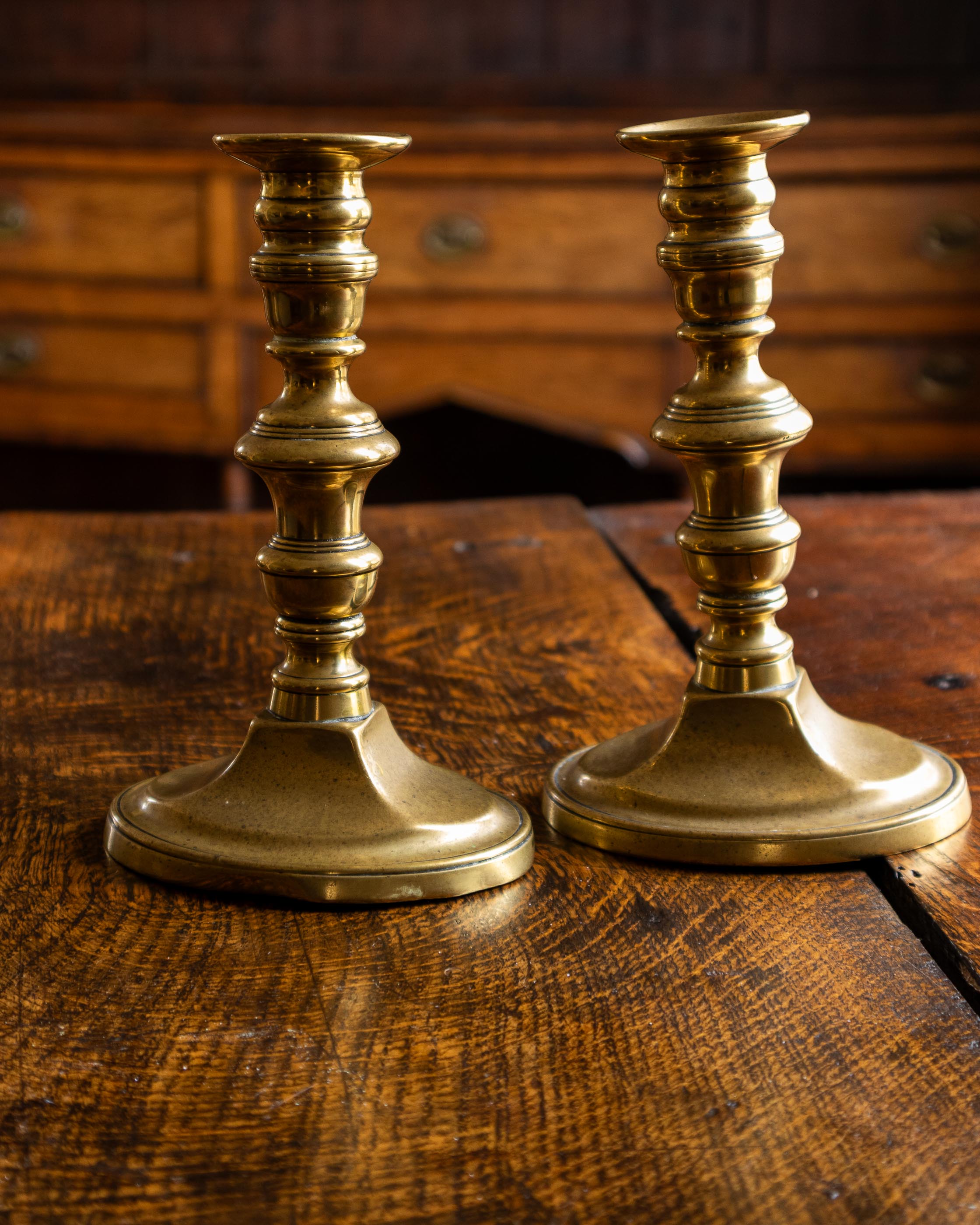
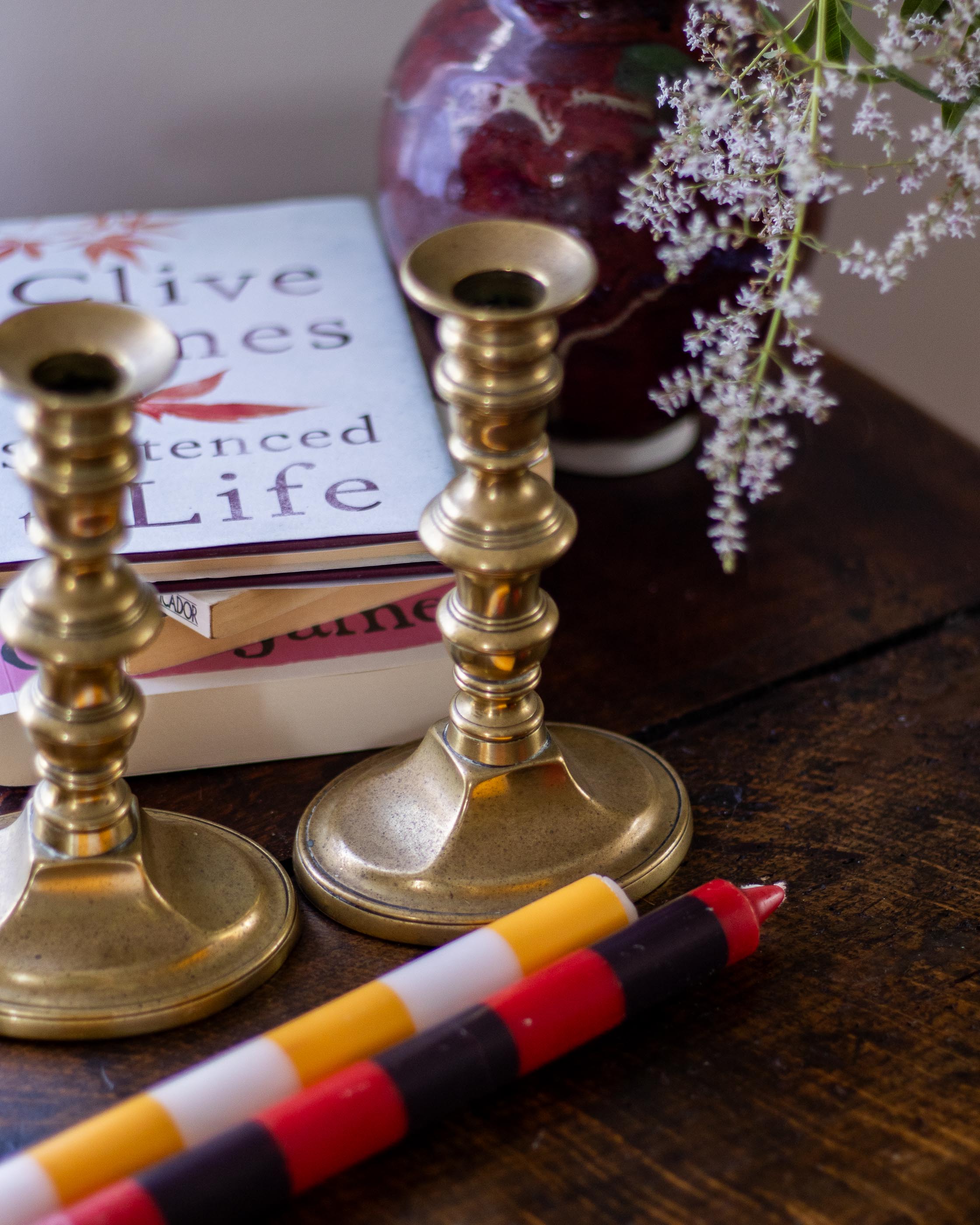
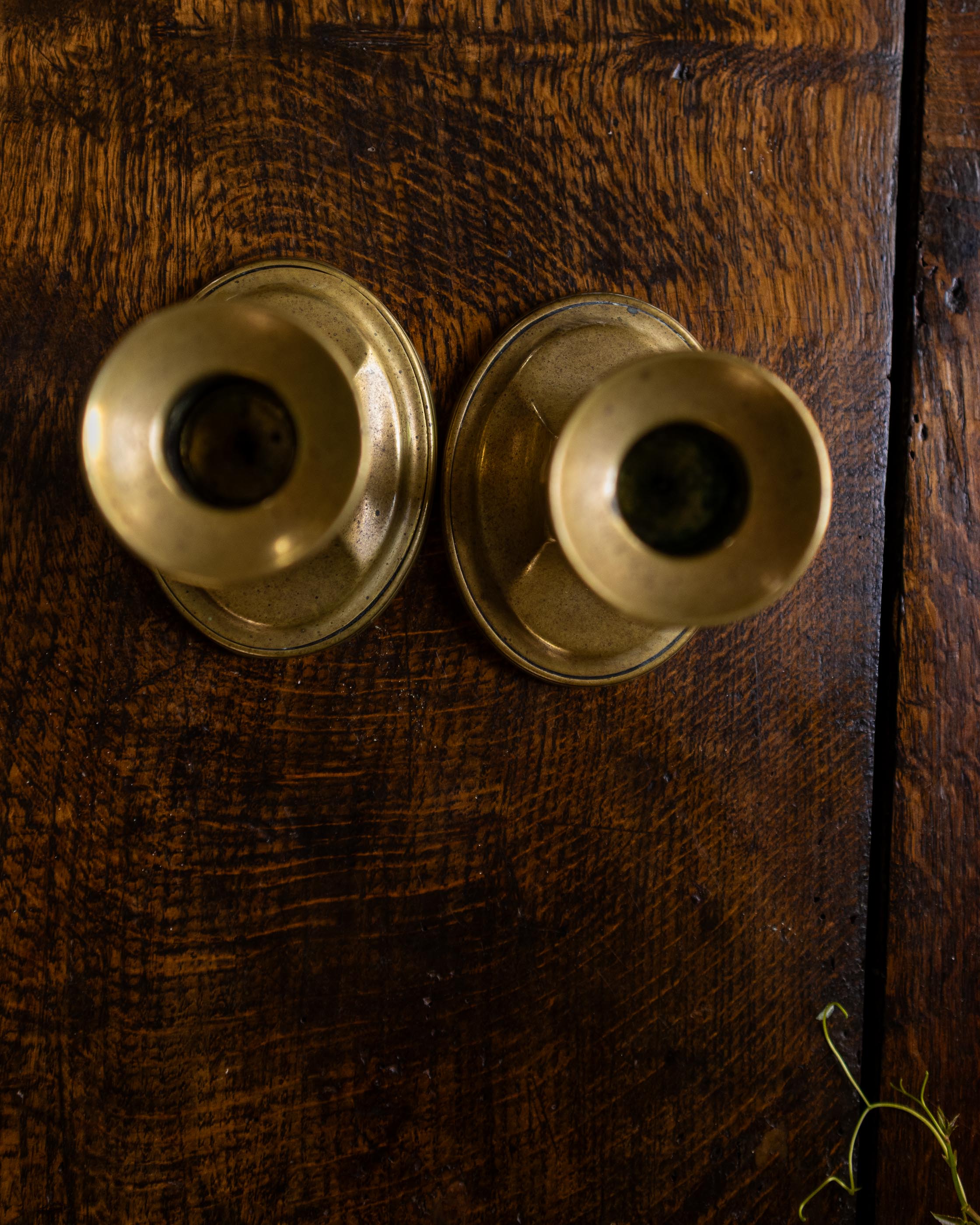
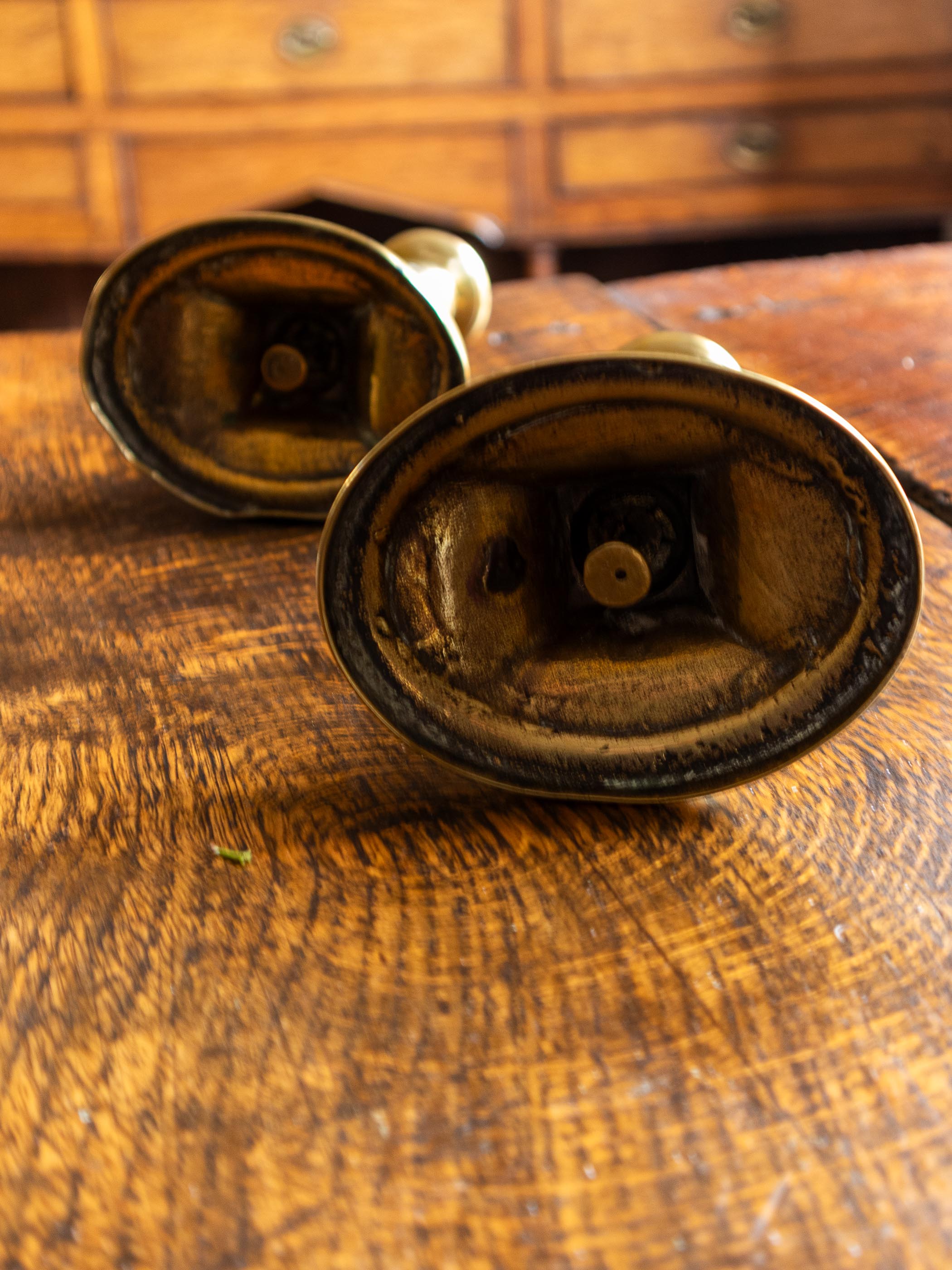
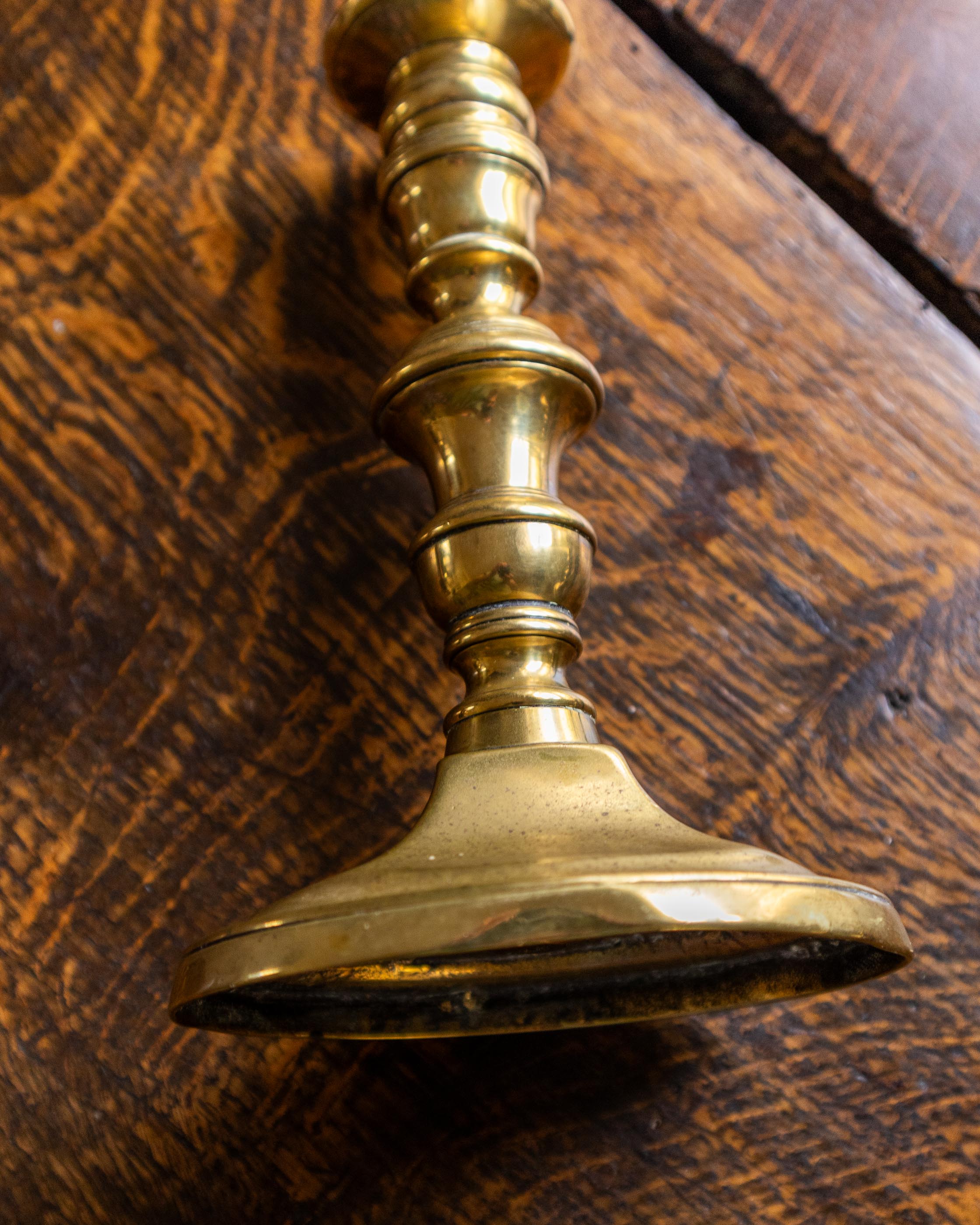
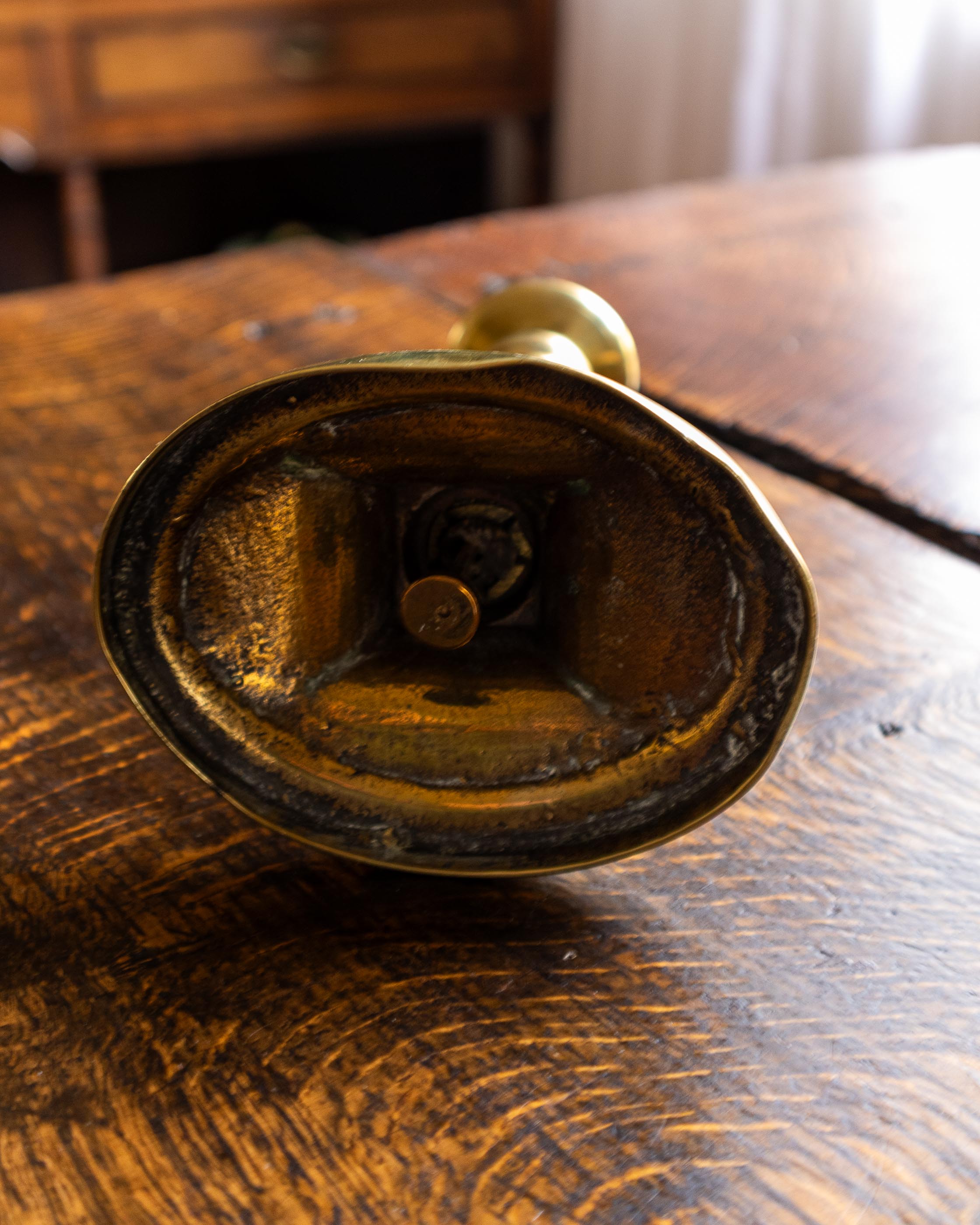
An antique nineteenth century pair of brass candlesticks (see The Gen) with multi-knopped baluster stems on a raised ring decorated oval foot. Inside the foot of each a raiser rod can be found.
DIMENSIONS: Height 18 cm.
CONDITION: In very good condition, wear consistent with an antique age and use. The base of one candlestick has a dent, however the candlestick still stands proud. The brass has a lovely warm patina created by many years of handling and looks wonderful when a candle is lit. No evident restoration.
REFERENCES: For examples of similar candlesticks see Collecting Antique Copper & Brass, Peter Hornsby, Moorland Publishing Company, 1989, pp 64–65.
~~~~~~~~~~~
THE GEN
“Brass candlesticks have been made in the familiar socket form from at least the 14th century. Up to the end of the 17th century, when the vogue for silver began, brass candlesticks had been developing in styles of their own. But at that time silver styles were imitated in brass and other materials. However, a certain amount of individuality remained and, unlike silver sticks, brass candlesticks were rarely ornamented beyond the shapes of the mouldings or modest beading and fluting. Moreover, the simple straight cylindrical stems, a type found largely in brass, continued to be produced during the 18th and 19th centuries. As the candlestick developed during the 15th century, the stem was elaborated by the addition of mouldings or knops—probably to catch the candle wax—and the base deepened for the same purpose. Early in the 16th century a separate wax-pan appeared part way up the stem and by the 17th century this was in common use. Towards the end of that century, however, the wax-pan took up a position at the nozzle where it remained from then on, either as a flange on the nozzle or a detachable drip-pan … The most influential 18th century silver designs on brass candlesticks were the simple baluster shapes of the early-Georgian period with small bulges along the stem and pretty lobed bases and flanges and the more austere neo-classical Adam period late in the century, featuring classical columns and elongated vase shapes … In the 19th century, brass candlesticks developed round, oblong and small square bases and an infinite variety of knop shapes along the stems. The overall tendency was towards thicker, heavier looking candlesticks.” (Candlesticks, Deborah Stratton, Pitman, 1976, p. 46)
~~~~~~~~~~~
Would you like to know more about this piece?
Make an enquiry via email here.