Victorian
Circa 1880–1890 | France
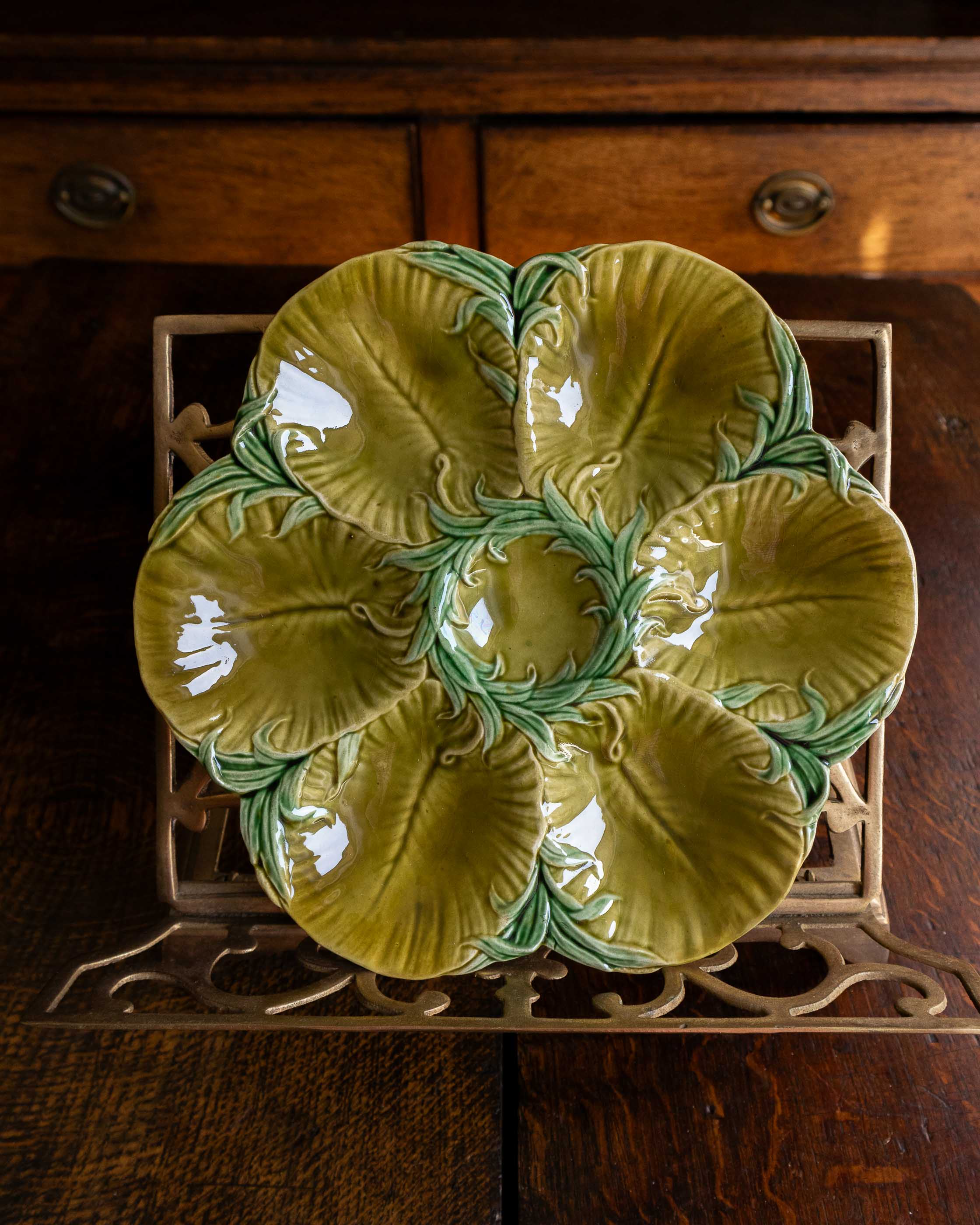
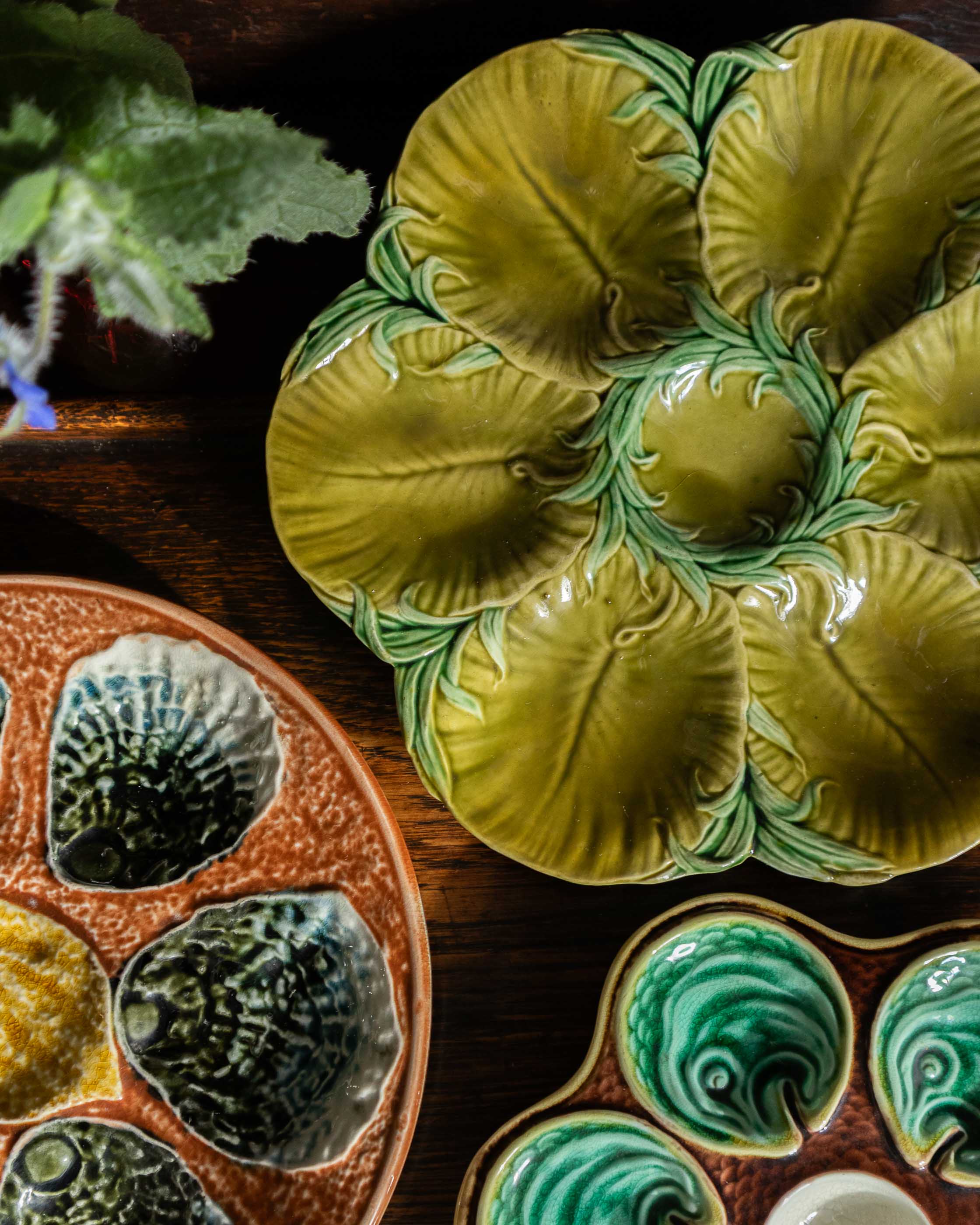
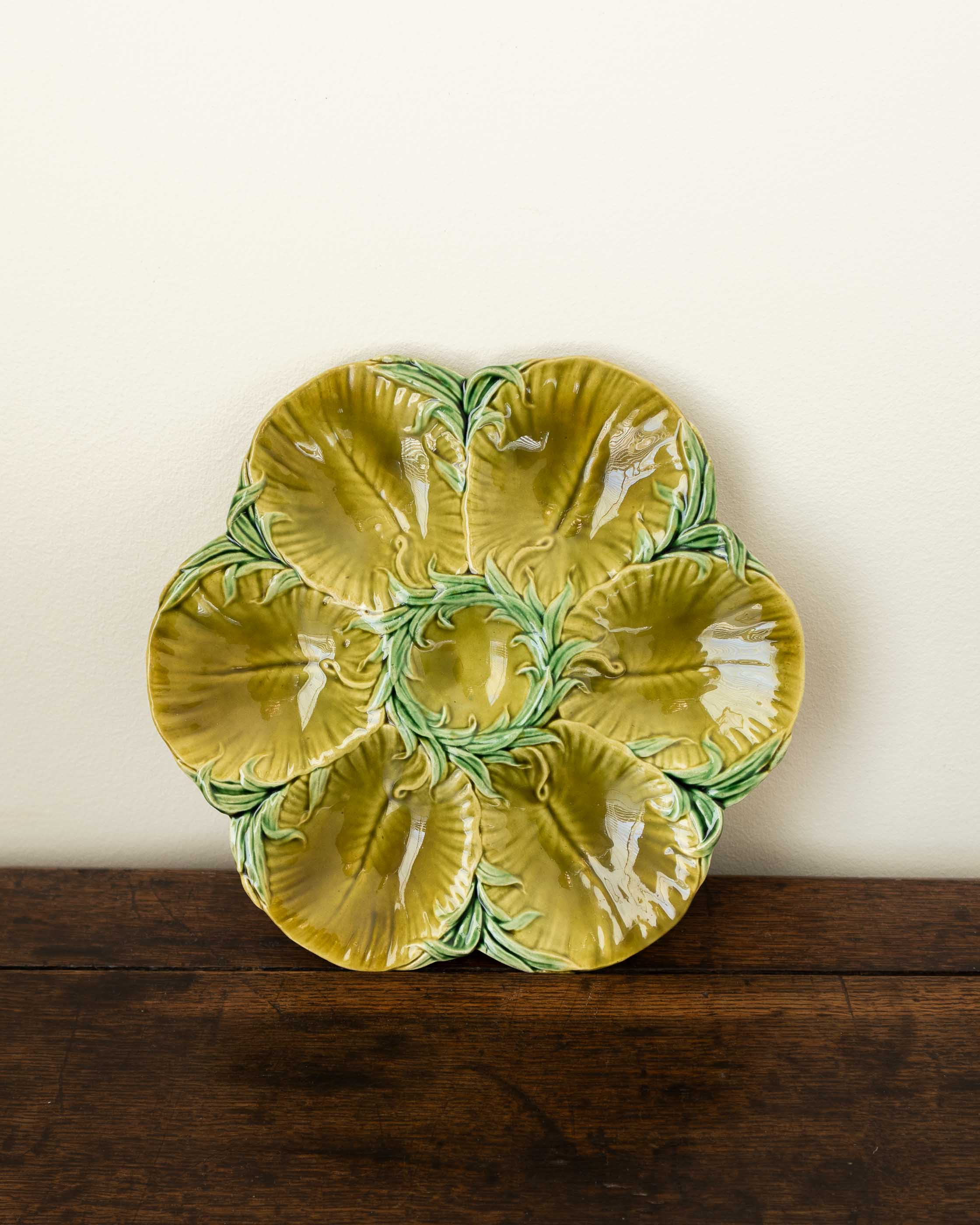
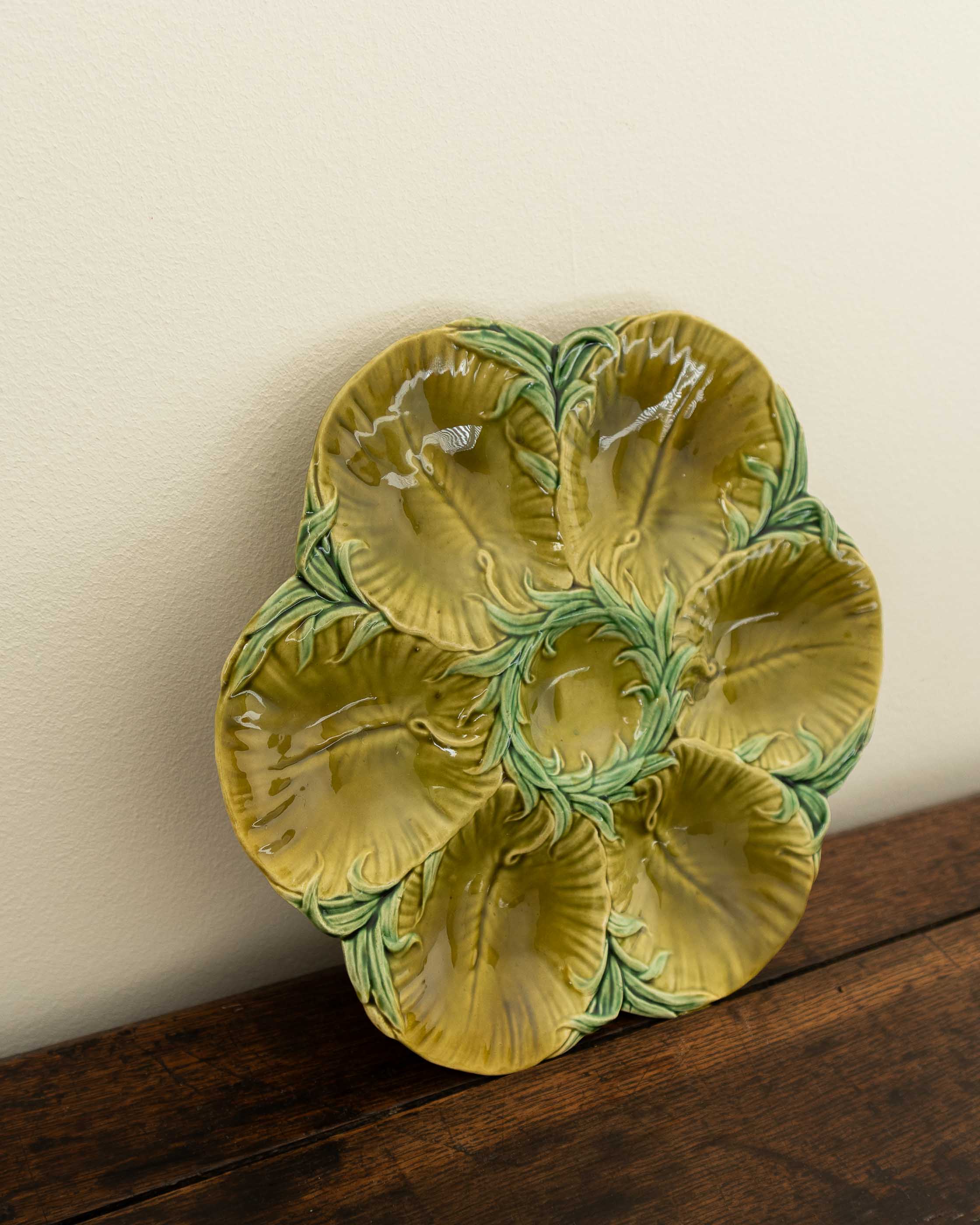
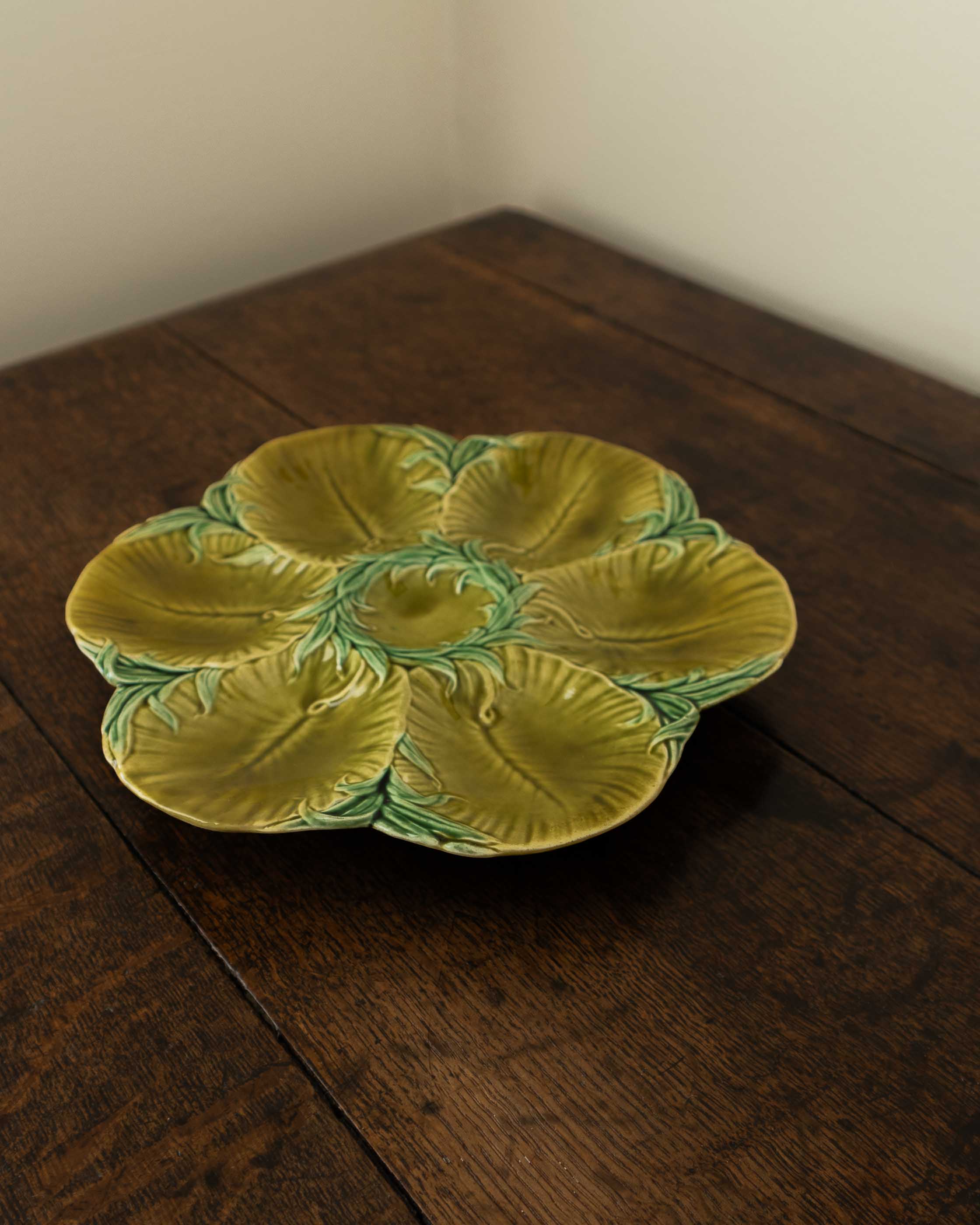
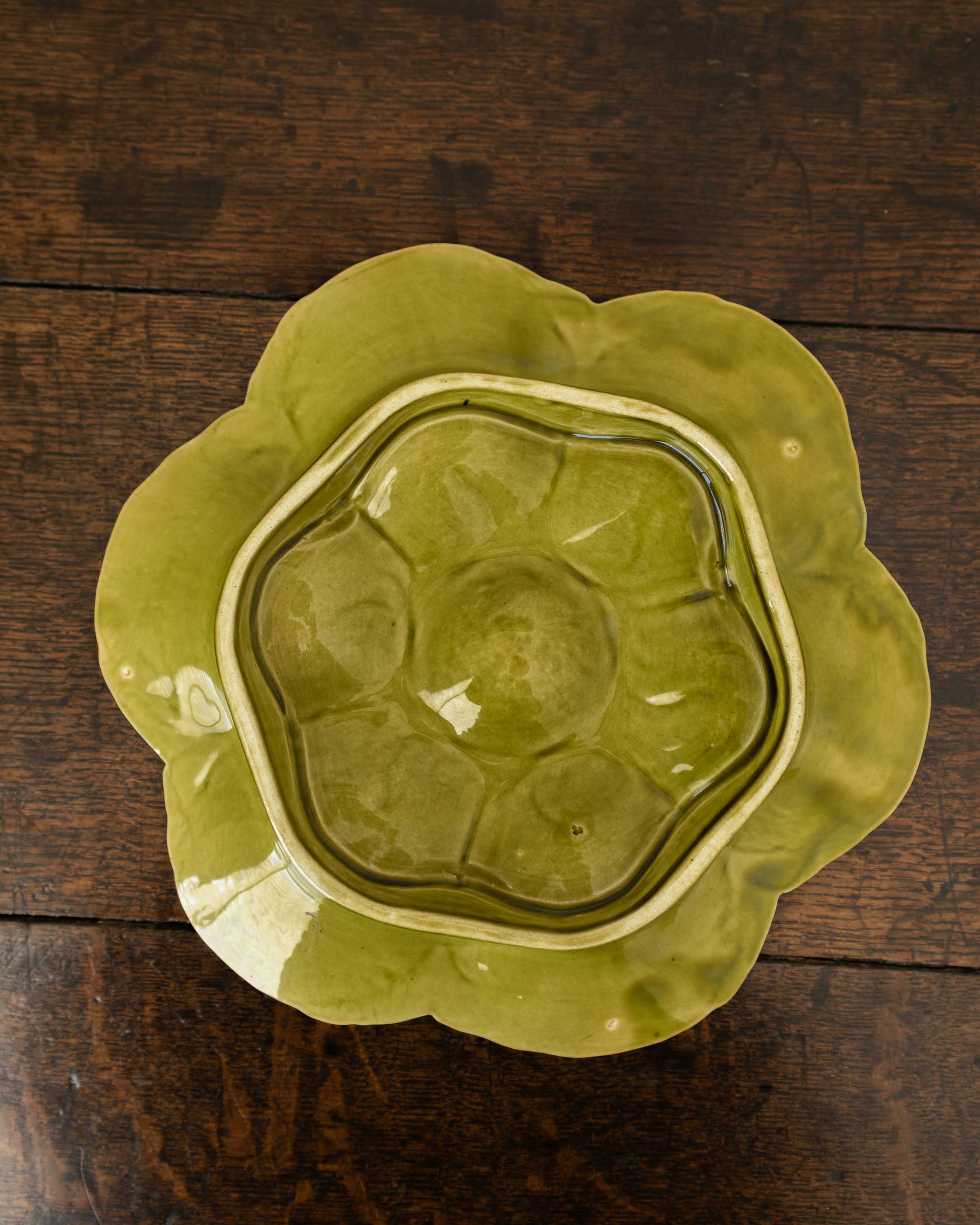
A rare and highly covetable antique nineteenth century French majolica oyster plate made at Luneville by Keller and Guerin. Coloured in beautiful naturalistic greens (see The Gen) with six green oyster shaped wells, and a seaweed and rope edge. An oyster plate as popular today as it was when it was first made (see The Gen).
DIMENSIONS: Diameter 22.3 cm.
SIGNATURES, MARKINGS & INSCRIPTIONS: Unmarked.
CONDITION: The plate is in excellent condition with wear consistent with an antique age and use. There is no evident restoration.
REFERENCES: For an example of a similar plate see Oyster Plates, Vivian & Jim Karsnitz, Schiffer Publishing Limited, 1993, p. 43.
~~~~~~~~~~~
THE GEN
“Jacques Chambrette established the first faience pottery factory in the town of Luneville, France, in 1728. The artistry and quality of ware produced at the Luneville plant was high from the start, and the company’s ware was much sought after by the local elite. The staffs’ efforts were rewarded in 1748 by the Duke of Lorraine, who granted the Luneville plant the patent title ‘Manufacture Royale de Faience’. The firm of Keller and Guerin (c. 1790–1892) produced a small amount of majolica at the historic Luneville works. The majolica used brilliant colors, heavy in blues and greens.” (Collecting Oyster Plates, Jeffrey B. Snyder, Schiffer Publishing, 2002, p. 131)
“A formal evening meal often began with a soup course or with oysters on the half shell, which were served on specially designed plates. A wide range of wares was manufactured to present this ubiquitous shellfish at the table, from ceramic representations of wooden oyster barrels to stands for open shells. Most majolica oyster plates feature between five and seven wells for the oysters and a central well for sauce or a lemon.” (Majolica Mania: Transatlantic Pottery in England and the United States, 1850–1915, Susan Webber (ed.), Bard Centre and Yale University Press, 2021, p. 114)
~~~~~~~~~~~
Would you like to know more about this piece?
Make an enquiry via email here.