Victorian
Circa 19th Century | Continental
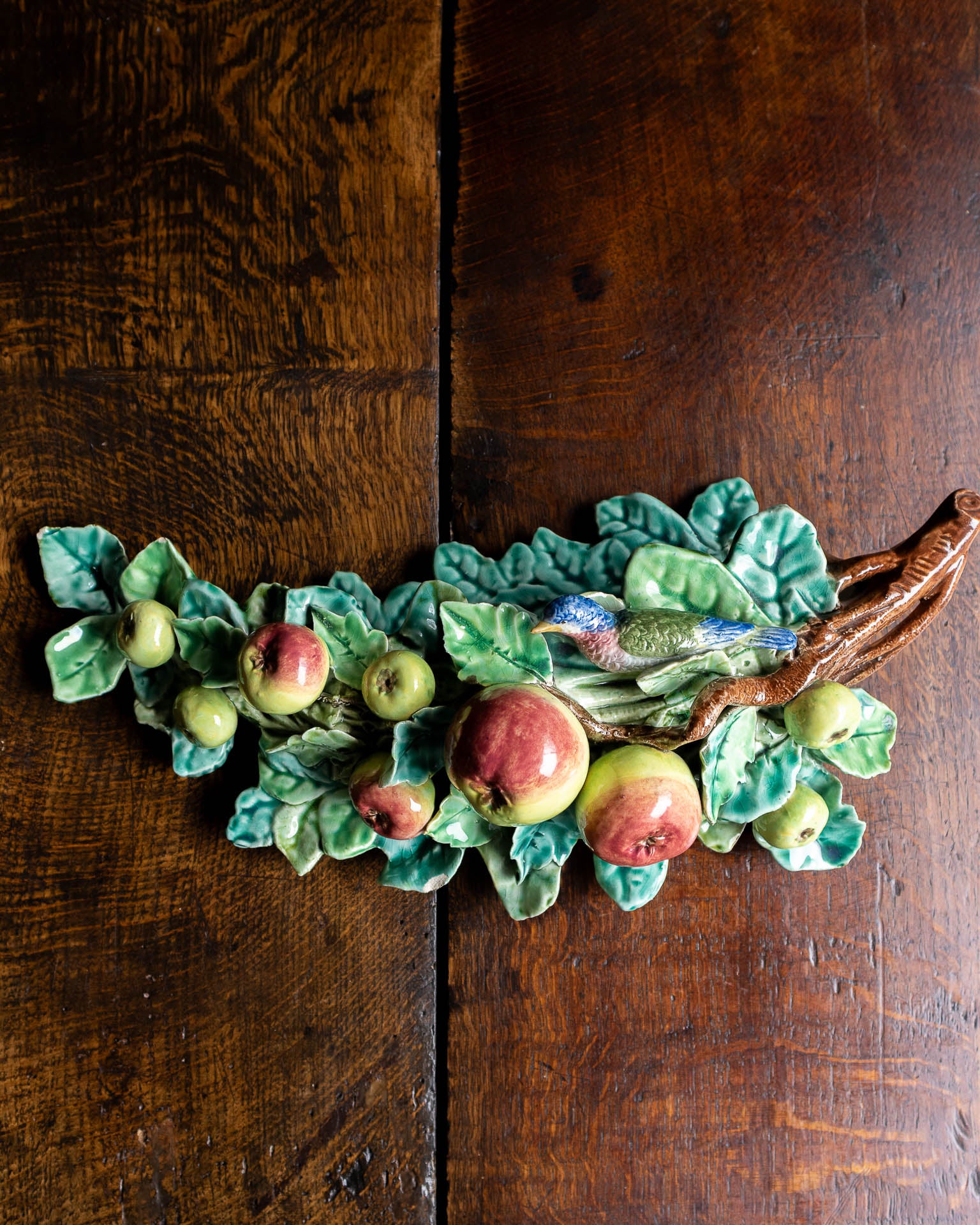
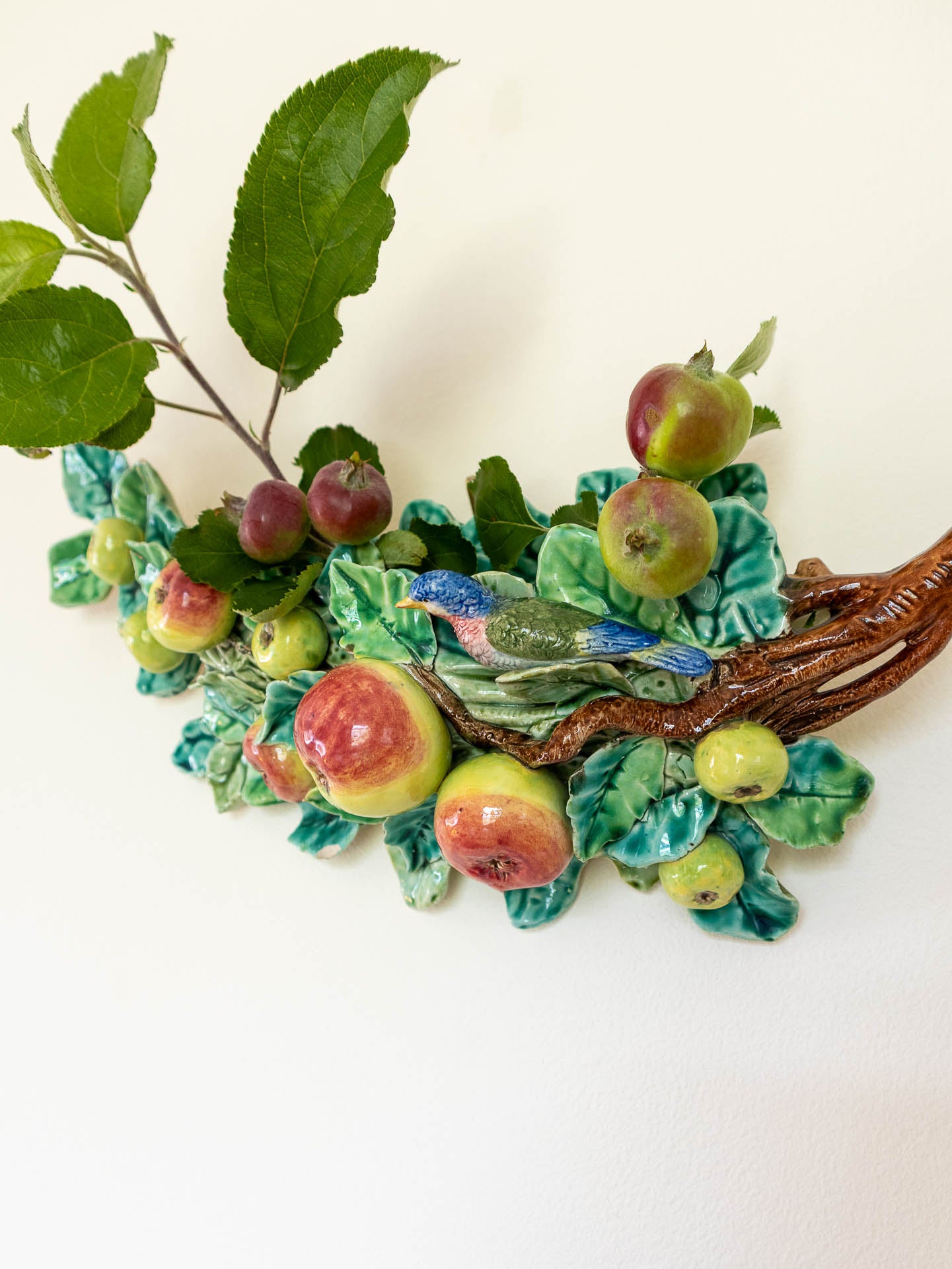
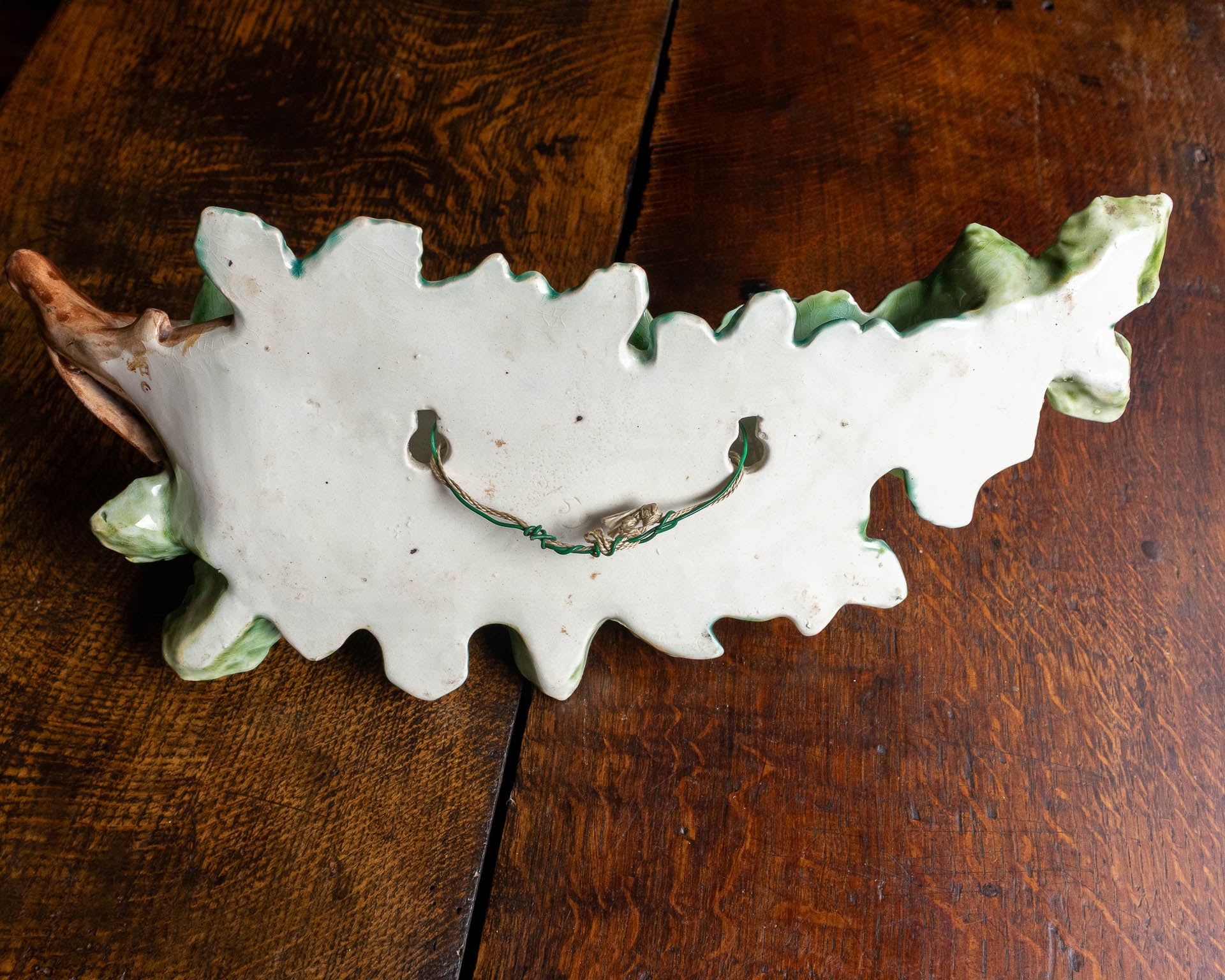
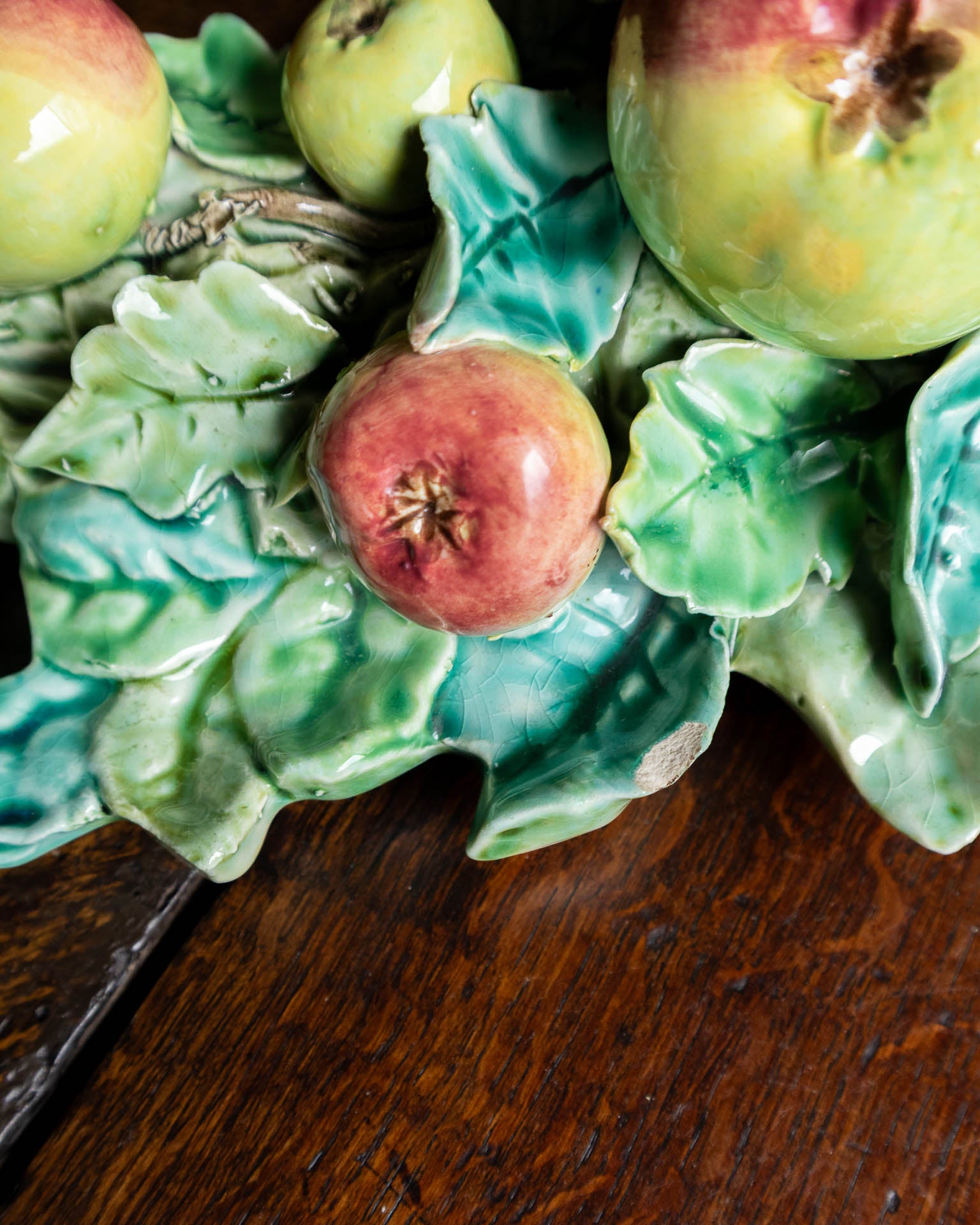
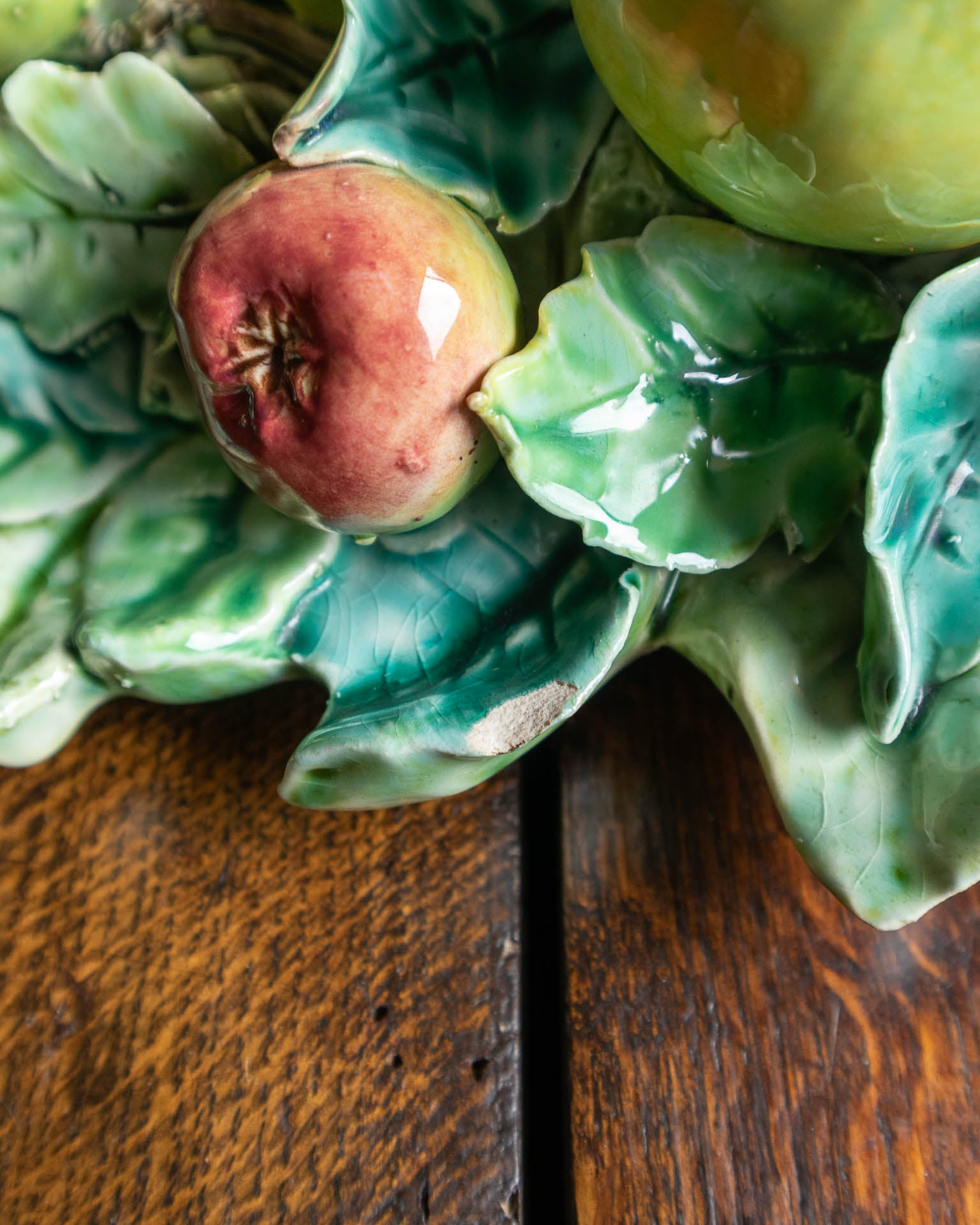
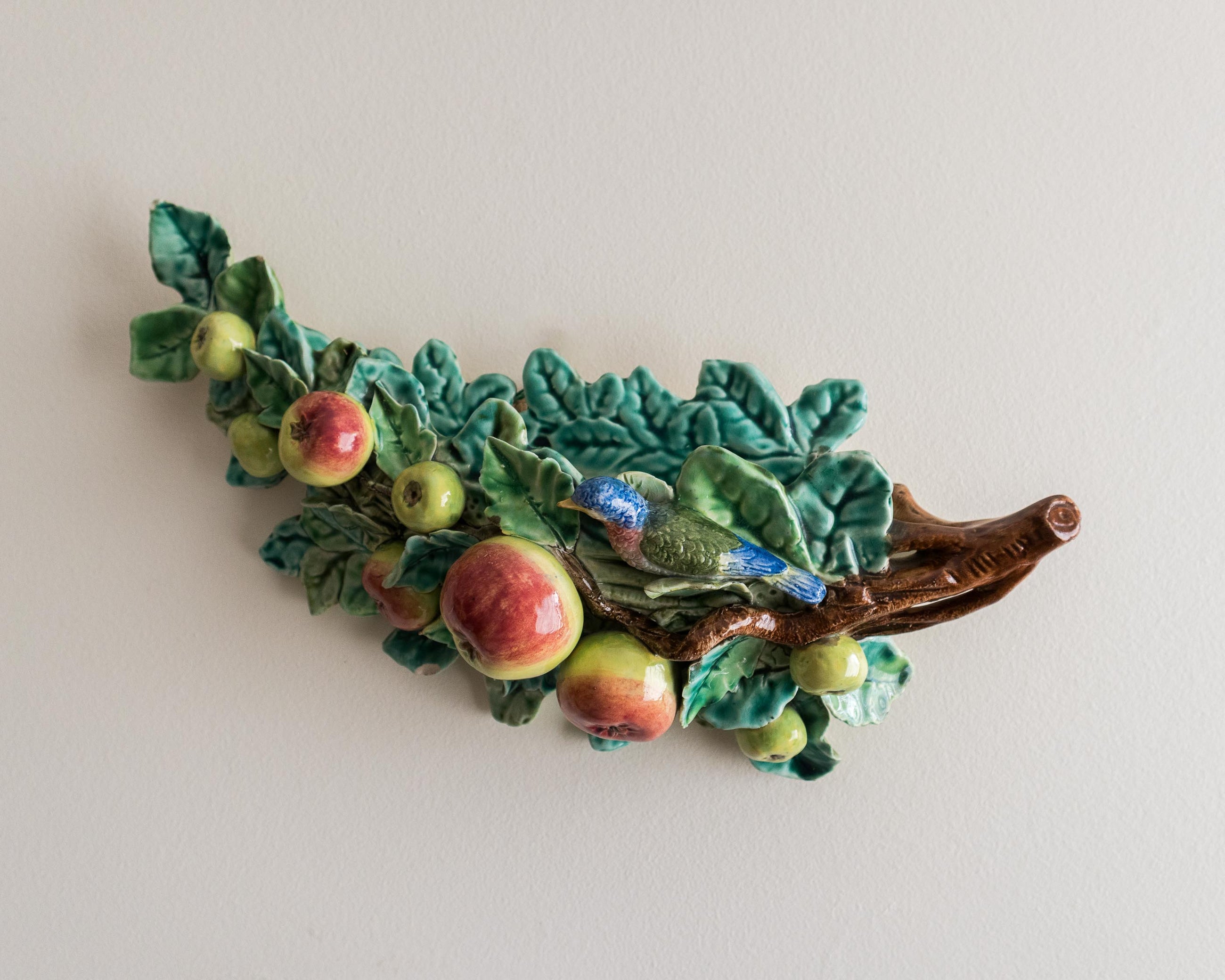
An antique nineteenth century majolica wall pocket (see The Gen). The delightful trompe l’oeil majolica wall pocket is modelled as a branch of an apple tree, naturistically styled in high relief, with a bird perched within the branch; an exceptional example of the best of Victorian majolica.
DIMENSIONS: Length 40 cm, Width 17 cm.
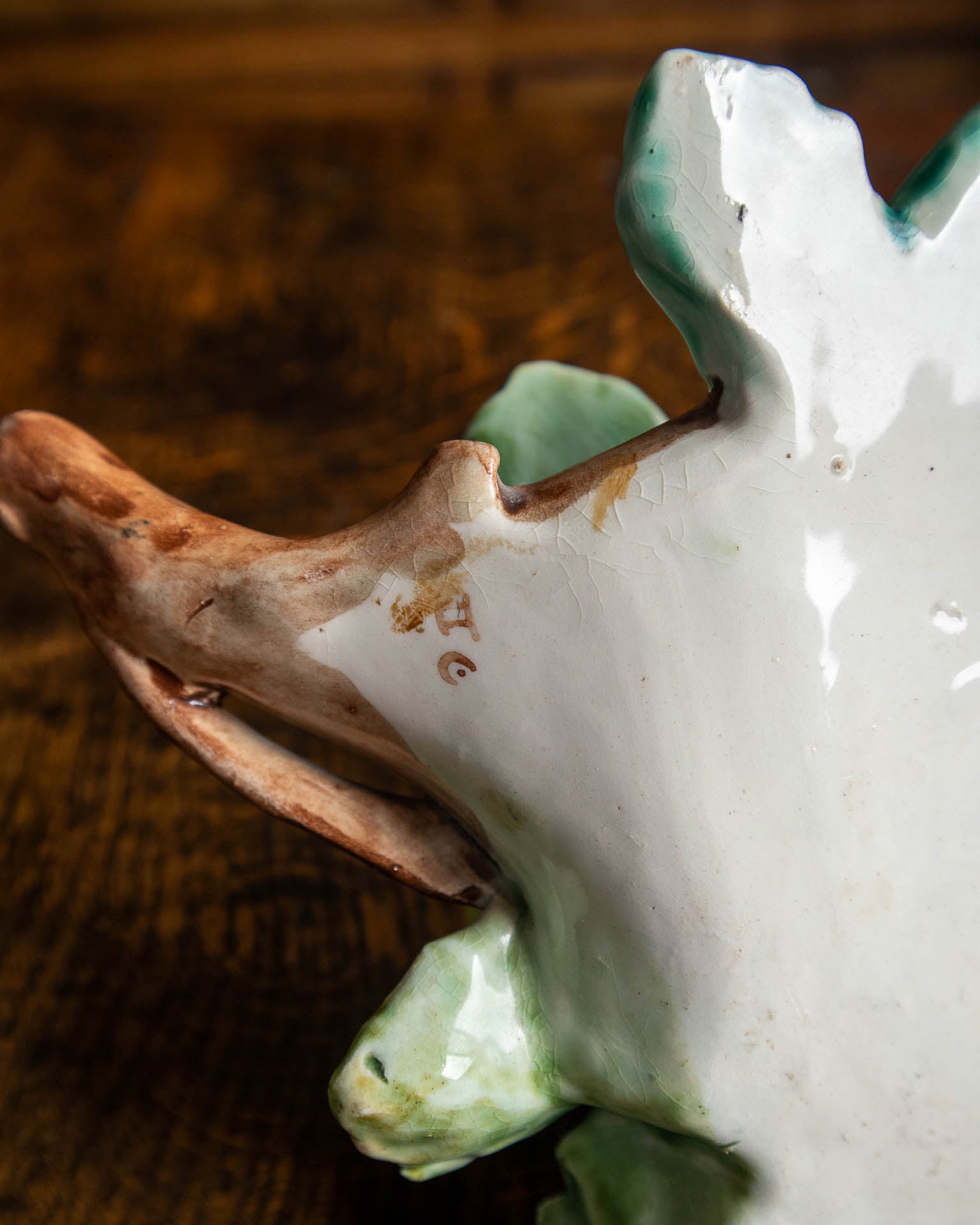
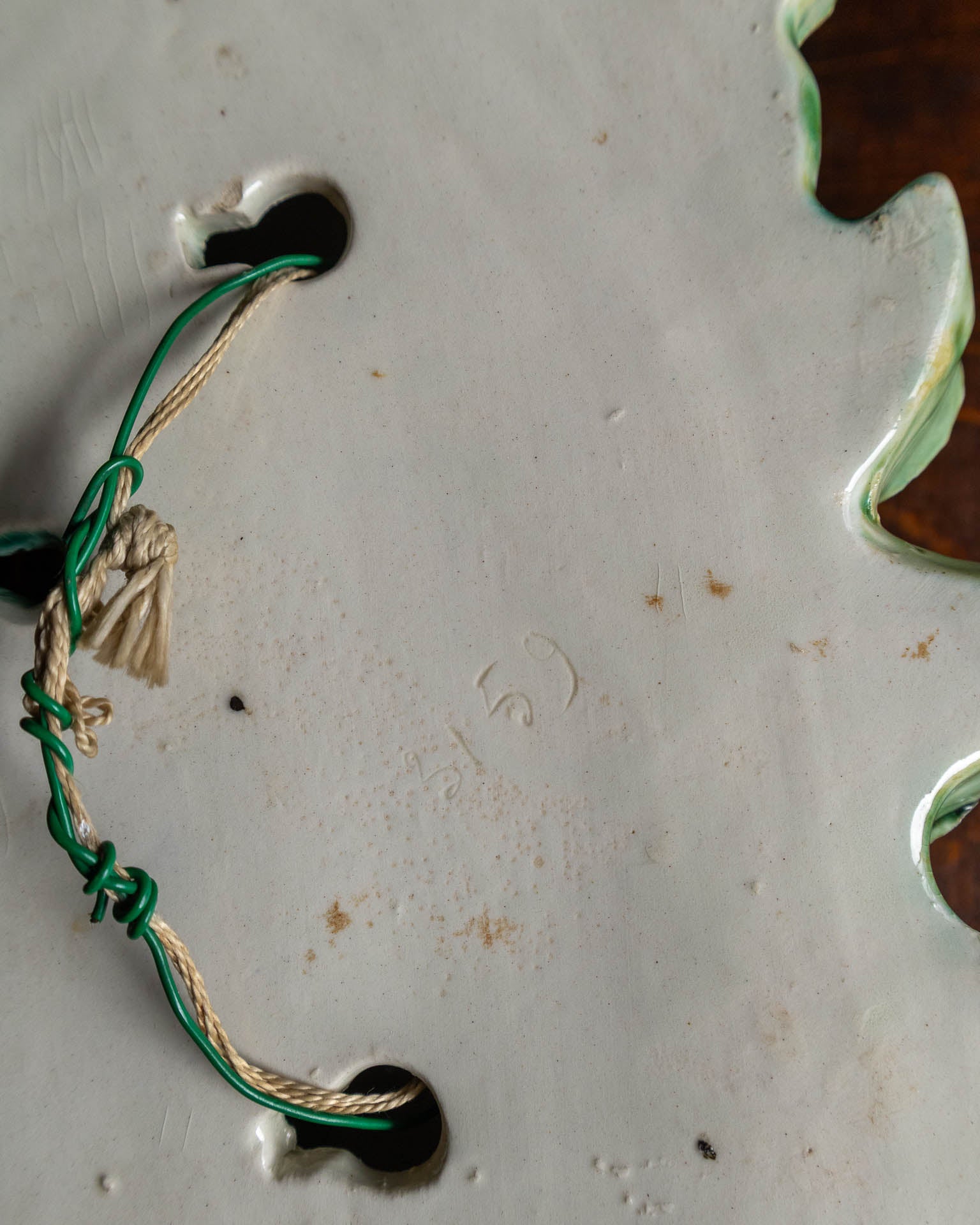
SIGNATURES, MARKINGS & INSCRIPTIONS: Unattributed. Impressed model number 3159 and painted maker’s marks.
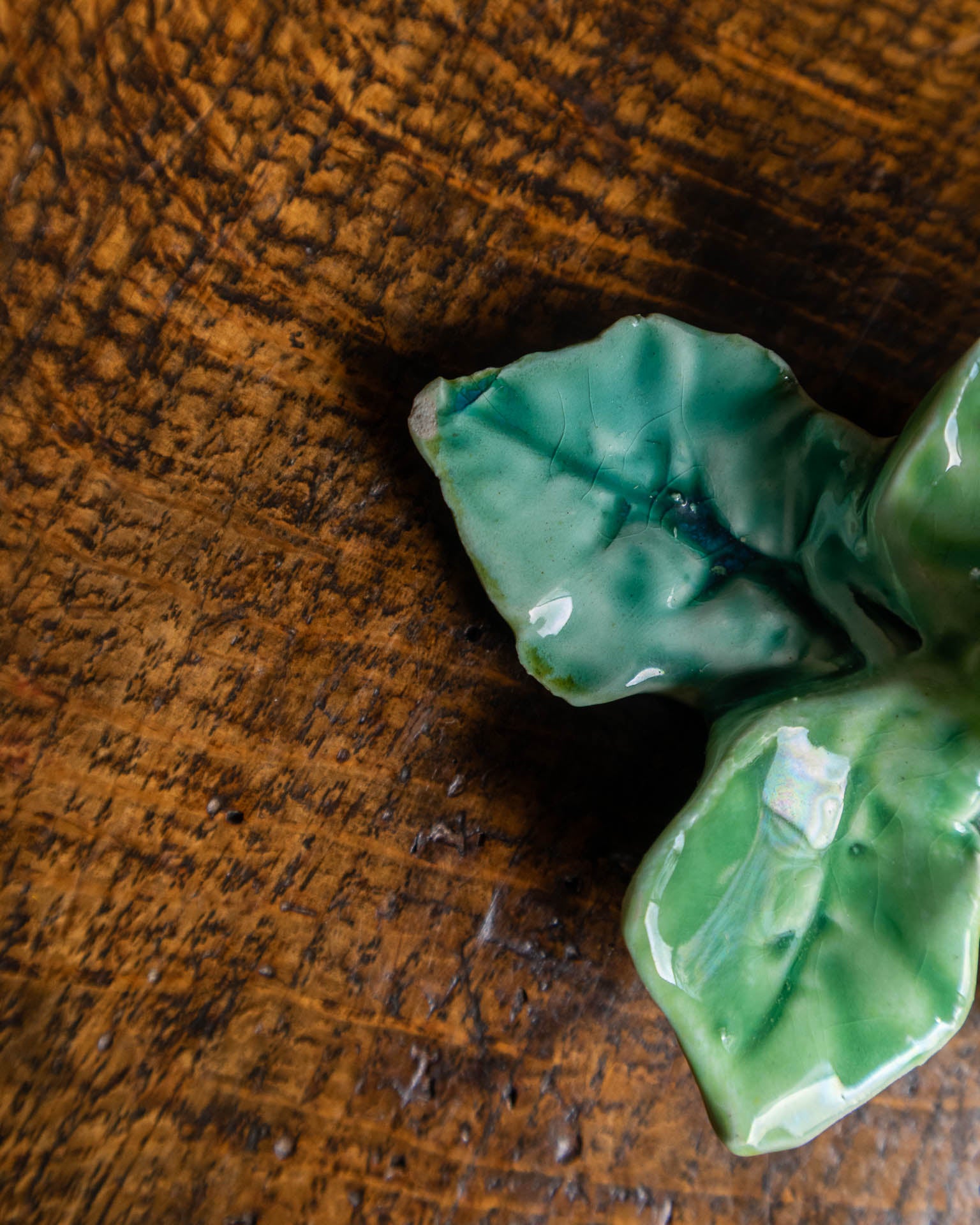
CONDITION: The wall pocket is in very good condition with wear consistent with an antique age and use. There are some minor chips in three instances to the tips of the leaves. There is no evident restoration.
REFERENCES: For an example of similar majolica wall pockets see the Powerhouse Museum Object No. A4293.
~~~~~~~~~~~
THE GEN
“… Victorian interiors were often filled with fresh-cut flowers from the garden or greenhouse, giving rise to a range of majolica vessels to hold bouquets of all shapes and sizes. These included vases, urns, baskets, and bowls, as well as flat-backed wall pockets or flower brackets, which were designed to be mounted. These receptacles were typically used for fresh flowers, small ferns, or ivy, and would be integrated into the overall decoration of a room. The cultivation of flowers and plants, flower arranging, and floriography, or deciphering the language of flowers, were considered genteel pursuits, particularly for women.” (Majolica Mania: Transatlantic Pottery in England and the United States, 1850–1915, Susan Webber (ed.), Bard Centre and Yale University Press, 2021, p. 137)
~~~~~~~~~~~
Would you like to know more about this piece?
Make an enquiry via email here.