Edwardian
Circa 1900 | England
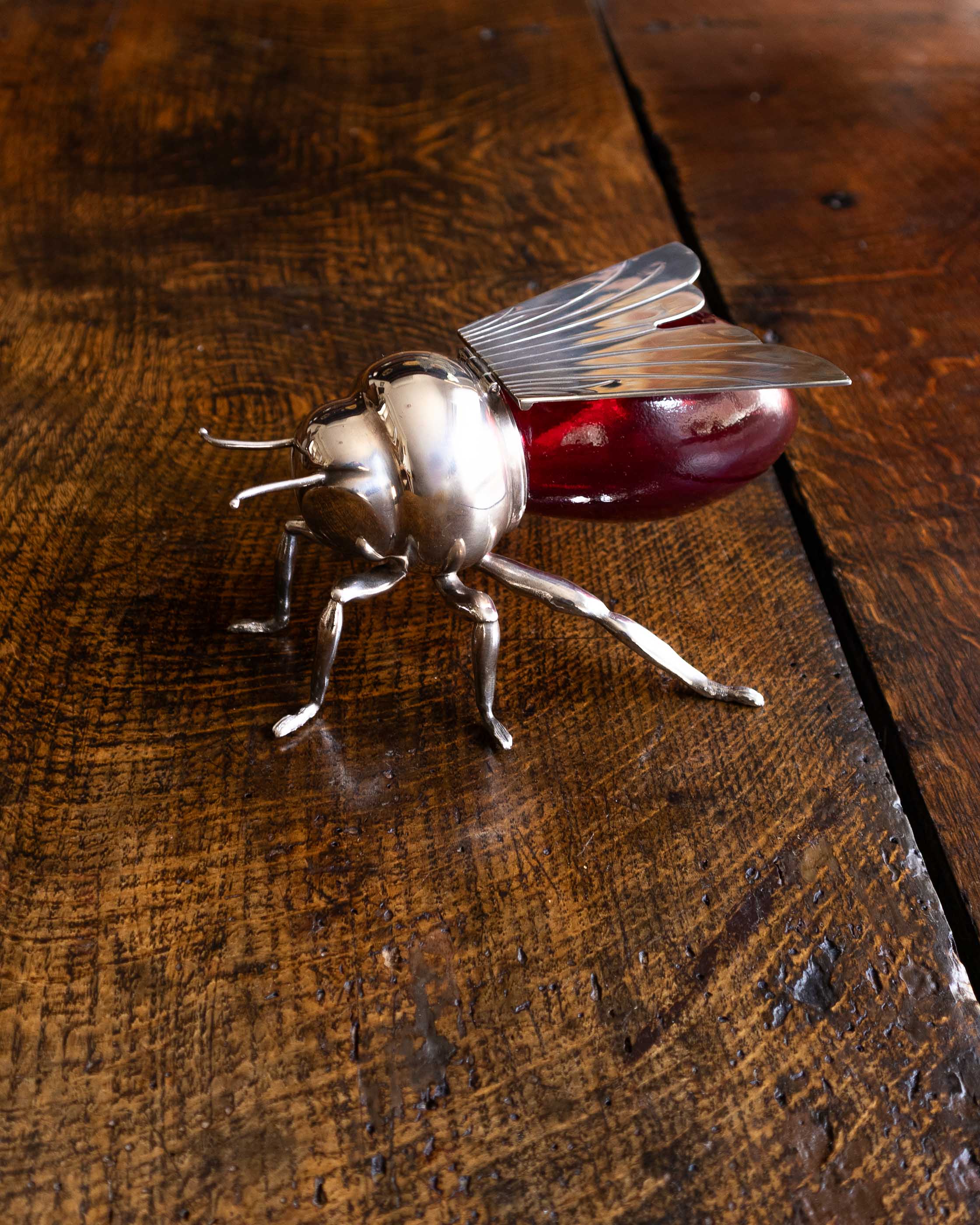
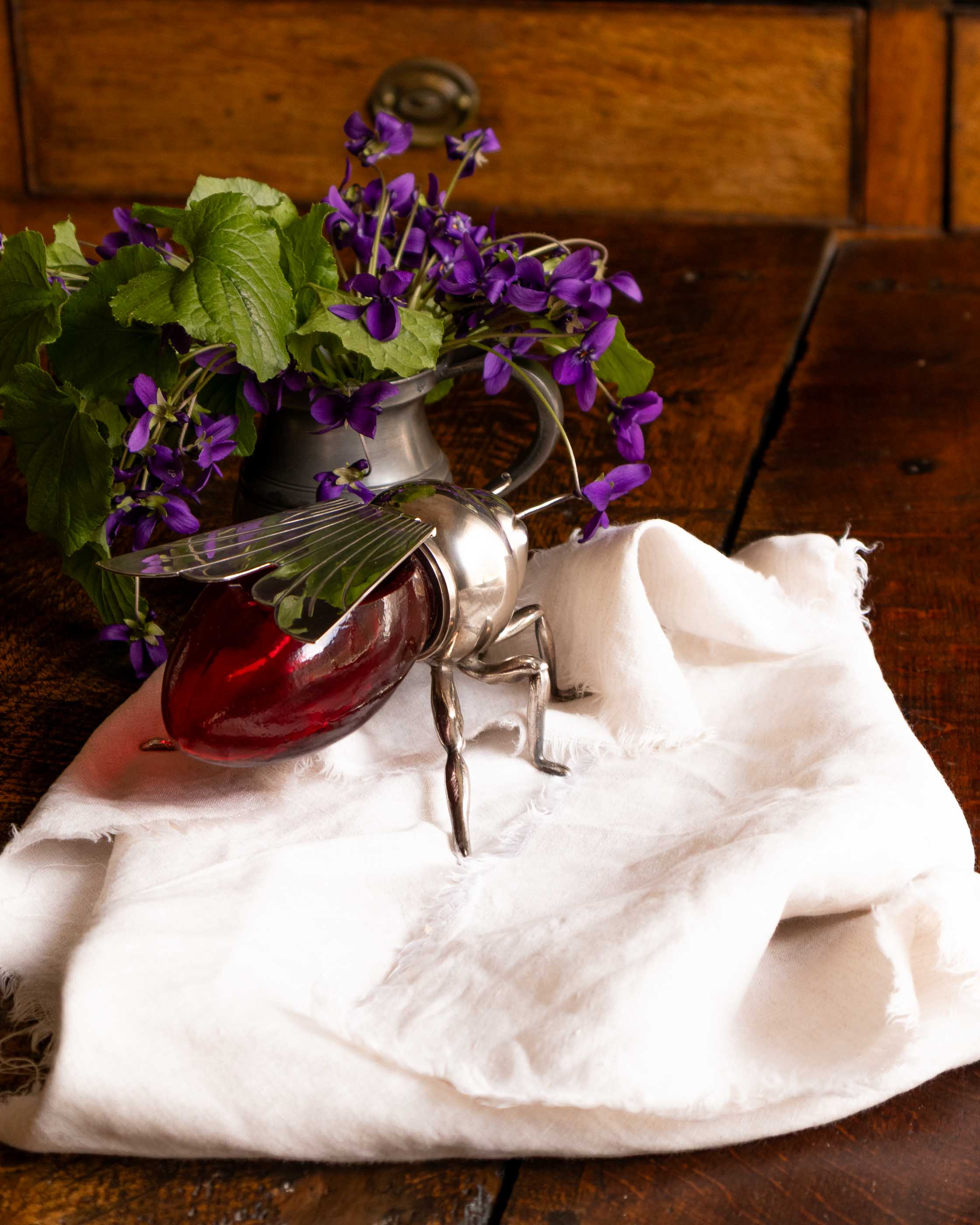
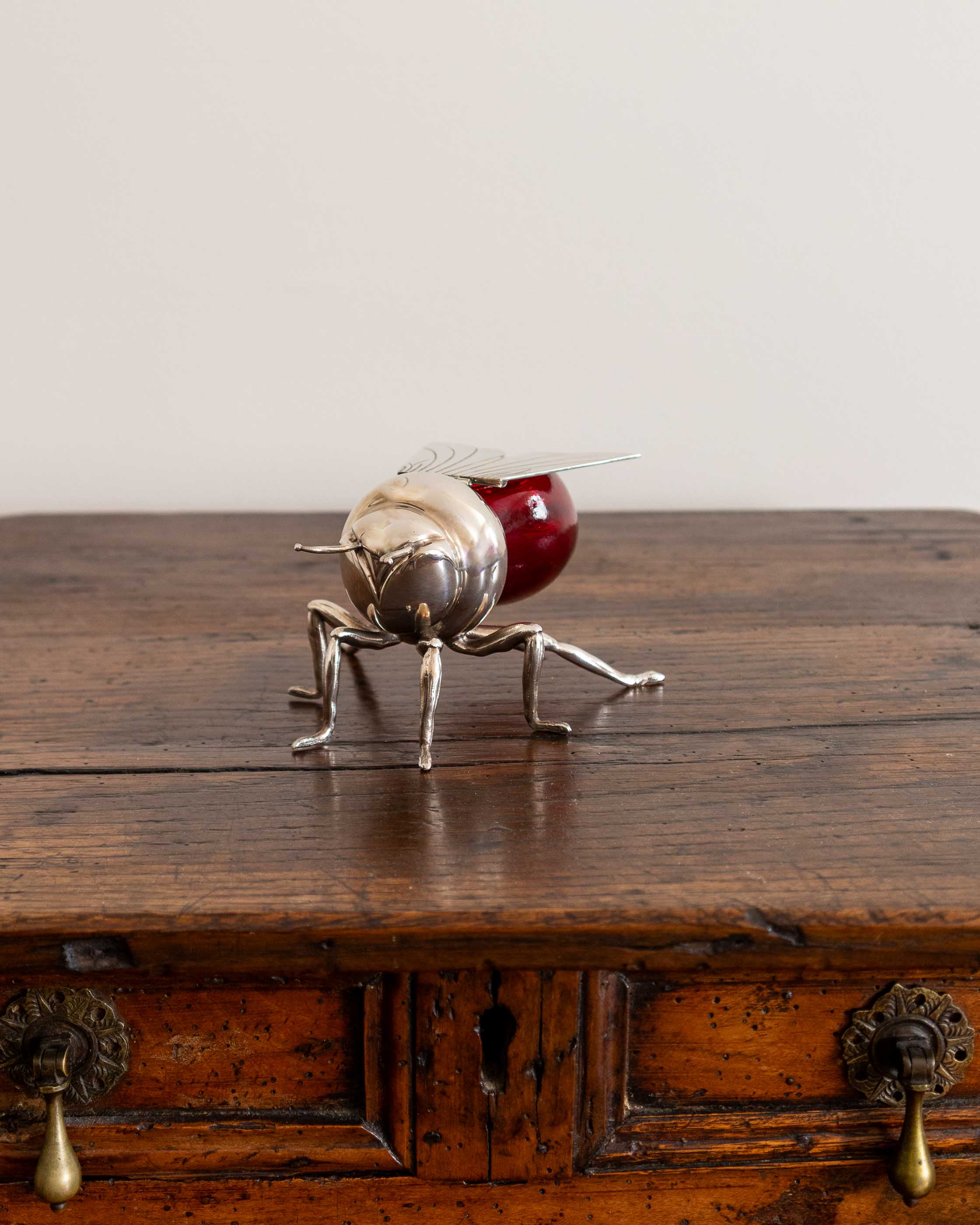
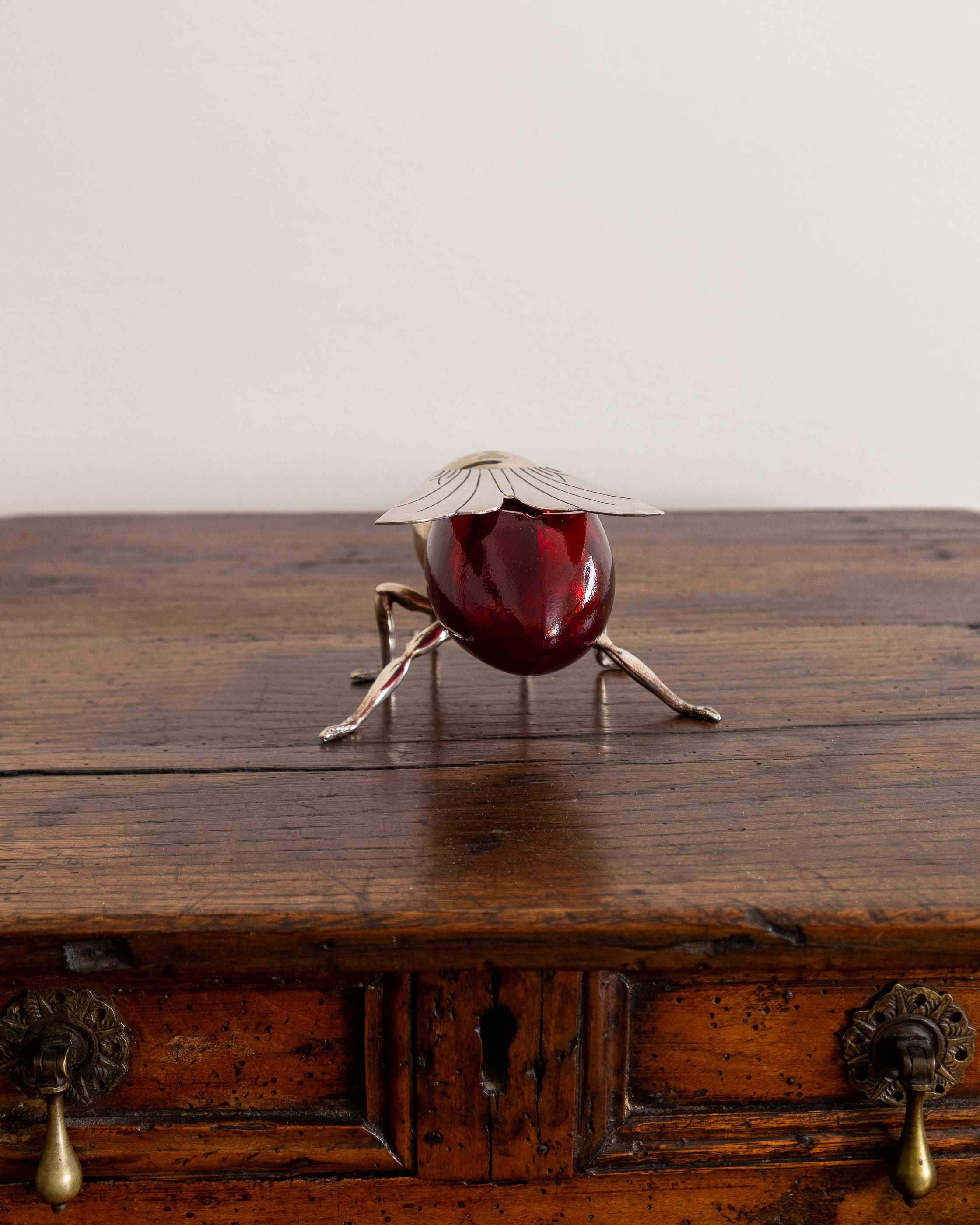
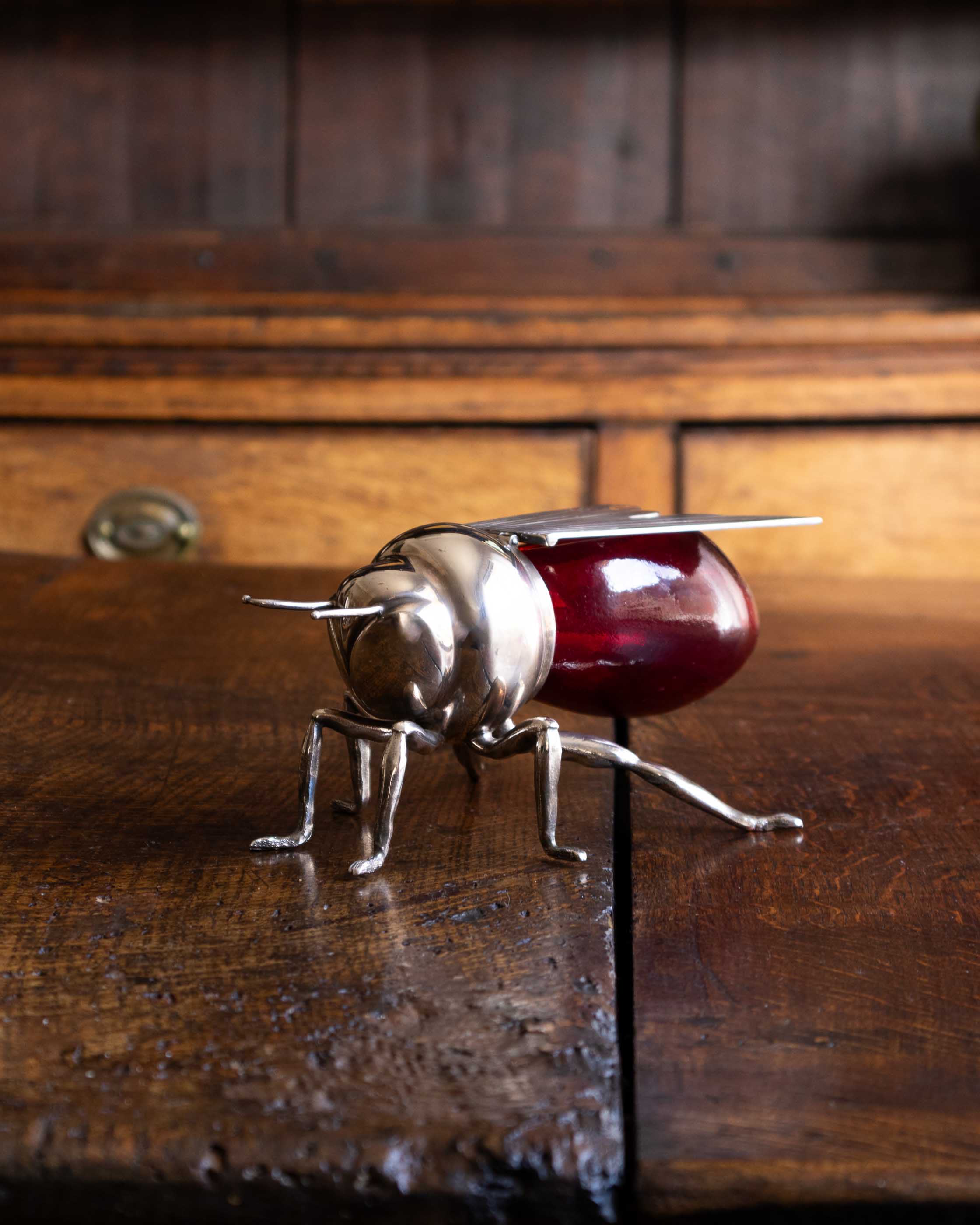
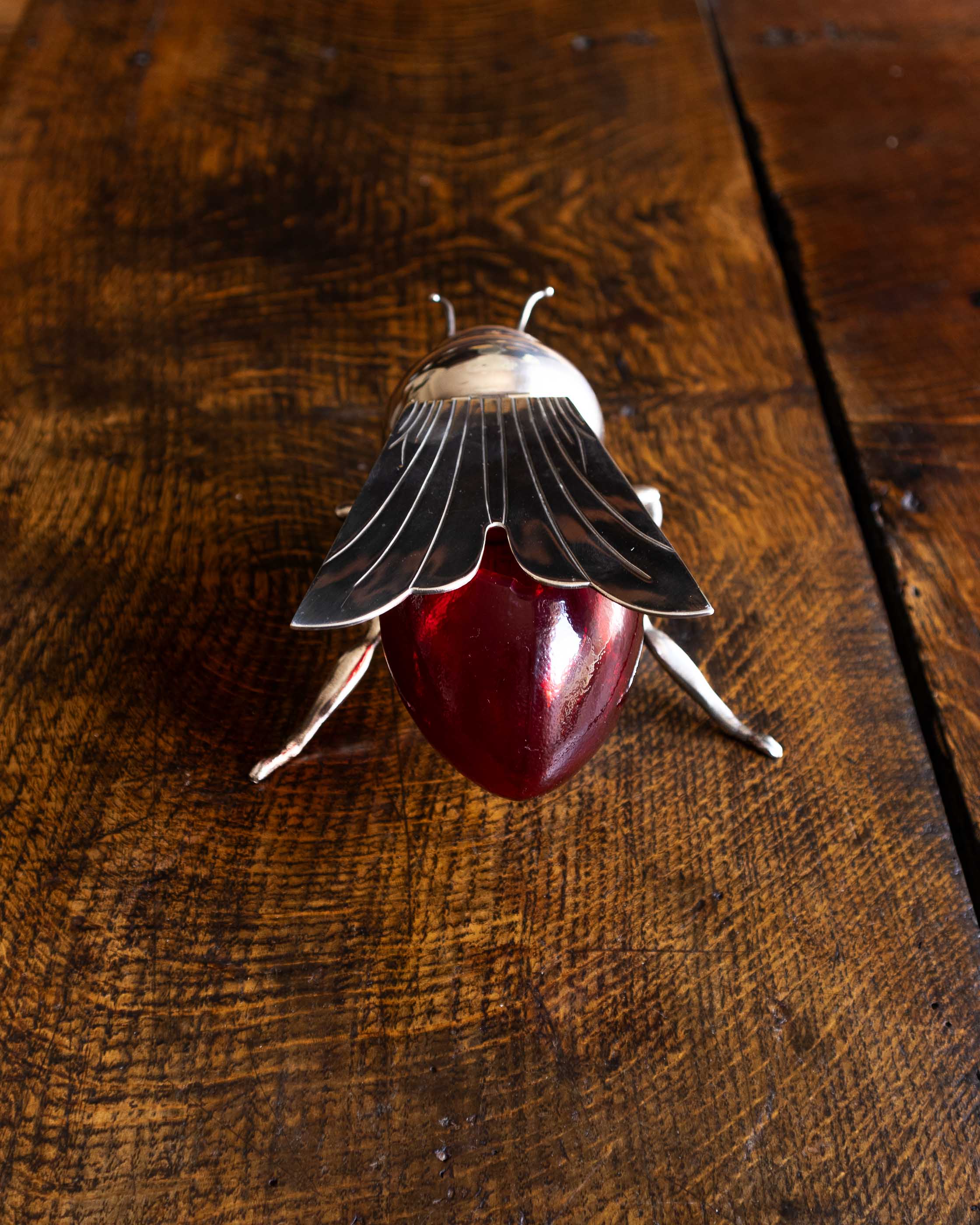
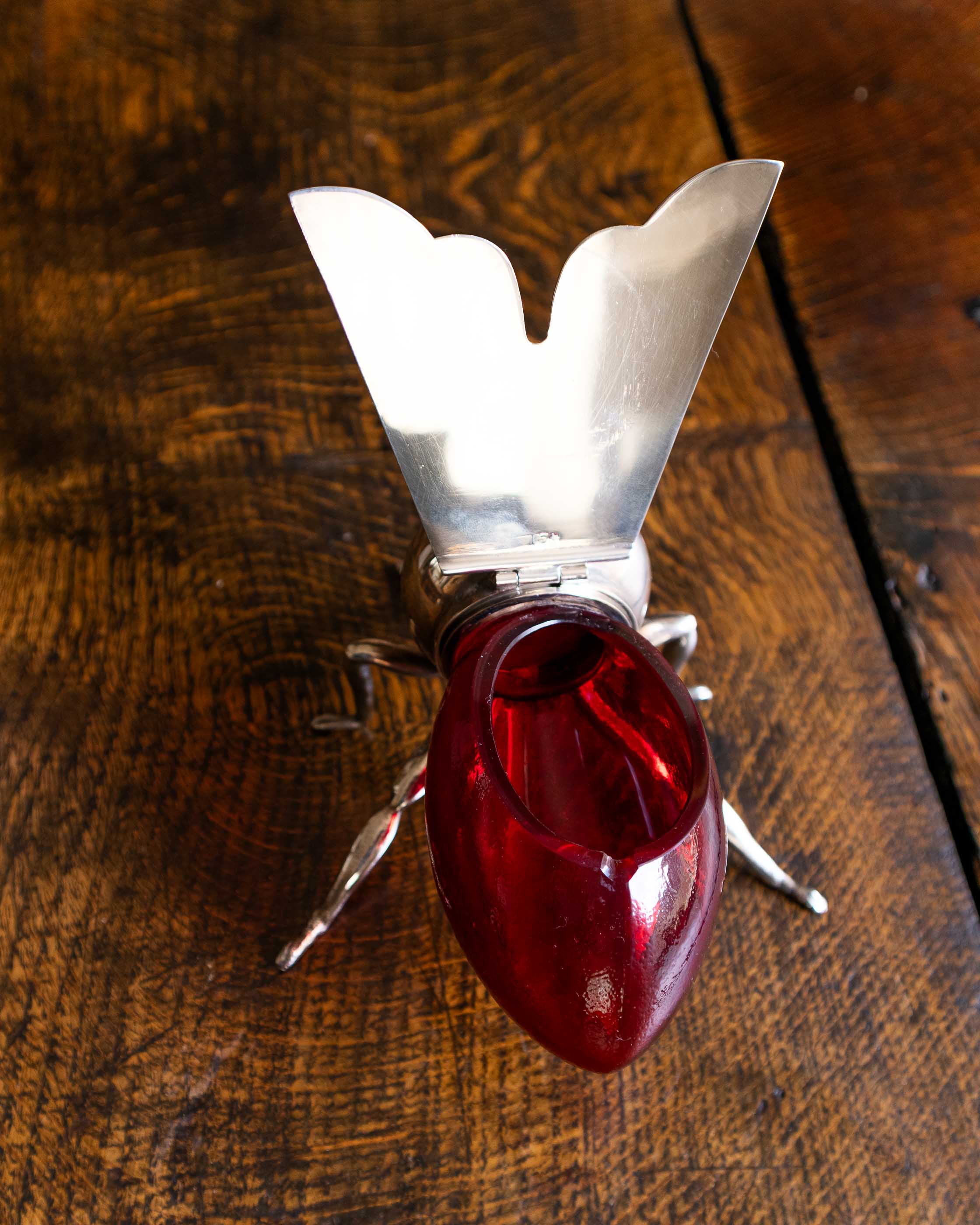
An antique Edwardian silver plated figural honey pot (see The Gen) made in the form of a honeybee from the great makers Mappin & Webb. The thorax, head, wings and six legs are made from the finest silver plate and the glass body is made from a vibrant ruby red glass. The lid of the pot is hinged bee’s wings which lift to reveal the glass honey pot. The glass honey pot can be unscrewed from the bee head for easy washing and cleaning.
DIMENSIONS: Maximum Length 16 cm, Height 8 cm, Maximum Width (at the widest point of the legs) 13.5 cm.
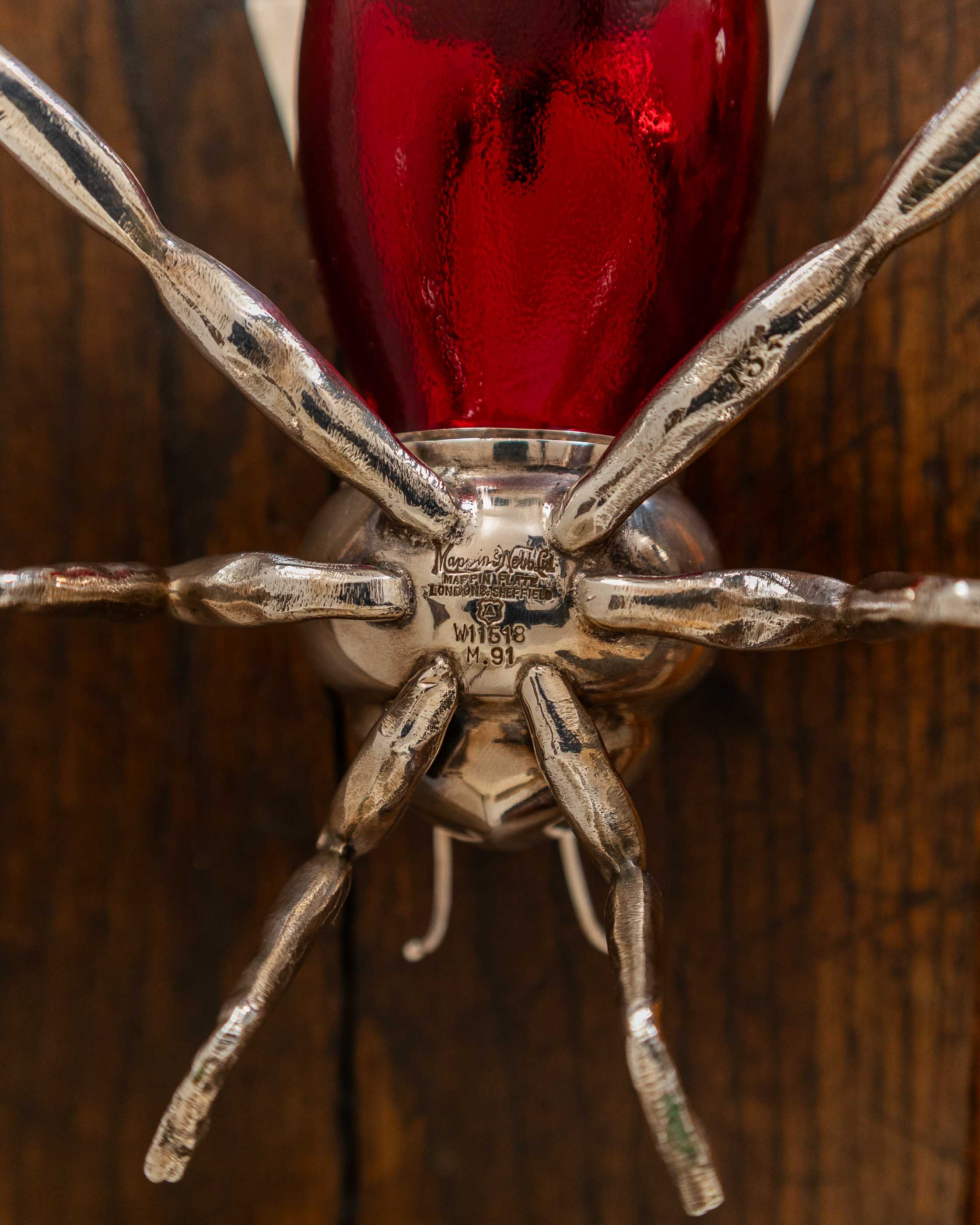
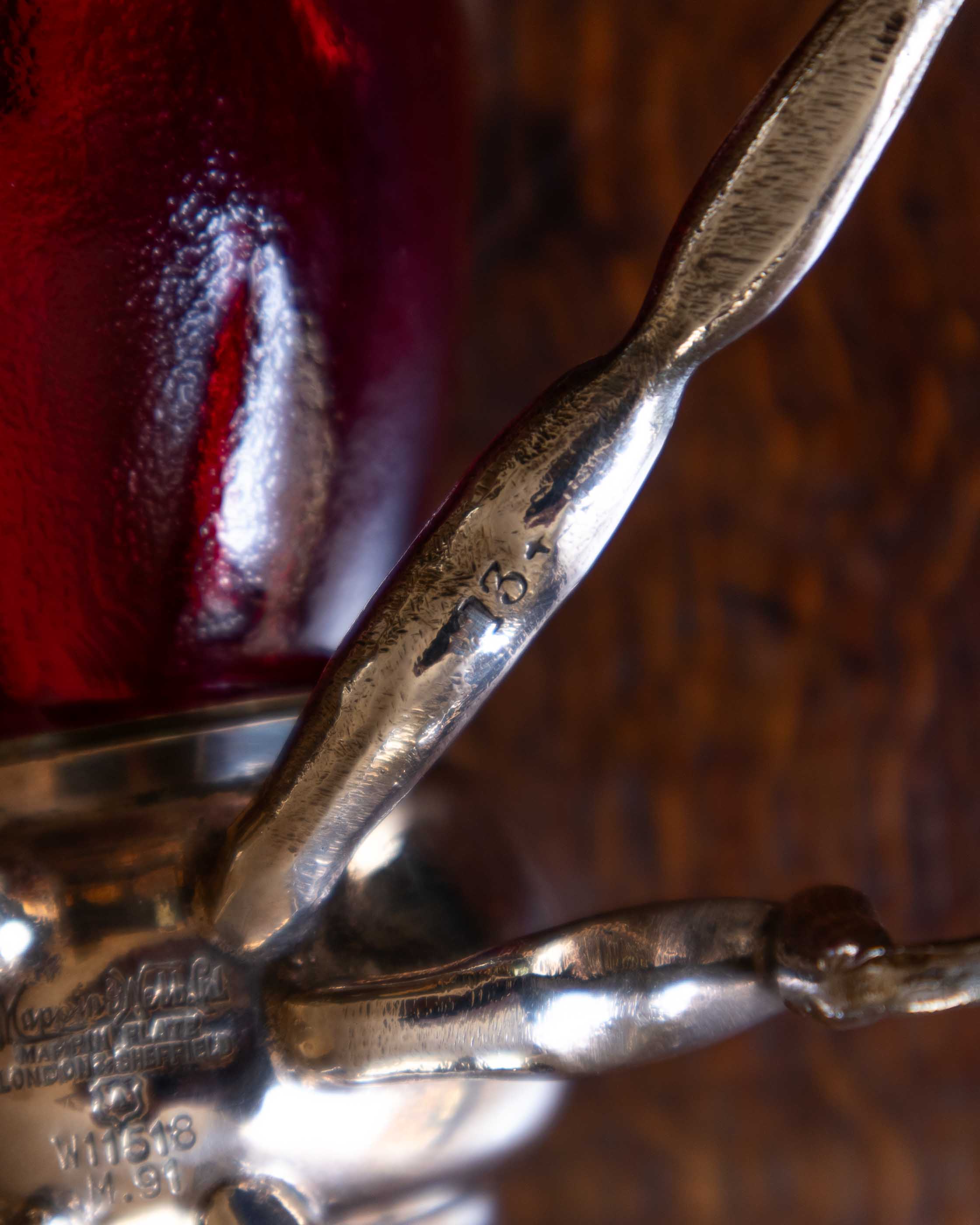
SIGNATURES, MARKINGS & INSCRIPTIONS: Incised markings including Mappin & Webb Ltd, Mappin Plate, London & Sheffield date stamp (Shield A), pattern number W11518, M.91, and 13+ on one leg and the back of the hinged wings.
It’s difficult to find information on Mappin & Webb marks but everything points to this being an early version of this highly collectible honey pot which is sought after by collectors. The text version of Mappin & Webb Ltd in cursive font is seen in advertisements at the beginning of the twentieth century. The M.91 mark is unusual and might refer to the person who modelled it or the number of the item produced. Also, it is uncertain what the 13+ represents. All in all, there are some very interesting marks on this piece which make it perhaps that bit more special.
CONDITION: Very good condition, with wear commensurate with antique age and use of such a piece. The silver plate is in very good condition, with only one small bit of tarnish to the top of the bee’s head. The glass honey pot has a flea bite chip and one larger loss where it can only be assumed the spoon was held. Now it actually makes a very useful gully for any spoon!
REFERENCES: For a similar honey pot see Bonhams, 9 February 2016, Lot 44.
~~~~~~~~~~~
THE GEN
“In the Victorian and Edwardian days of long, leisurely breakfasts and teas served by the fire in the drawing room it was commonplace to have a choice of home-made jams, savoury spreads, marmalades, and honeys. Silver, china or cut-glass pots and jars were specially made to hold the many different flavours of jam and honey. Honey pots have always captured the imagination of designers, given the world of bees, hives and honeycombs offer so many wonderful visual references to inspire them.” (A Taste of Honey: Honey for Health, Beauty & Cookery: Recipes and Traditions, Jane Charlton and Jane Newdick, Readers Digest Association Limited, 1996, p. 72)
~~~~~~~~~~~
Would you like to know more about this piece?
Make an enquiry via email here.