Victorian
Circa mid to late 19th century | England
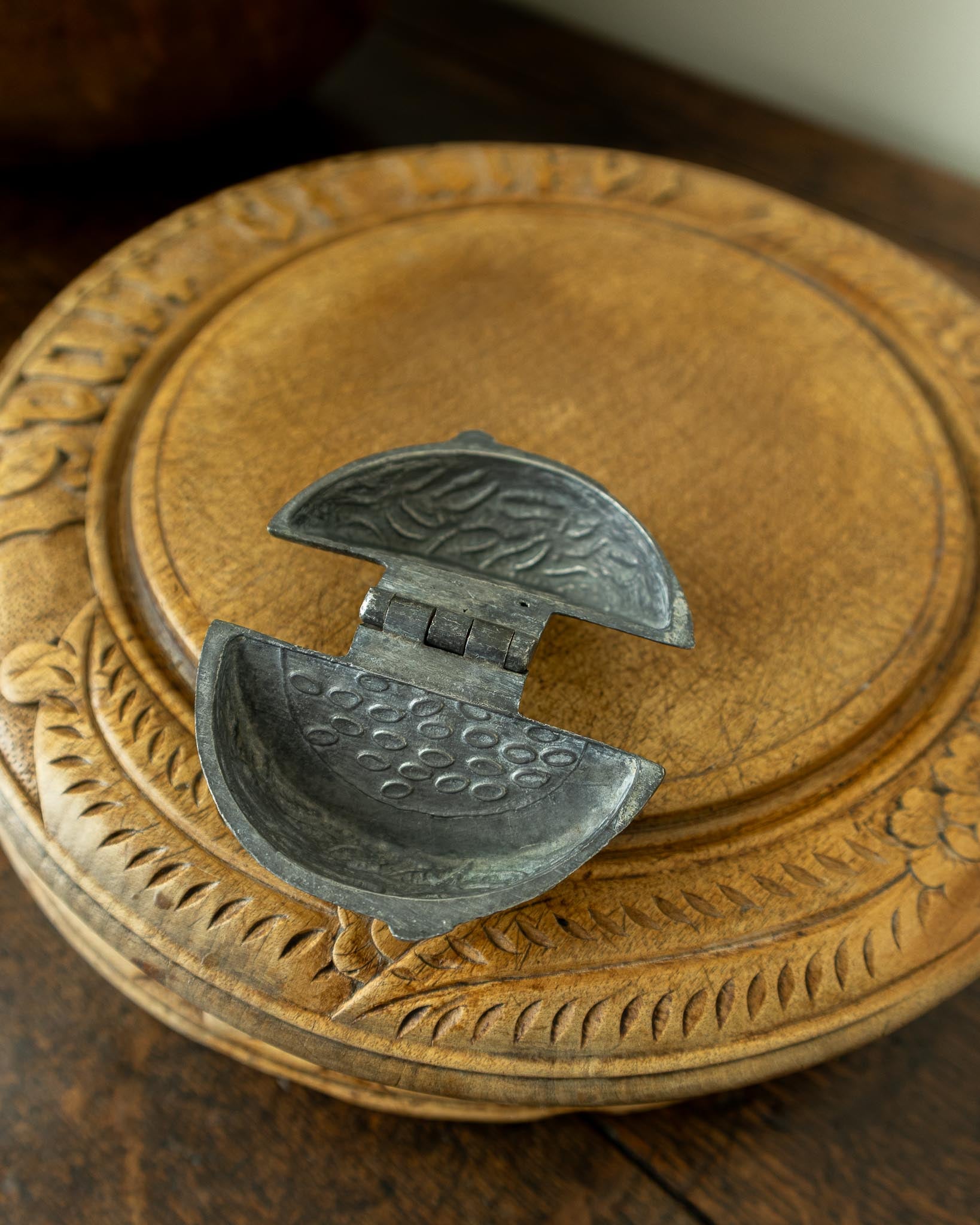
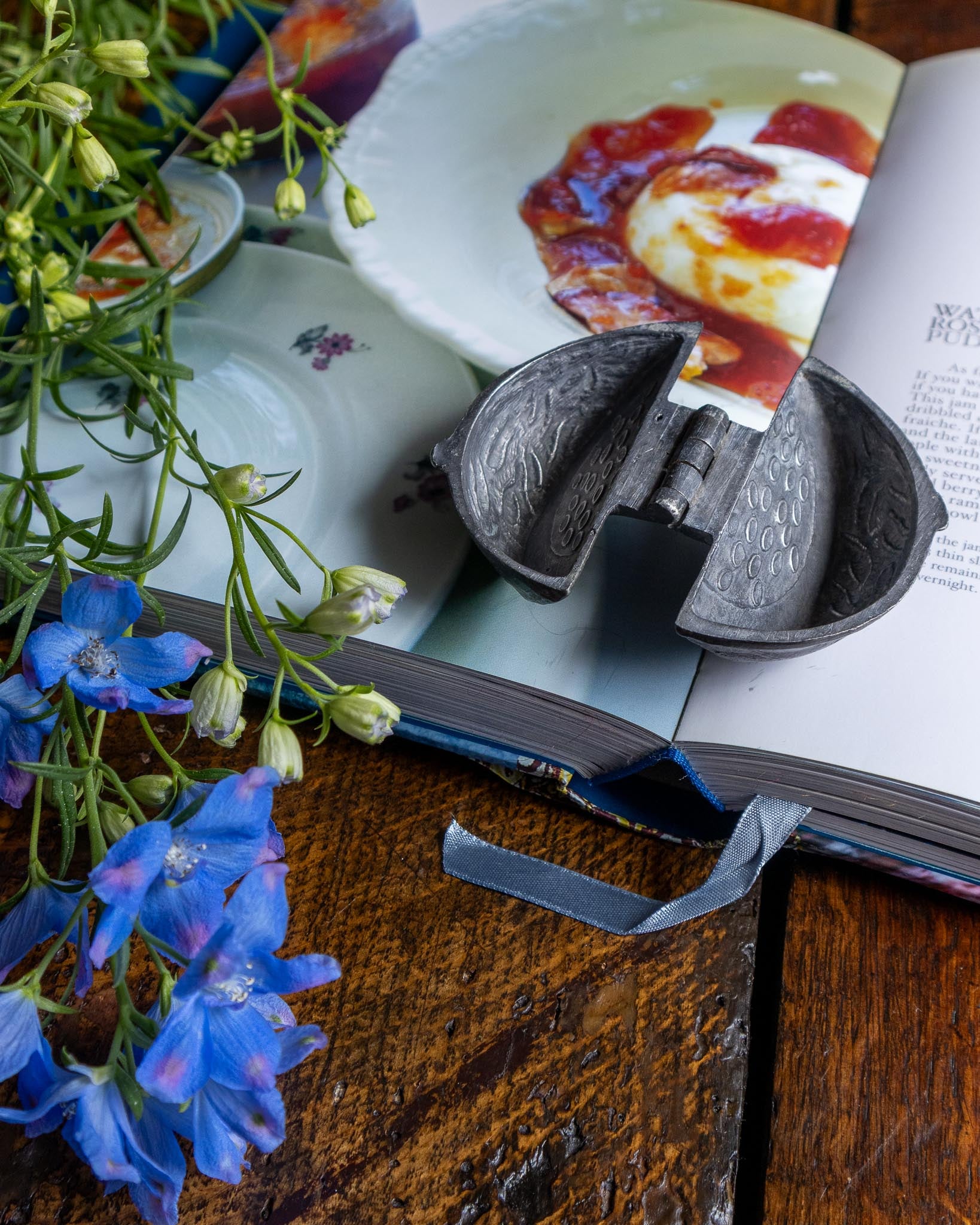
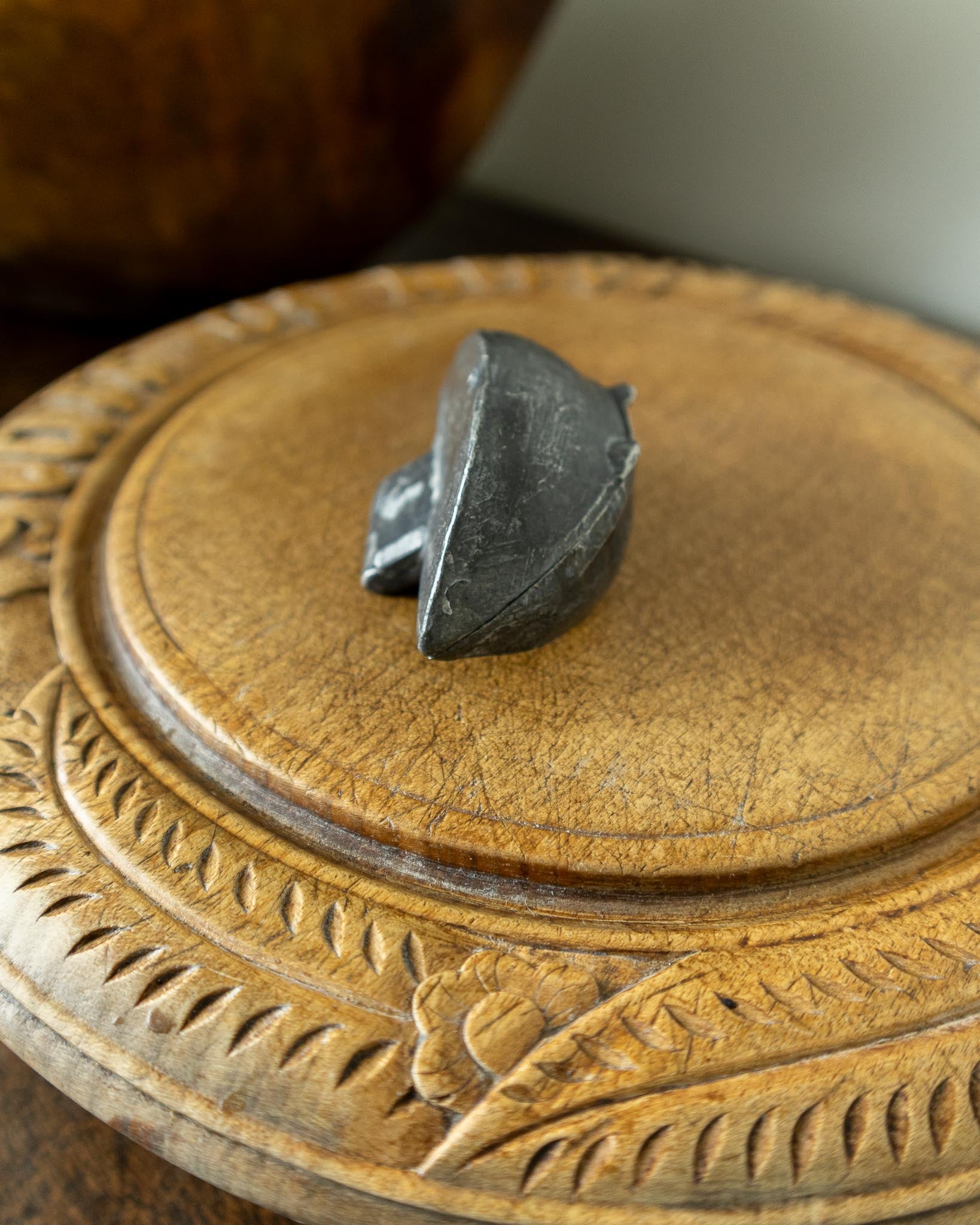
A small hinged pewter ice-cream mould shaped to form a watermelon. Pewter moulds were used to make highly decorative cream or water ices which were popular in the Victorian era (see The Gen).
DIMENSIONS: Length 7.5 cm.
SIGNATURES, MARKINGS & INSCRIPTIONS: Unmarked.
CONDITION: In very good condition, with wear commensurate with antique age and use of such a piece.
REFERENCES: For examples of similar small moulds see page 13 of the advertisements in Fancy Ices, Mrs A.B. Marshall, 1894 where they were advertised to be sold by the dozen! Also, see similar moulds at the Powerhouse Museum, Object No. A7651.
~~~~~~~~~~~
THE GEN
“Ice cream was first made in the 18th century but became more generally popular during the 19th. Ice cream moulds were made in a variety of shapes in pewter and copper. They sometimes had detachable lids and bases which made the ices easy to remove. The cream was poured into the moulds which were then put into an ice-cave or ice-chest; these had been developed from ice-houses on country estates. Some pewter moulds came as a set—the inner holding the cream, the outer larger one shaved ice.” (Collecting for Tomorrow: Kitchenware, Jo Marshall, Chilton Book Company, 1976, p. 46)
~~~~~~~~~~~
Would you like to know more about this piece?
Make an enquiry via email here.