Victorian
Circa 19th century | England
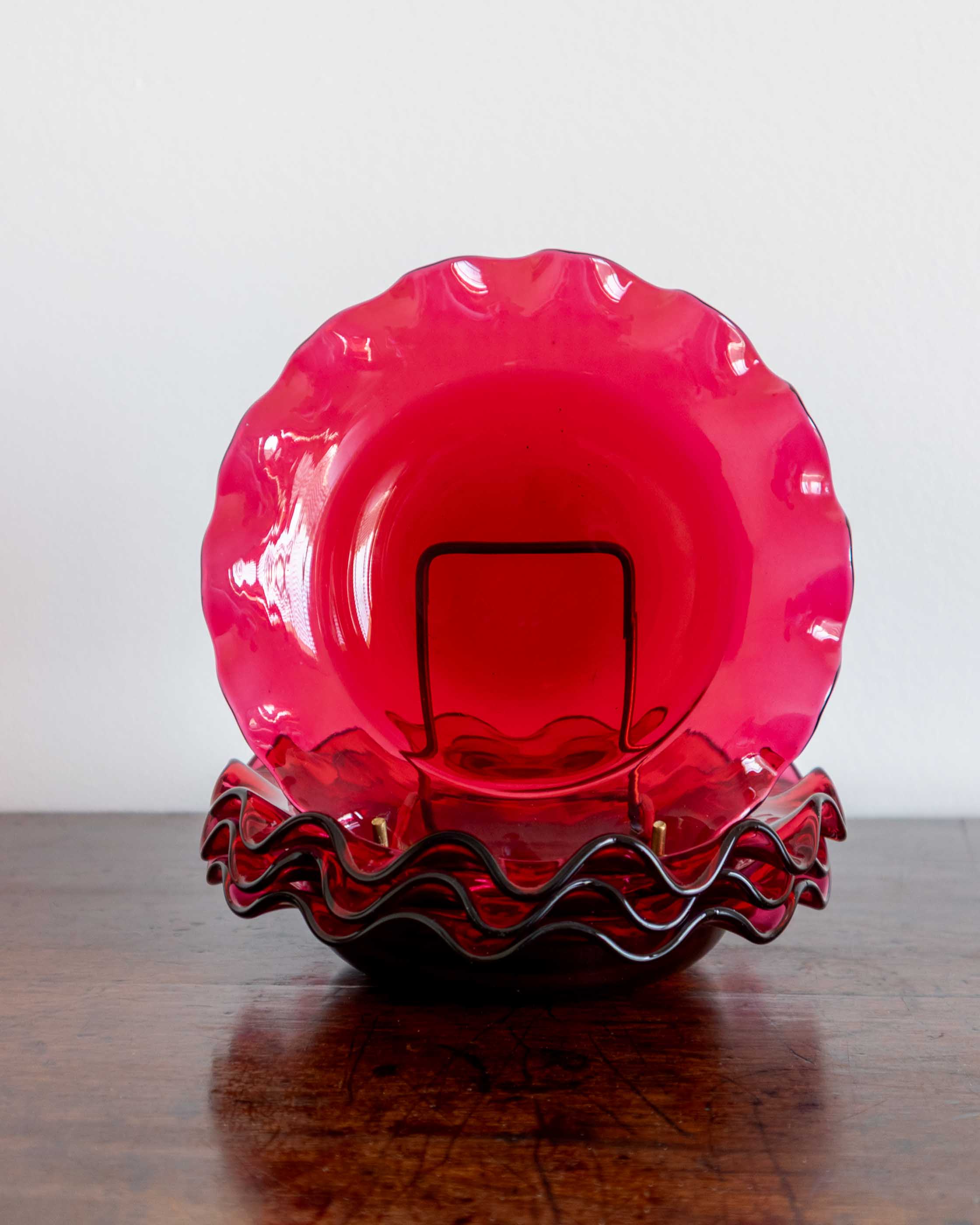
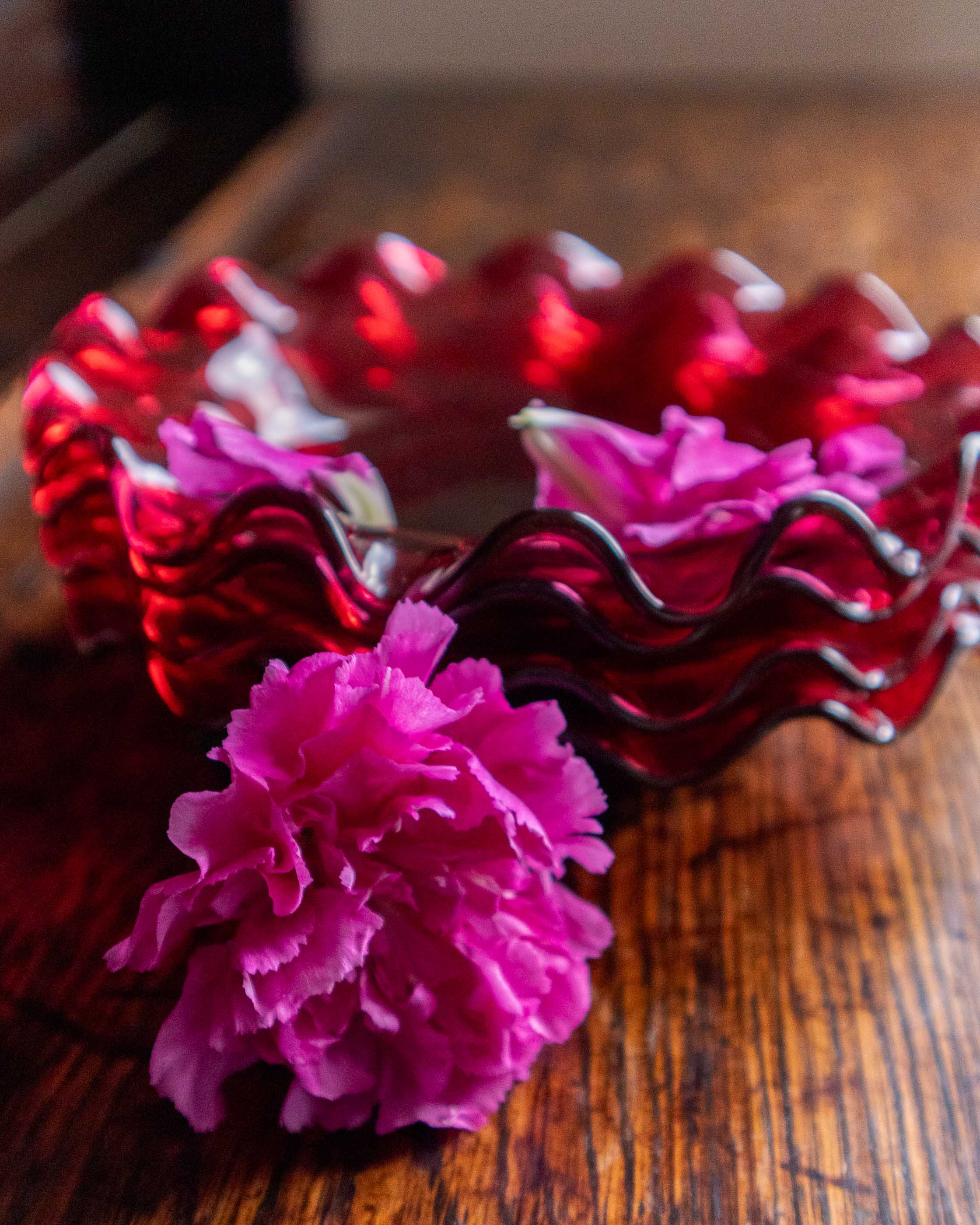
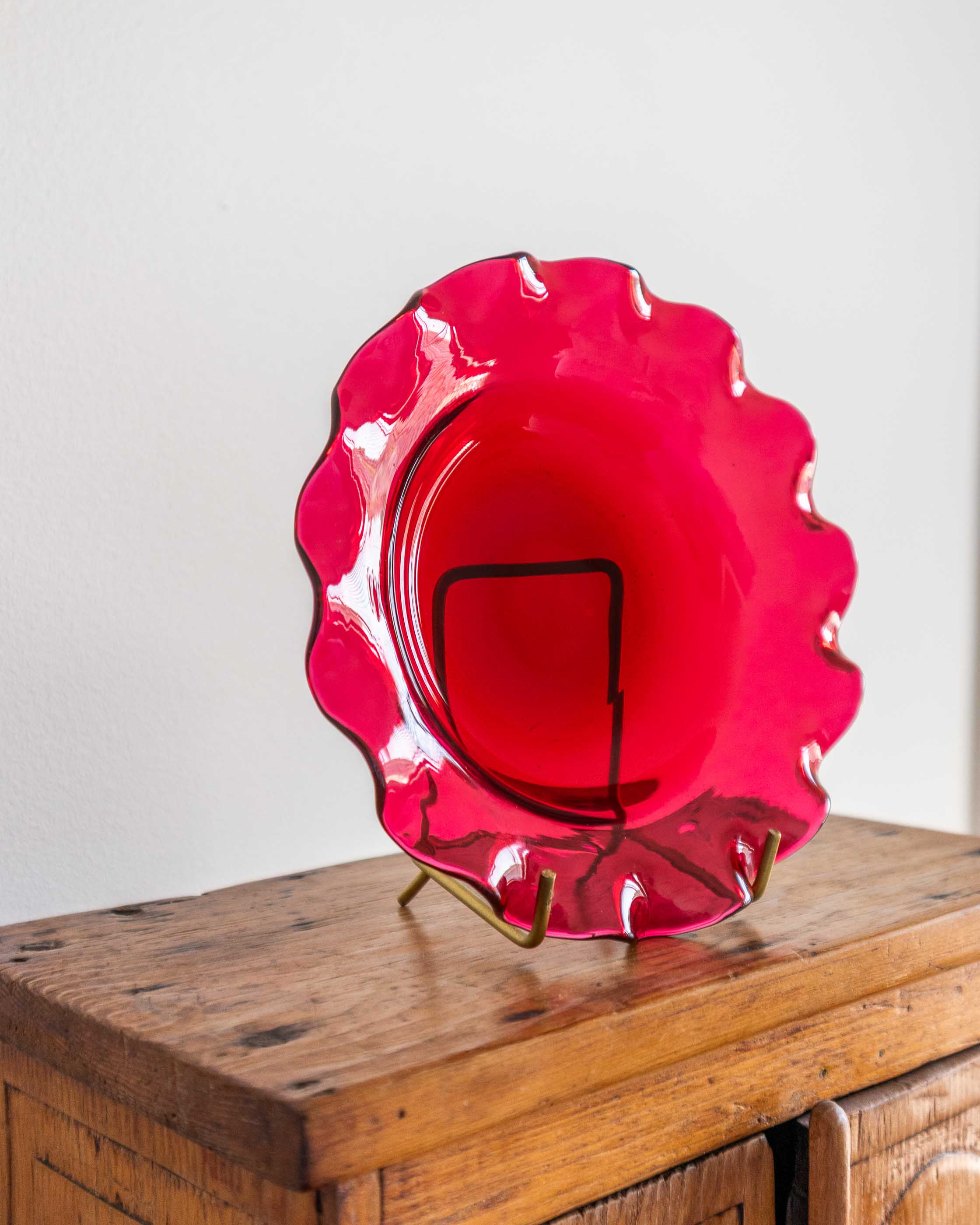
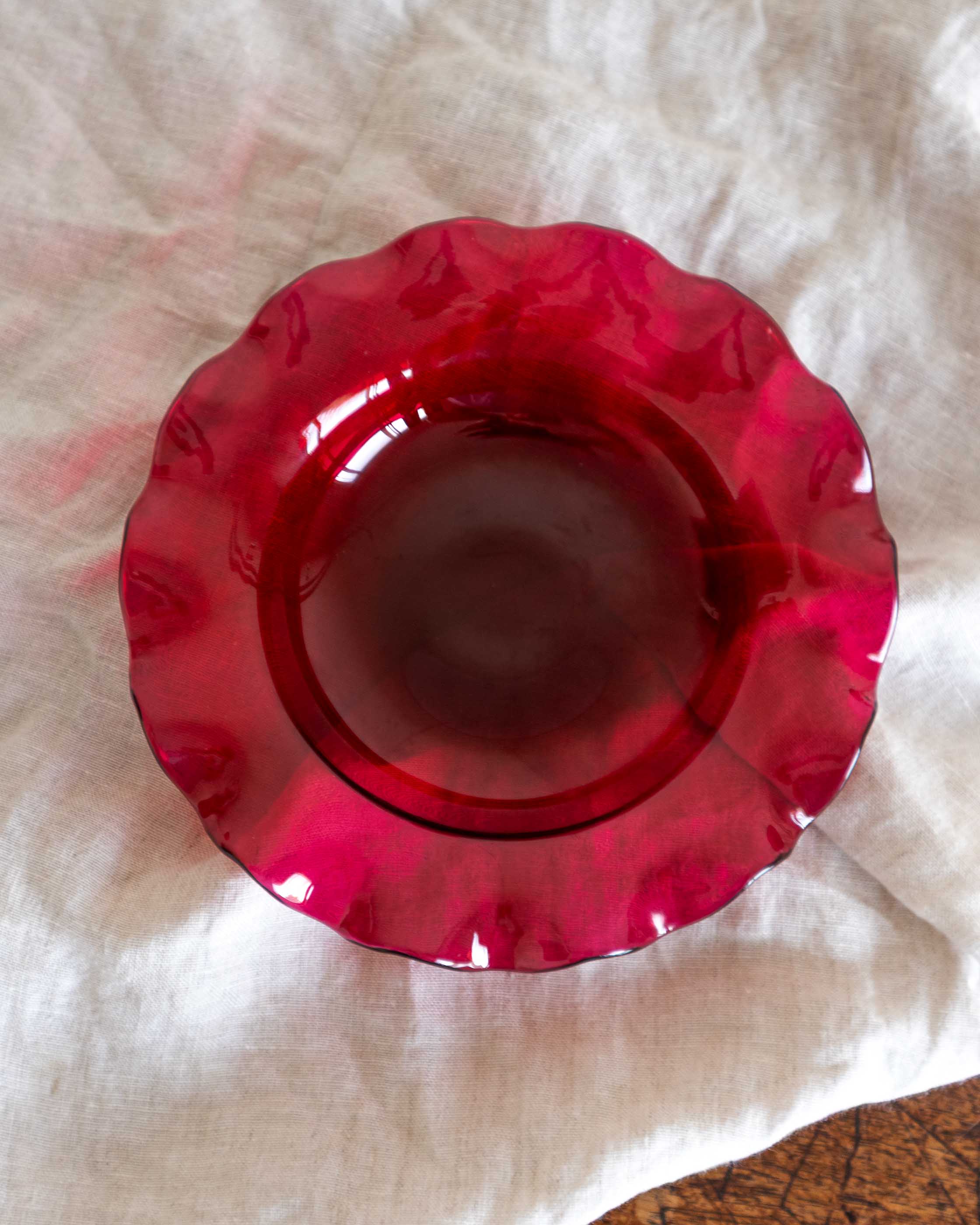
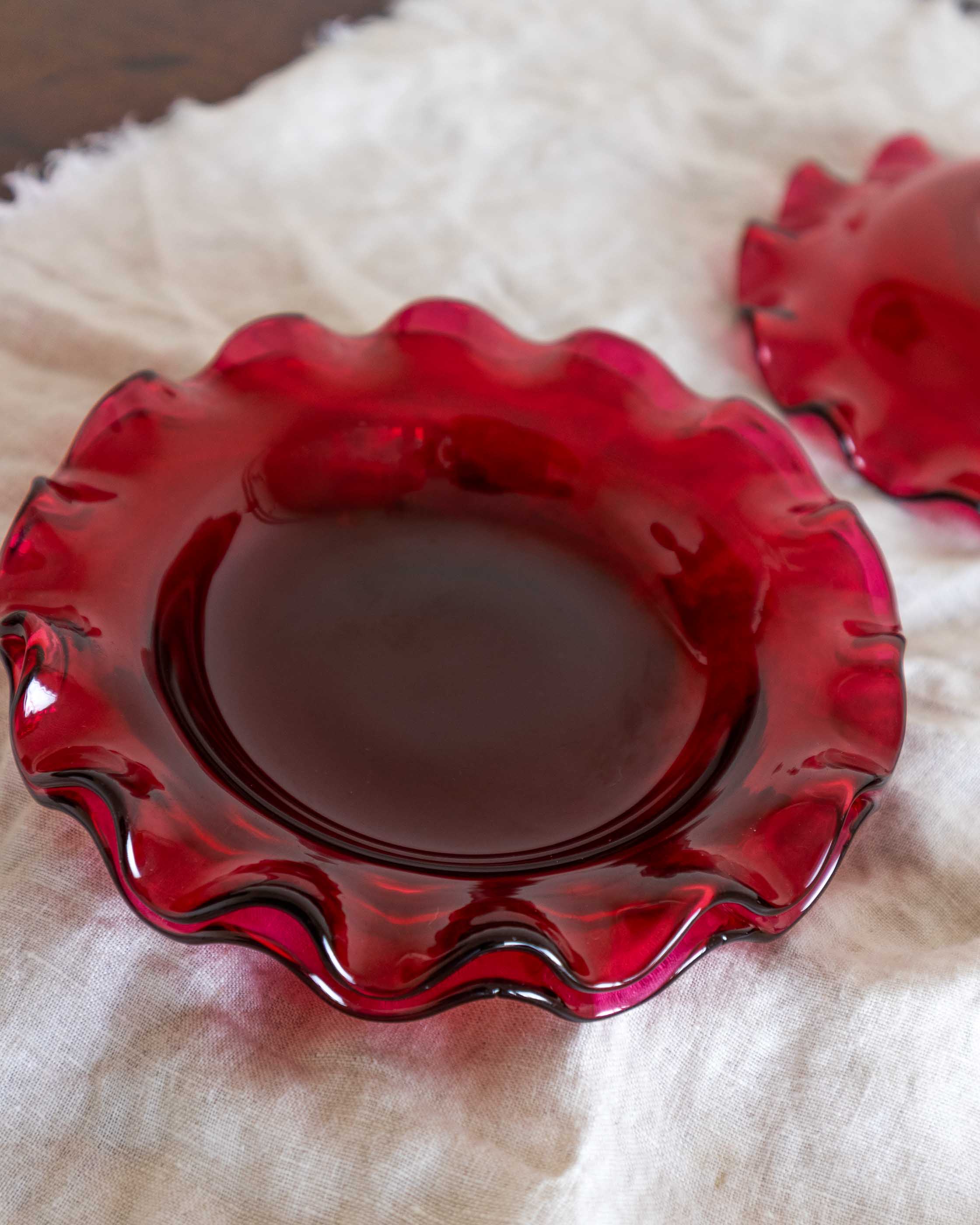
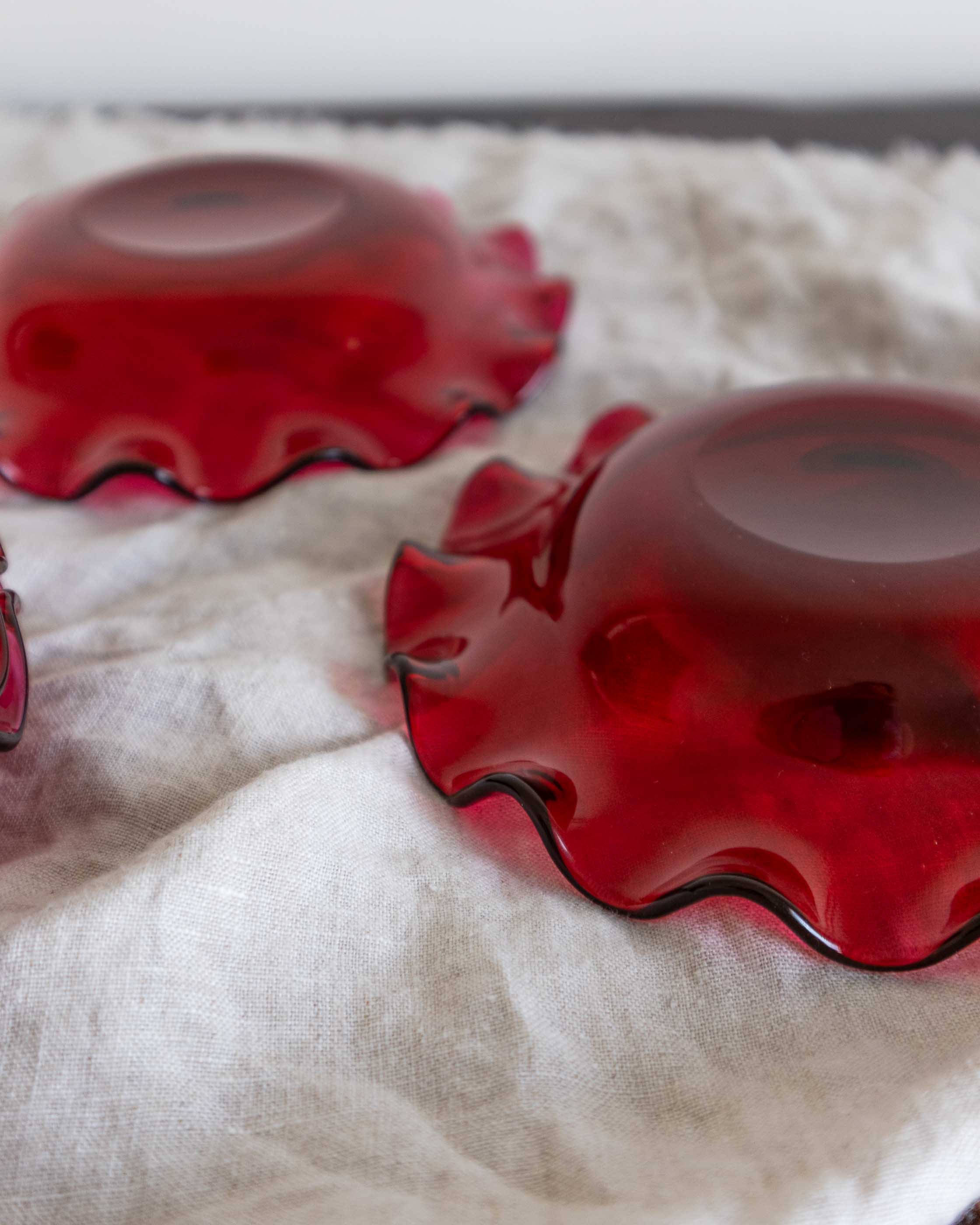
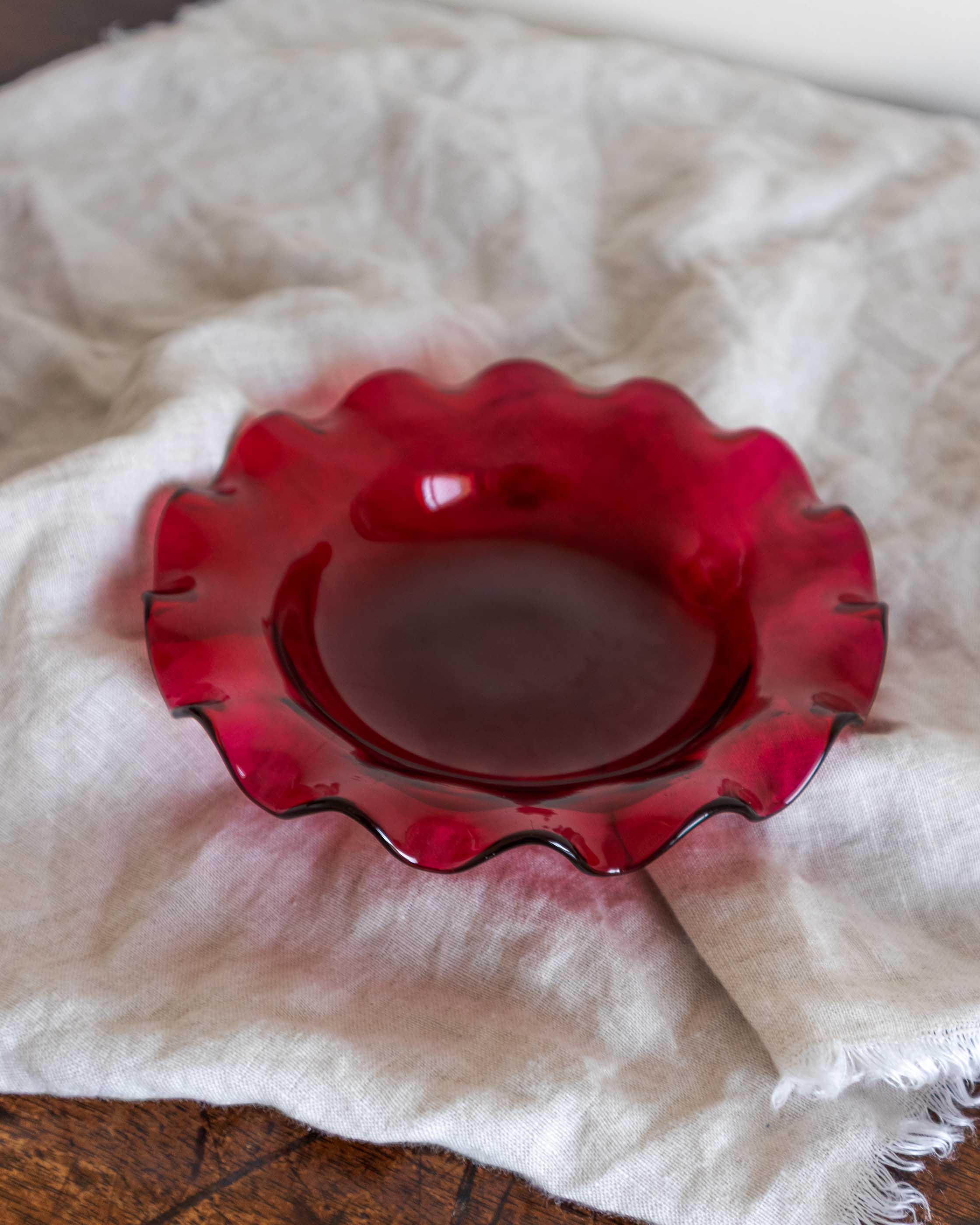
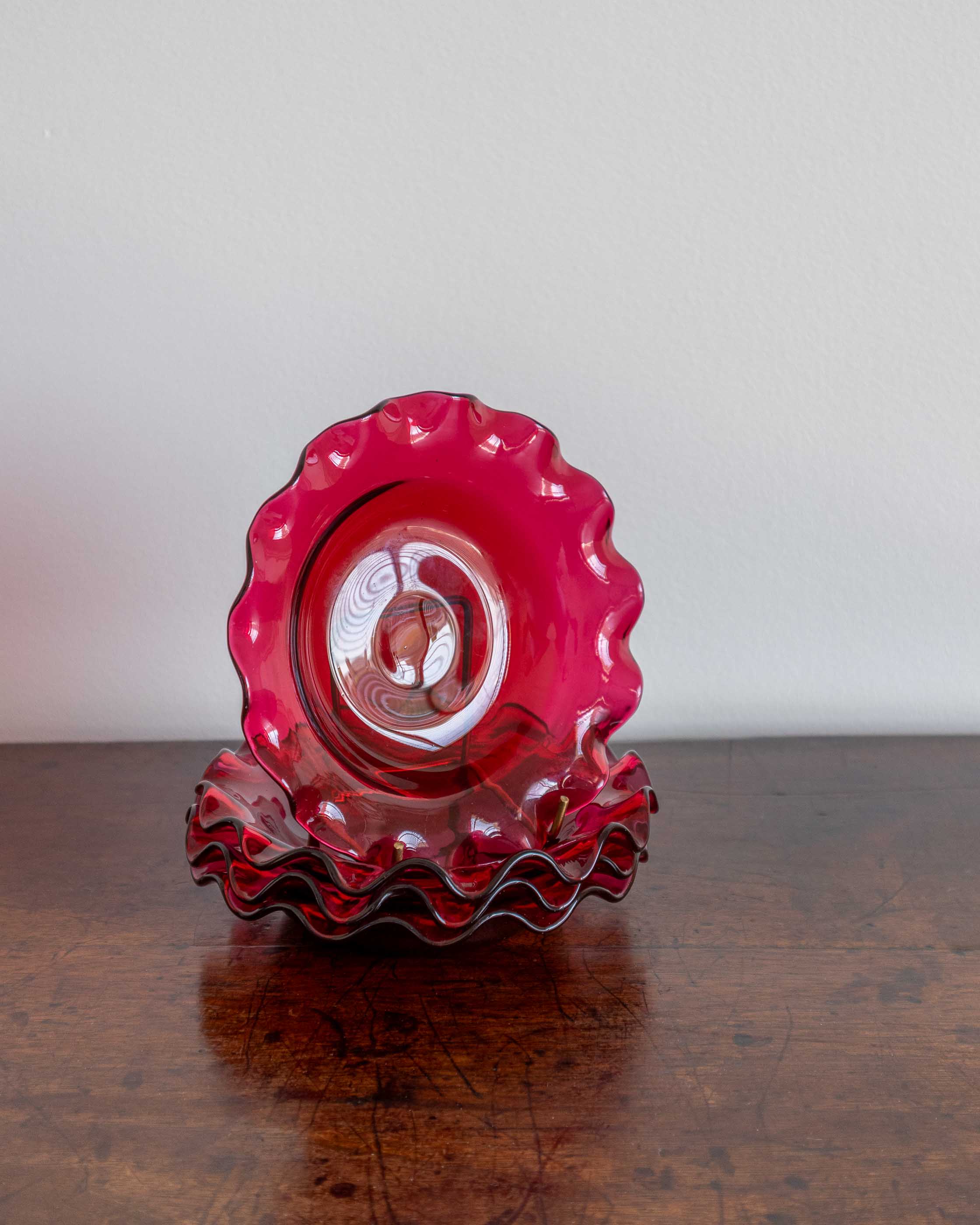
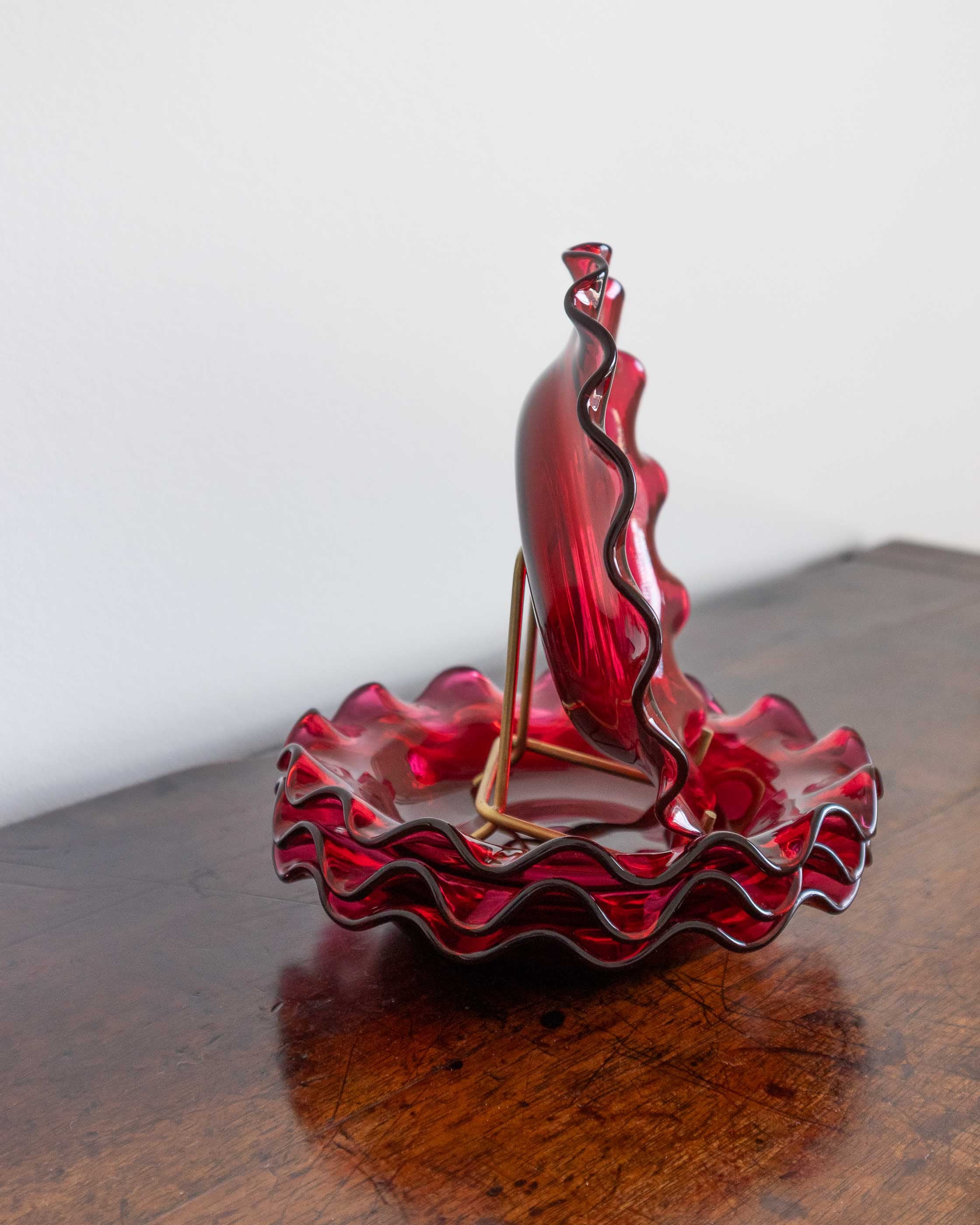
A lovely set of four antique Victorian ruby glass bowls with wavy rims and ground pontil marks (see The Gen). In England, in the eighteenth and nineteenth centuries, glass bowls were made for all manner of functions: for sweetmeats, punch, fruit, salad, butter, sugar, cream and for cleansing fingers. These bowls are of such a gorgeous colour and, given their size, would have been used for either sweetmeats, fruit or salad.
DIMENSIONS: Width 15.3 cm.
CONDITION: In very good condition; wear consistent with an antique age and use, such as fine scratches and marks.
REFERENCES: For a custard glass with a similar ruby hue see National Gallery of Victoria Accession Number 1523C-D4. This may point to these bowls being Australian made rather than from England but attribution is difficult.
~~~~~~~~~~~
THE GEN
“Ruby glass was made by Johann Kunckel in Potsdam (1679) by an expensive and difficult process involving the use of gold and three firings. The colour resembled red ink; it was closely imitated in Birmingham about a century later, and other ruby tints were obtained afterwards with selenium instead of gold. In Bohemia in the 1820s Egermann was able to make much cheaper ruby glass with copper, and this was often used in overlays; also rosaline (rose-pink).
A lighter, transparent cherry-red, usually called cranberry, was widely made in Victorian days and later—both in England and America—especially jugs, vases, wines, sugar bowls. Much of it was decorated with threads and frills of pinched clear glass (or tinted green or yellow); the better Victorian wine glasses have a collar between stem and bowl, and a domed foot—features lacking in later versions, which may also be pinker because they were blown thinner. A deeper tawnier red appeared in Edwardian times.” (The Observers Book of Glass, Mary and Geoffrey Payton, Frederick Warne & Co Ltd, 1976, pp 55–56)
~~~~~~~~~~~
Would you like to know more about this piece?
Make an enquiry via email here.