Victorian
Circa 1860 | England
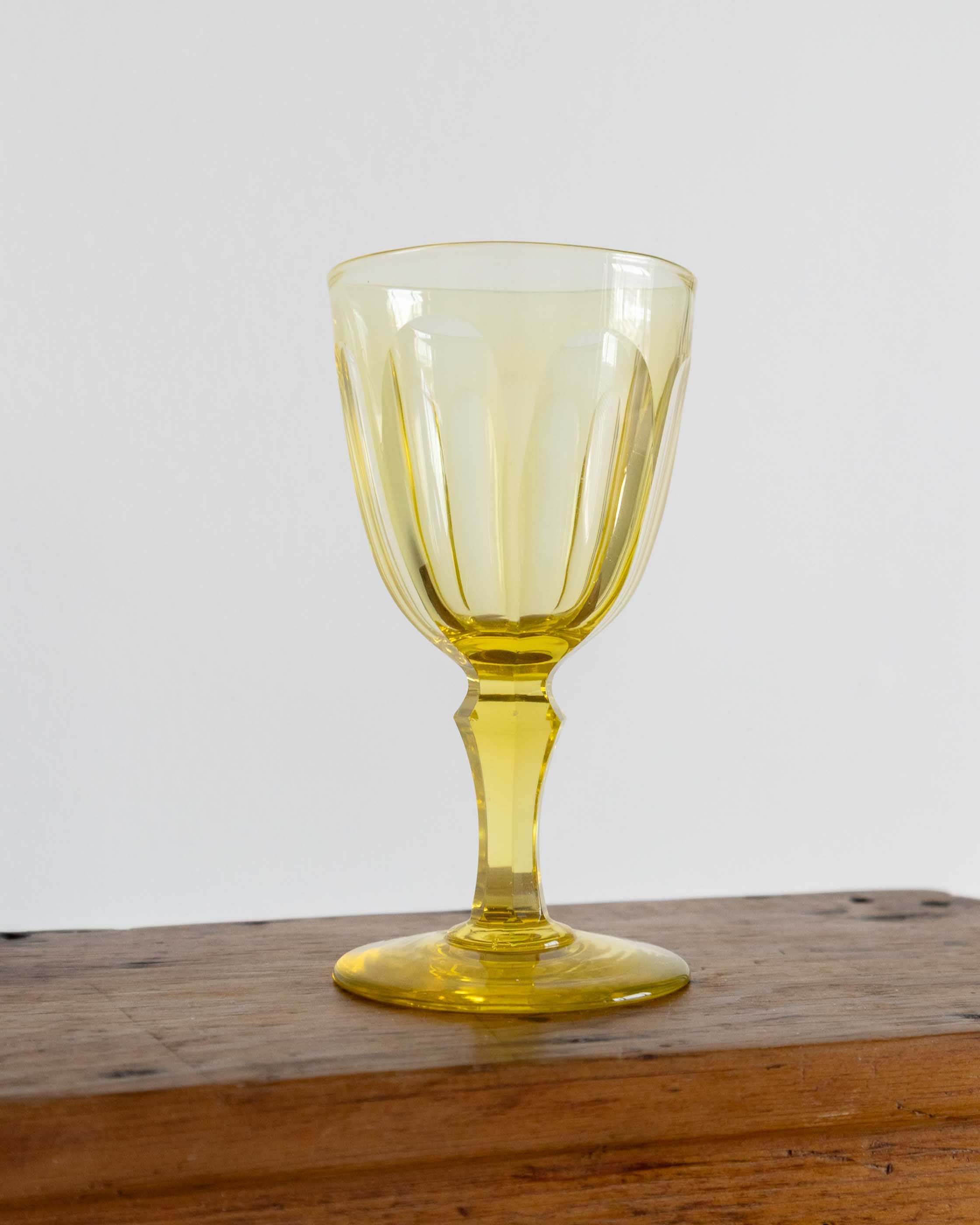
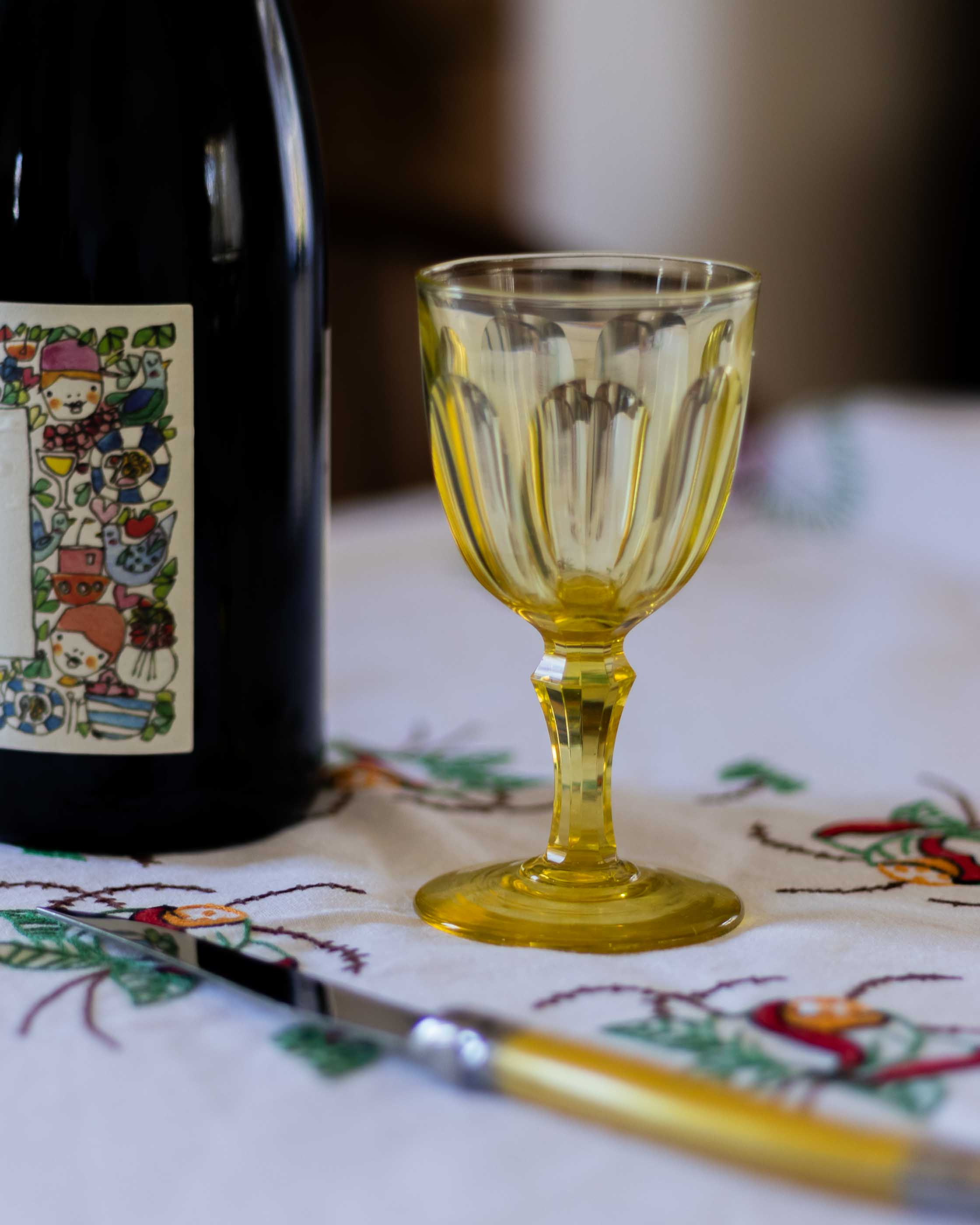
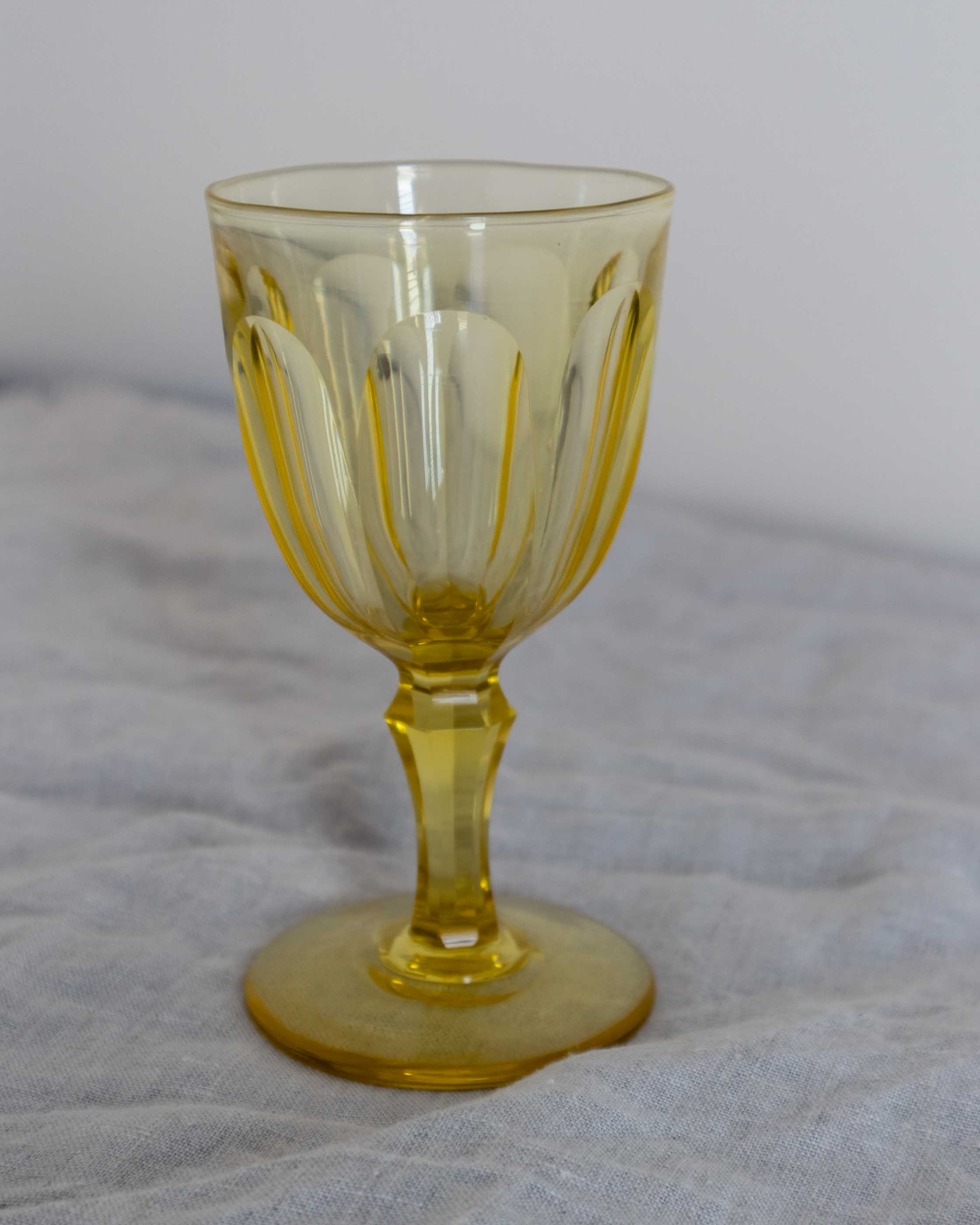
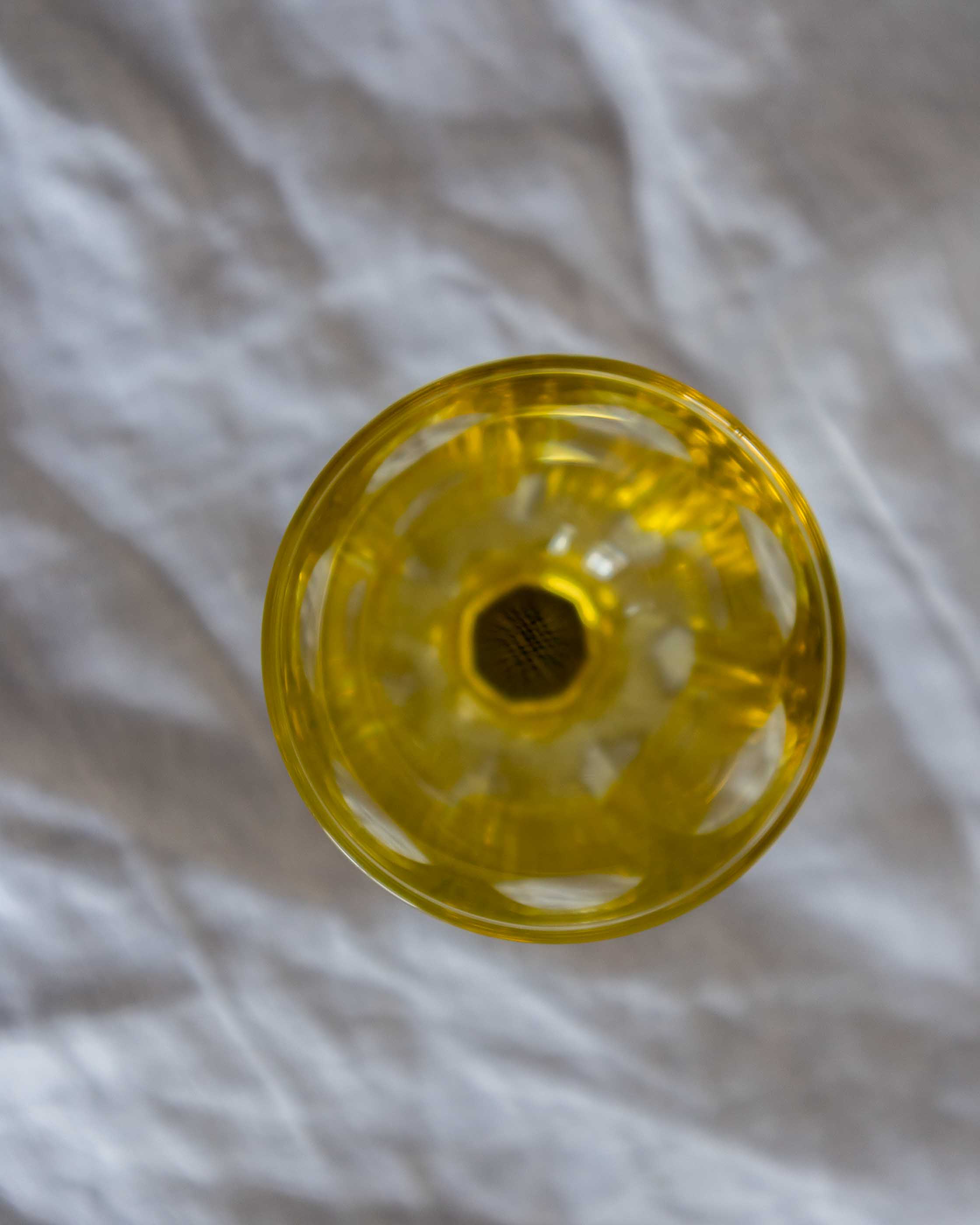
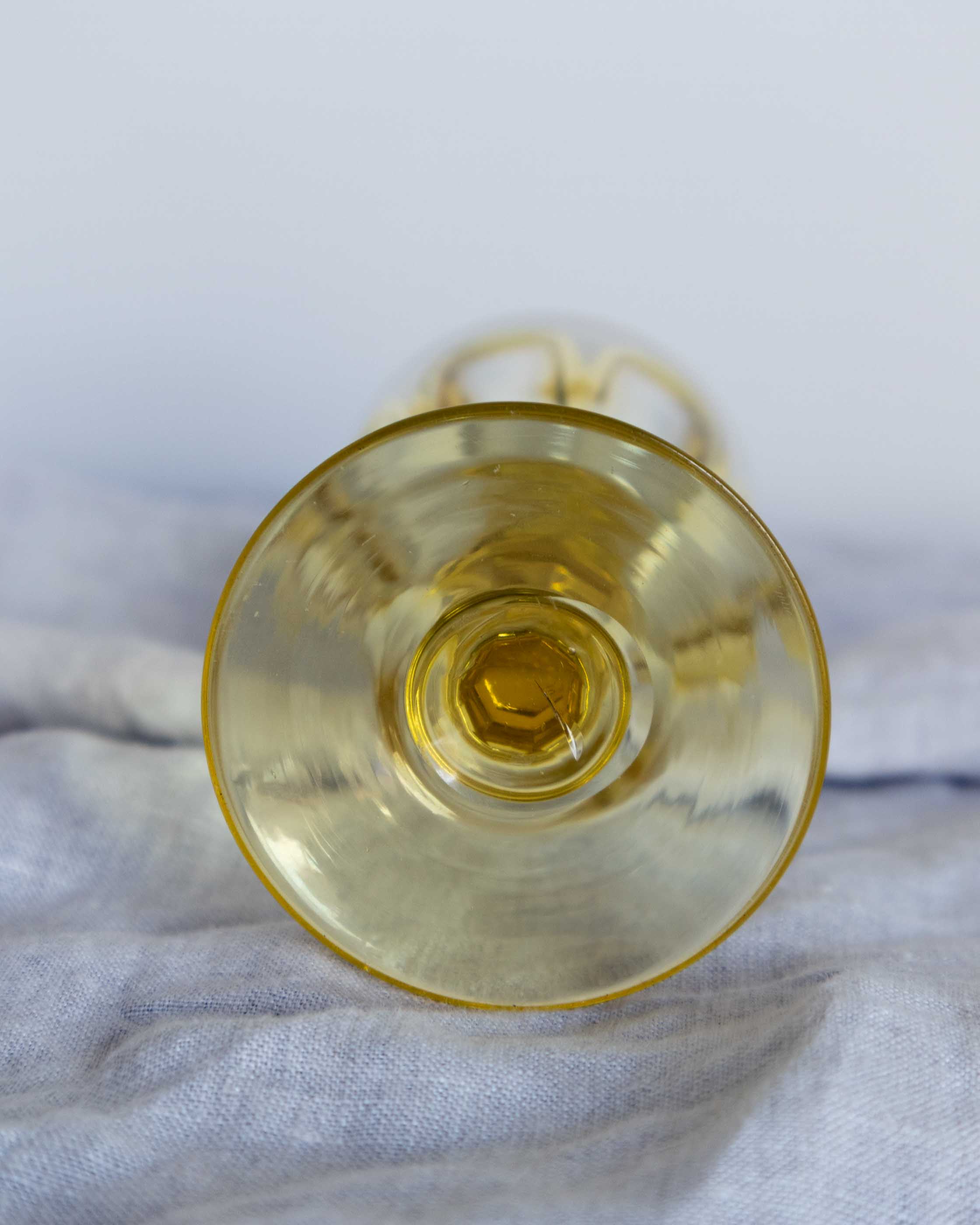
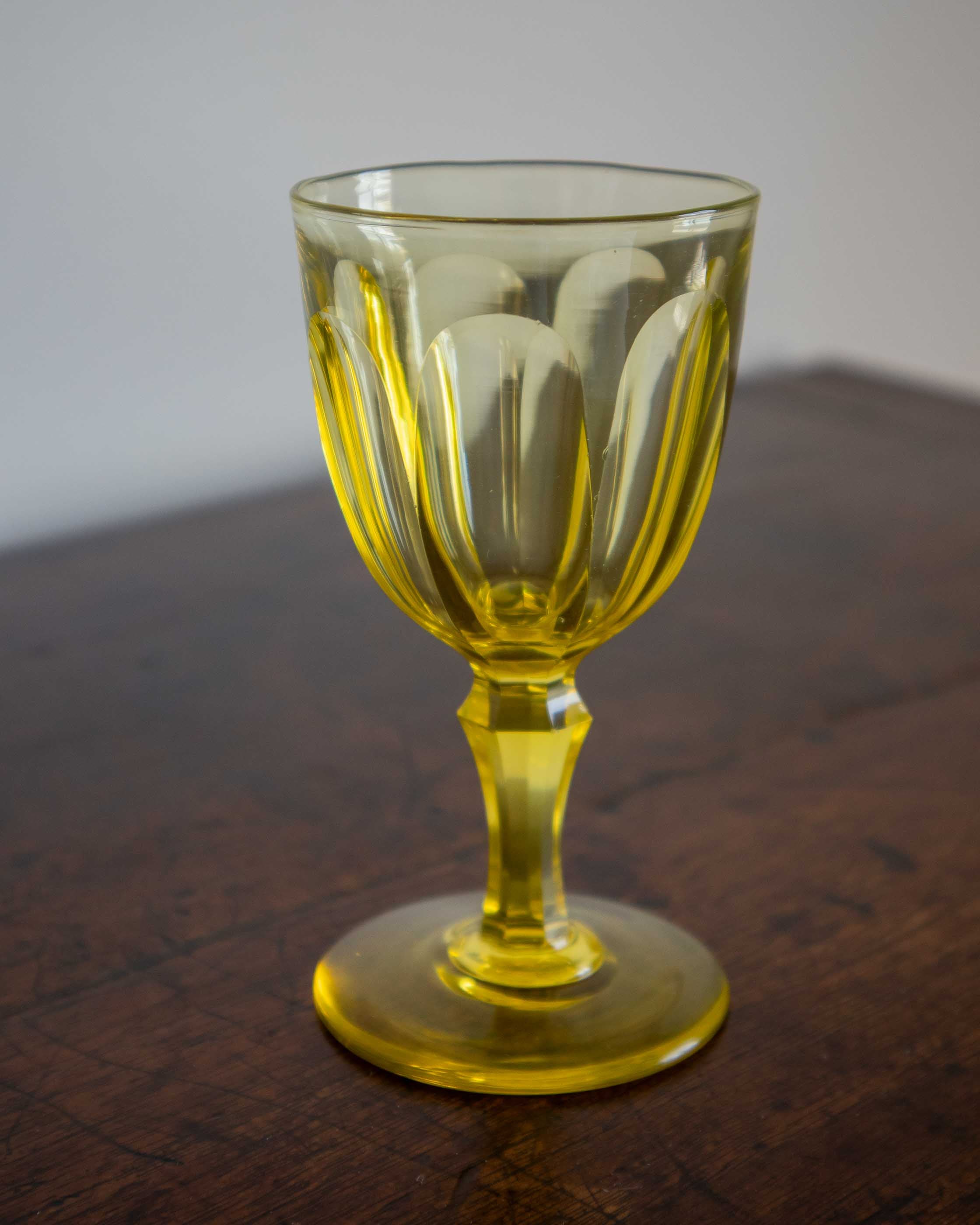
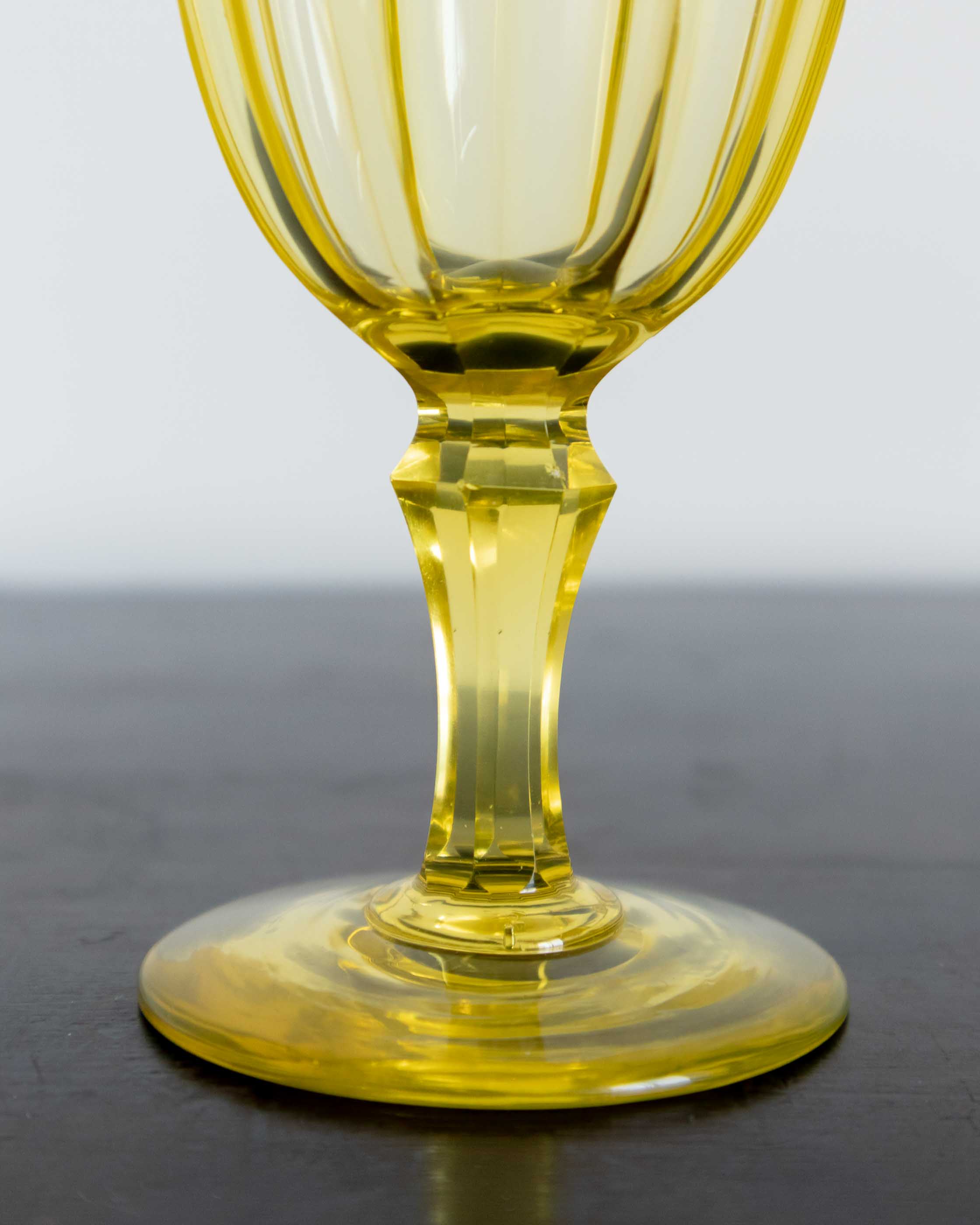
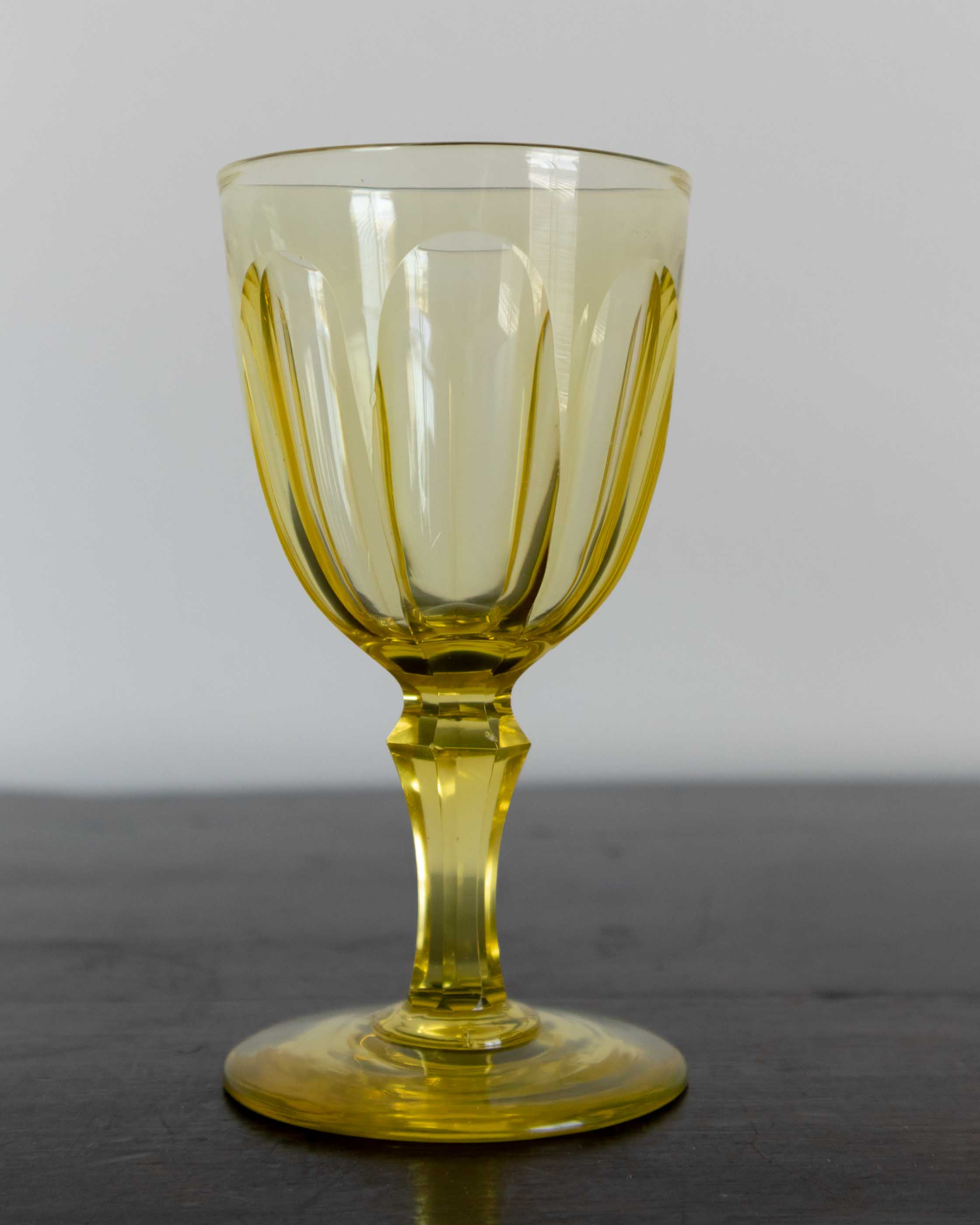
An antique mid-nineteenth century Victorian vaseline wine glass with slice tulip cut bowl and inverted baluster stem. Ground pontil to foot. The colour of the wine glass is a lovely pale yellow colour which would have been beautiful when seen in candlelight in the nineteenth century (see The Gen).
DIMENSIONS: Height 12 cm, Bowl 6.4 cm, Foot 6.2 cm.
CONDITION: In very good condition; wear consistent with an antique age and use, such as fine scratches and minor marks.
REFERENCES: For a vase made of a similar yellow coloured glass see Powerhouse Museum Object No. H5353-1.
~~~~~~~~~~~
THE GEN
“Vaseline glass. A transparent yellowish green or greenish-yellow glass, so named in the early 1950s because the color and appearance is similar to Vaseline petroleum jelly. No manufacturer ever used the term to describe it. When first made, it was called yellow or canary glass, another misnomer. Some true vaseline glass was made by adding uranium oxide (usually 2%) to the lead glass formula and will flash two colors in sunlight and fluoresce under ultraviolet light, creating a yellow-green glow. Other yellow-green glass will not fluoresce or glow under ultraviolet light and neither will other antique glass, except Burmese, custard and other wares with uranium oxide.
The earliest known uranium glass is a mosaic excavated from a Roman villa on the Bay of Naples, dating to about 79 A.D., containing a little over 1% of an oxide of uranium. The Chinese used some uranium in their glass jewelry made in the 17th and 18th centuries. The process of isolating uranium dioxide from pitchblende in 1841, and the development of methods for pressing glass in the 1830s gave rise to the first commercial use of uranium in glass making in the 1850s. The Boston & Sandwich Glass Company made some canary glass items in the 1840s. Lloyd & Summerfield of England began the first large scale production of uranium glass beginning in 1857.
In vaseline glass, the most popular pattern was the Daisy & Button, first introduced by Gillinder & Sons for the centennial in 1876. Other companies followed suit. About 55 patterns were made in canary and vaseline glass; about 30 are still considered common. Other patterns, not originally made in vaseline glass, were made later. Its height of popularity was from 1860 to 1890. It was popular because yellow-green is the last color to see in diminishing light before total darkness and the first seen when going from dark to light. It was a sharp contrast to the usual dark and drab Victorian settings.
Vaseline glass was often blown and/or cut in small quantities on special order. The glass in its product form emits radiation, but not above normal environmental background levels. However, in its molten state, it was highly radioactive, emitting radon gas as well as alpha, beta and gamma radiation. Therefore, the blower was subjected to high levels of radiation. By the 1890s it was becoming unpopular. Some opalescent vaseline glass was made, but in very small quantities.
The glassmaker given credit for first using uranium oxide as a coloring agent is a Czech named Frantisek Riedl, who noted the uranium salts obtained from pitchblende often caused glass to have a yellowish or greenish tint. He named the two colors Annagelb (Anna yellow) and Lenoragrun (Lorena green) after his two daughters. He only made the glass in small quantities. His nephew, Joseph, Anna’s husband, started production on a larger scale, changing the name Lorenagrun to Annagrun, in honor of his wife. Before 1840, the Czechs made some uranium glass rods, called chameleon, used as a raw material for some costume jewelry. Eventually they added other ingredients to the uranium-containing batch to create new colors: selenium to make pink, sulfur to make orange, and cadmium to make amber, making it until the start of World War II. They started making it again in the 1970s. In the United States, production of uranium glass was suspended by the Atomic Energy Commission from 1942 until 1951.
When under the varying light frequencies of the sun, candlelight, and gaslight, vaseline glass changes color from the yellow to green range and back again. Incandescent light has low fluctuating frequencies, so Vaseline glass’s color never varies from the yellow range—hence its decrease in popularity with the increased use of the electric light. From 1900 to 1941, several attempts were made to revive the popularity of Vaseline glass. After 1951, when some uranium oxide was allowed to be used in the private sector, it was very expensive and only small quantities of vaseline glass were made. Since the 1960s some small companies have been making a small range of items in Vaseline glass. It is sometimes spelled Vasaline.” (Glass A to Z, David J. Shotwell, Krause Publications, 2002, pp 584–585)
~~~~~~~~~~~
Would you like to know more about this piece?
Make an enquiry via email here.