Late Georgian Regency
Circa 1780–1840 | England
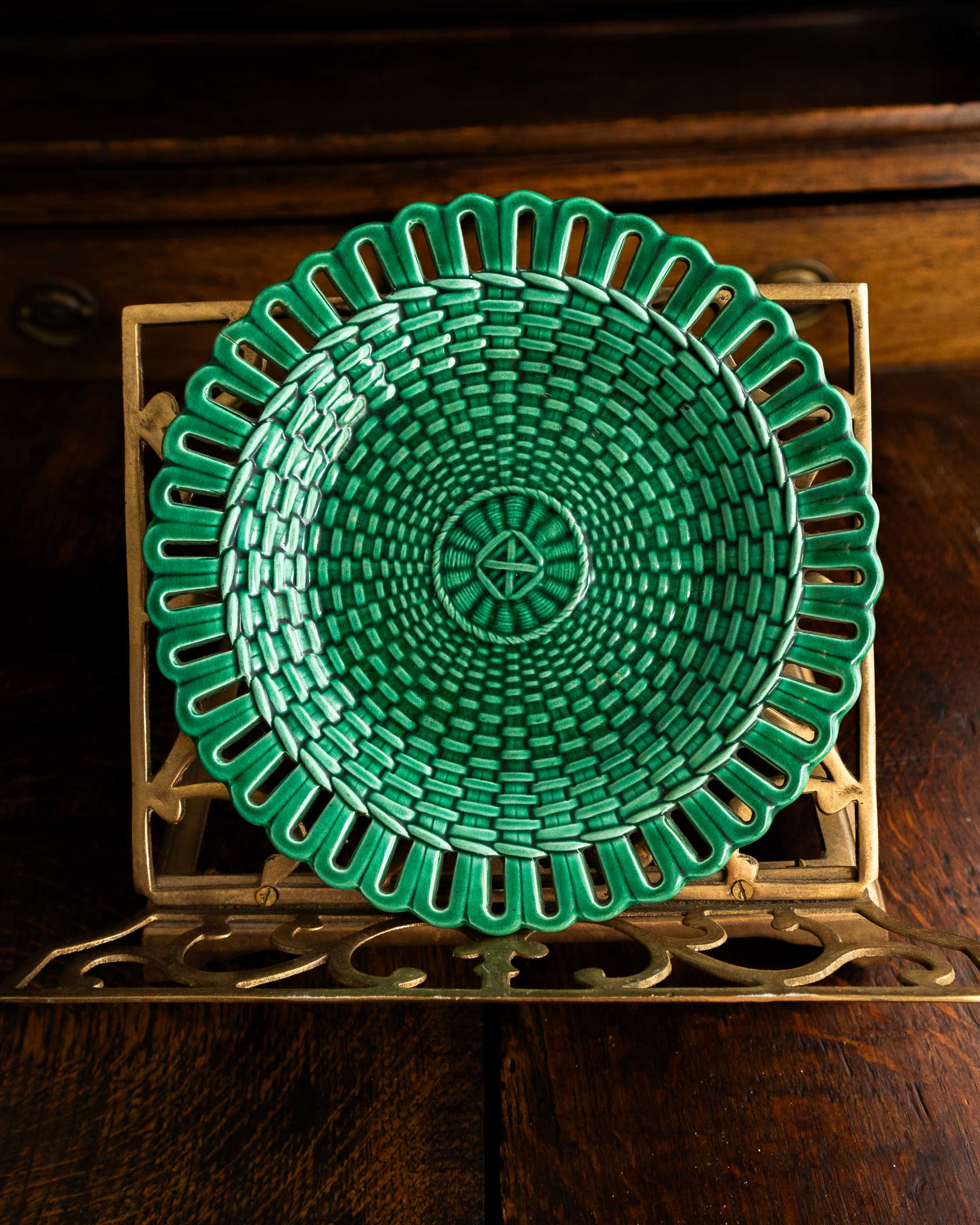
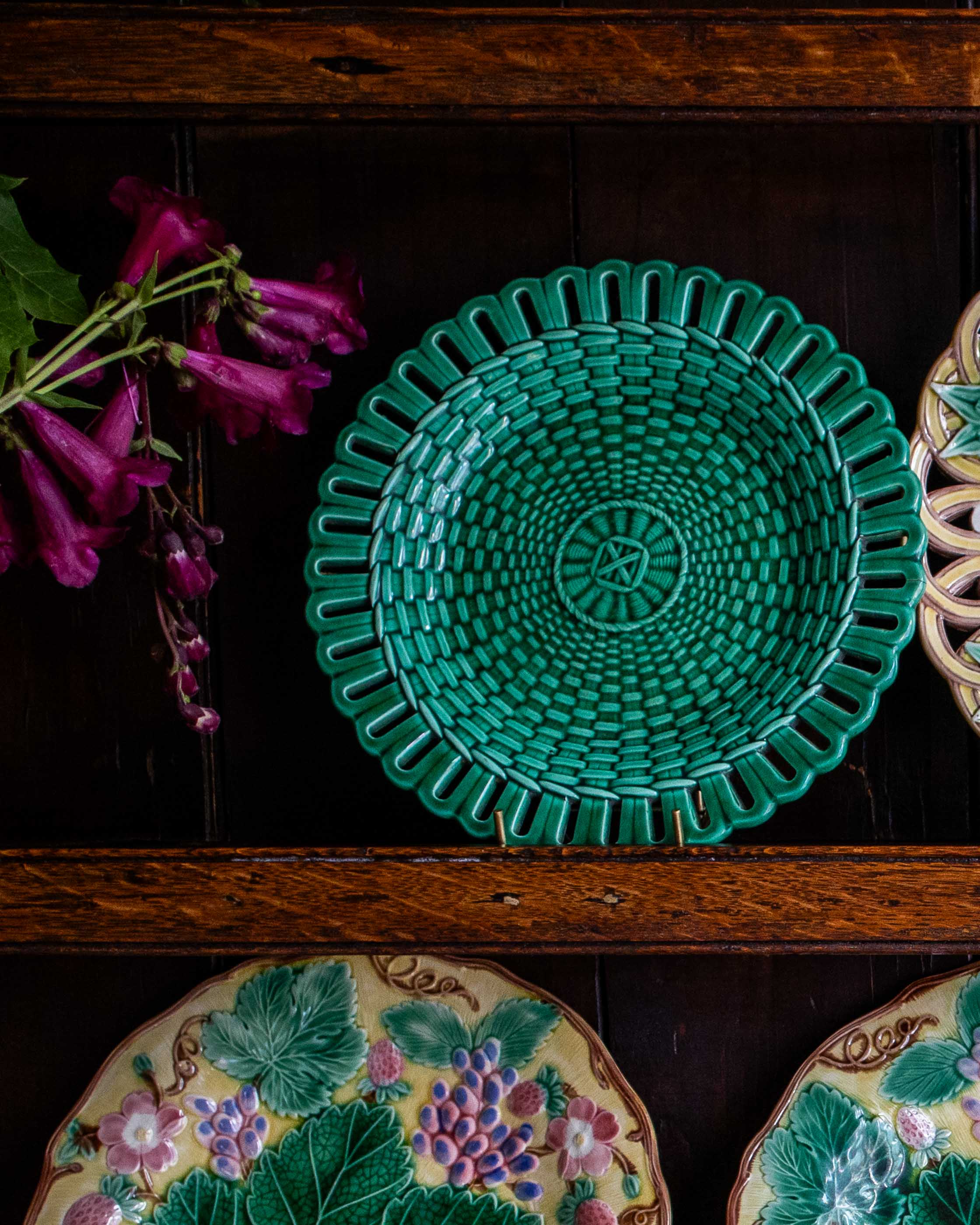
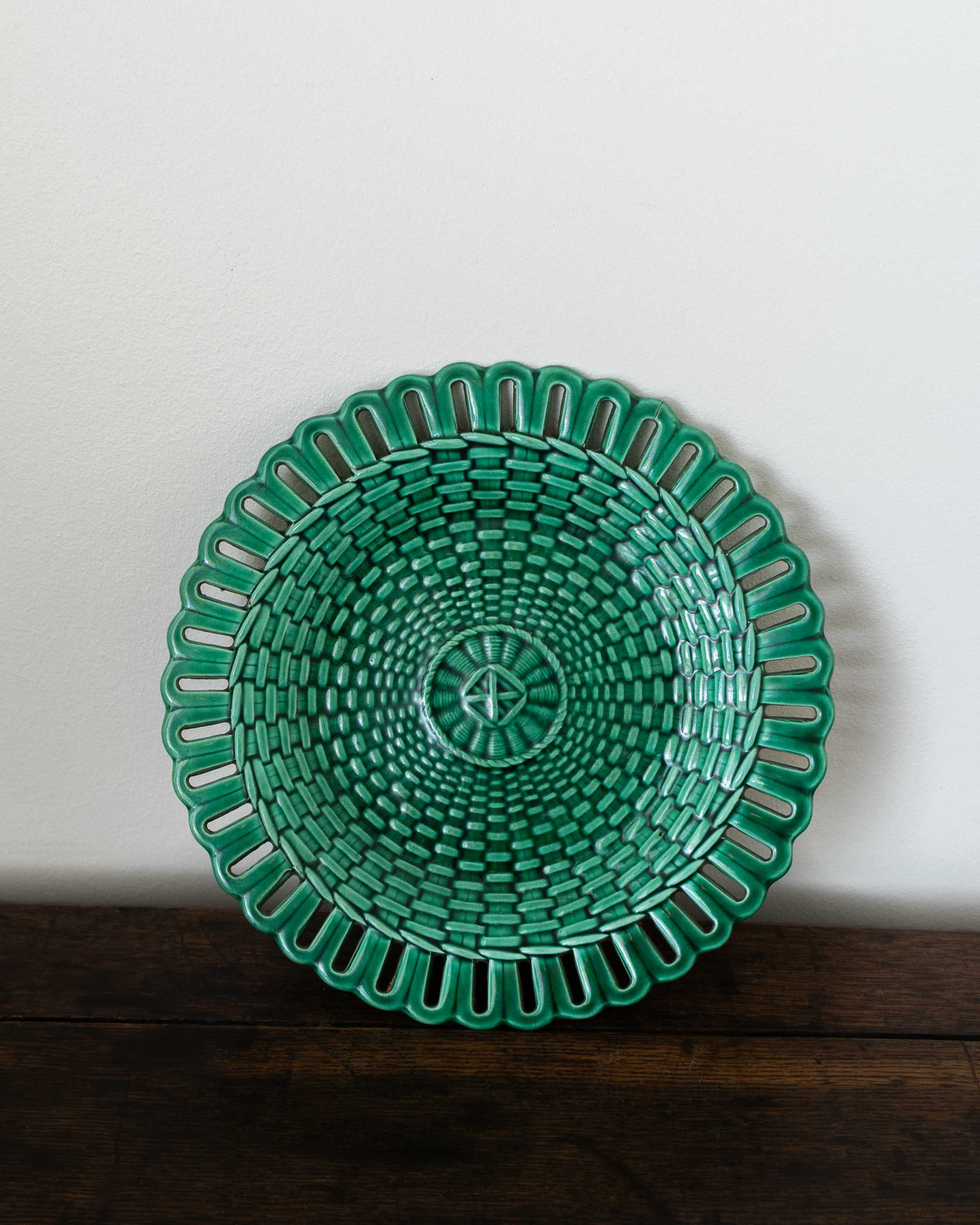
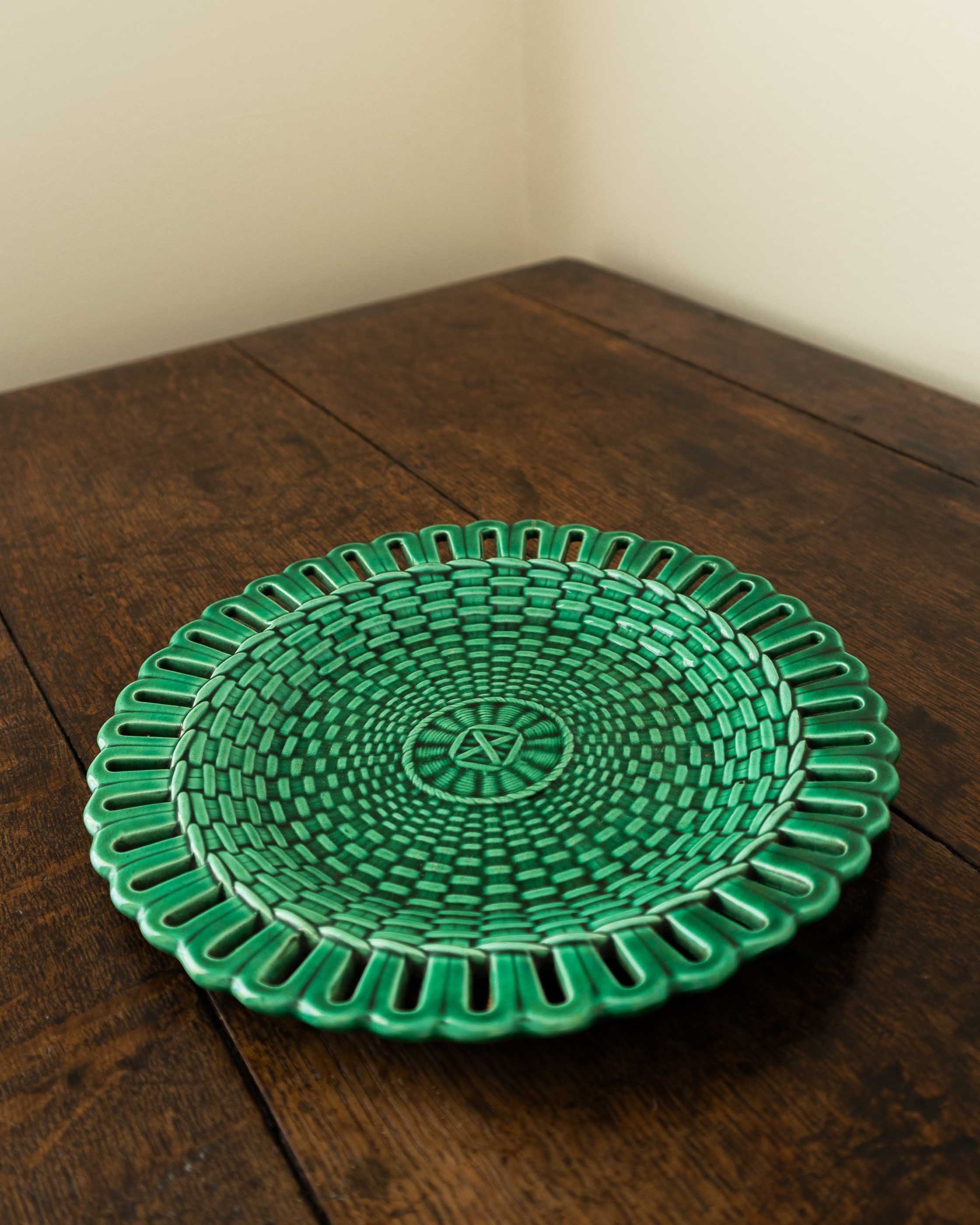
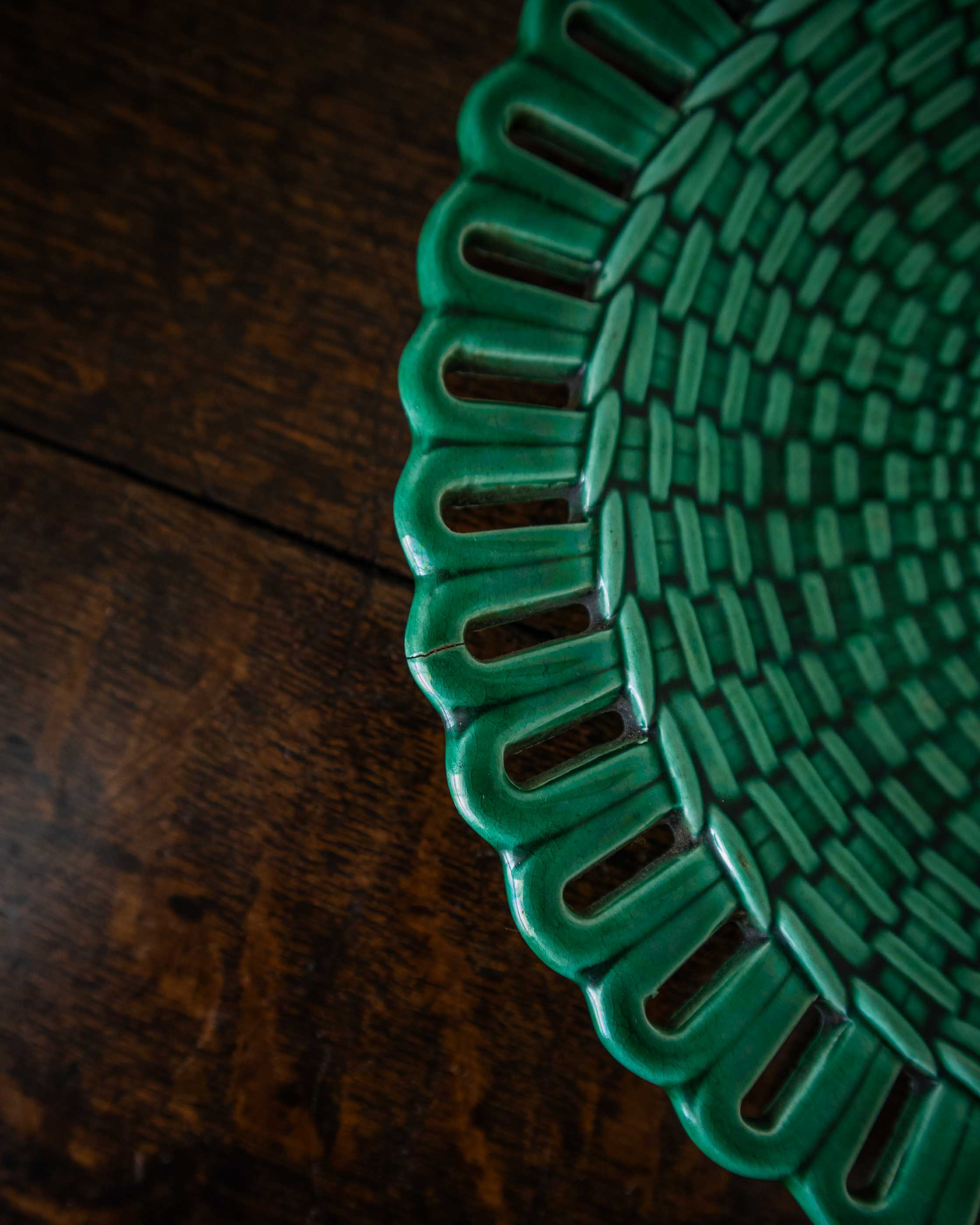
An antique Wedgwood plate moulded in low relief with a wickerwork pattern background and a ribbon pattern edge in the highly sought green glaze. The sharply modelled pattern of the plate is reminiscent of design 44 Creamware Shapes which first appeared in Wedgwood’s 1774 Catalogue. Unusual to find an example in a full green glaze that is so highly sought after by collectors today, some 260 years since it was invented by Josiah Wedgwood (see The Gen).
DIMENSIONS: Diameter 21 cm.
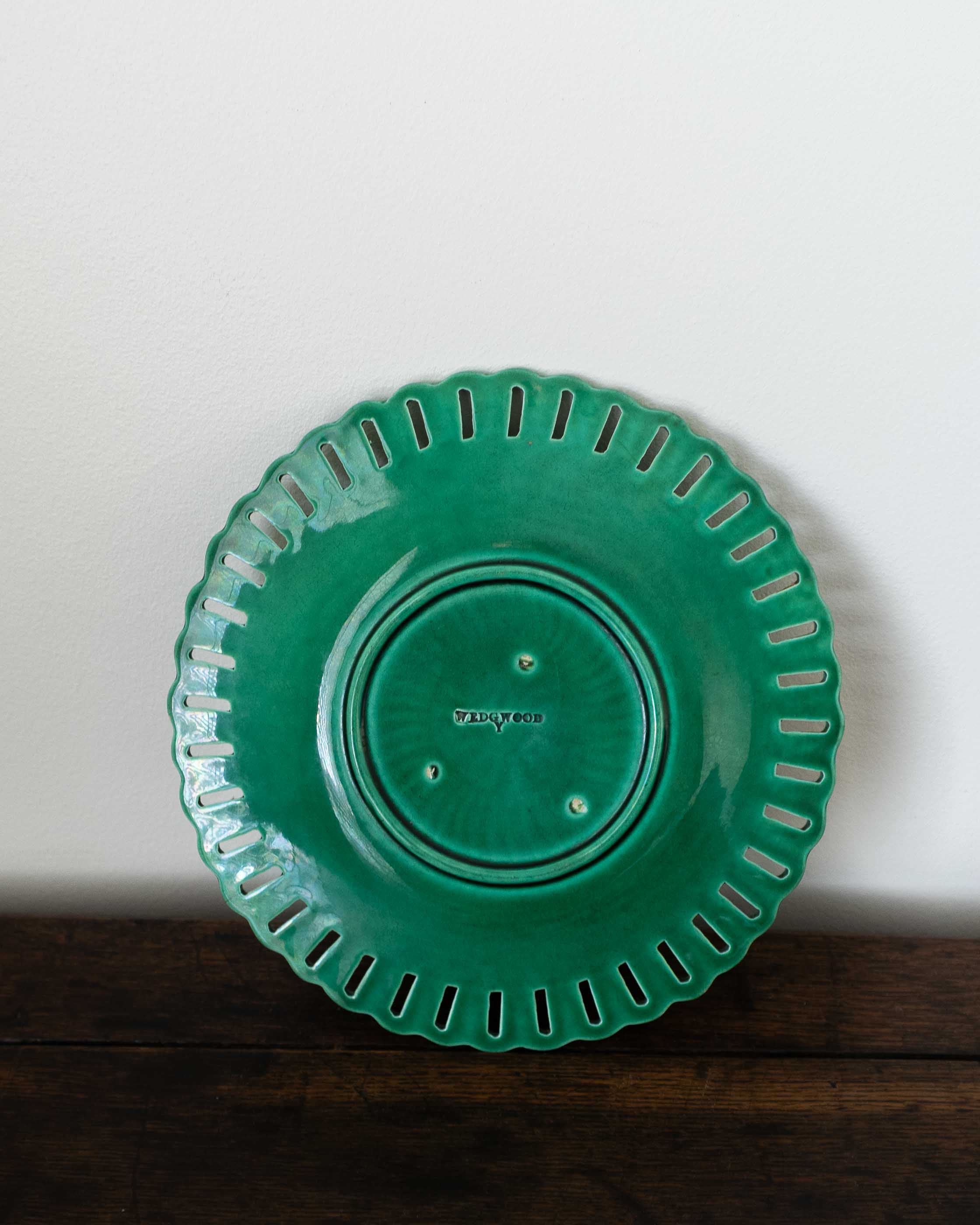
SIGNATURES, MARKINGS & INSCRIPTIONS: Impressed WEDGWOOD and Y.
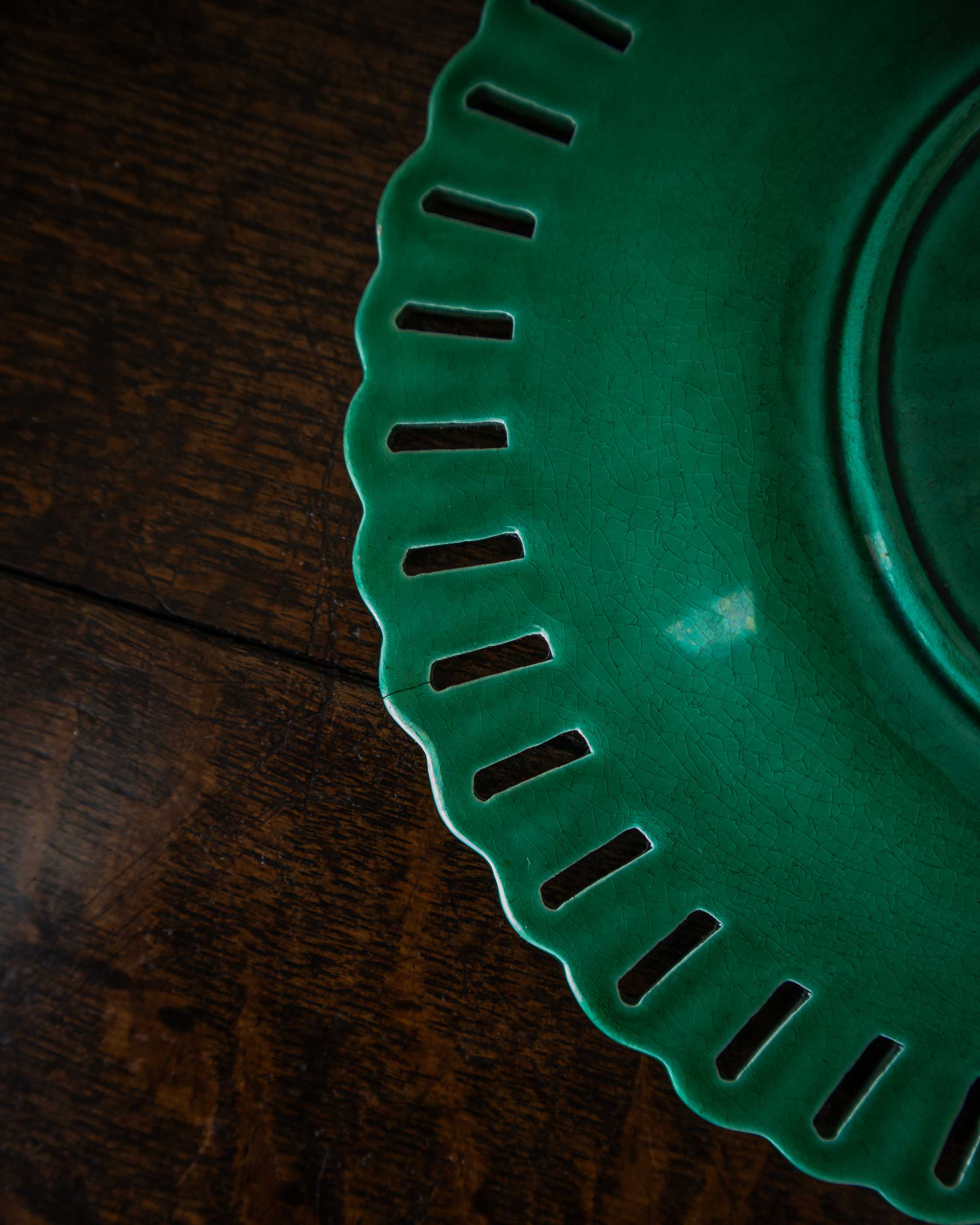
CONDITION: The plate is in very good condition with wear consistent with an antique age and use. There is one minor hairline crack to one of the reticulated loops. There is no evident restoration.
REFERENCES: For an example of a similarly modelled plate see the oblong Wedgwood dish at the Met, Accession Number 07.233.36.
~~~~~~~~~~~
THE GEN
“When he was at Fenton, Wedgwood made efforts to improve existing wares, and an unusual clause in his partnership agreement permitted him to keep to himself any discoveries made: he was under no obligation to reveal them to his partner or anyone else. It was at this time that he perfected a clear and bright green glaze that had been known in Tudor times and subsequently neglected. His report of the successful trial respecting the colour was recorded by him in these words: ‘A Green glaze, to be laid on Common white (or cream colour) biscuit ware. Very good — March 23, 1759’.” (Wedgwood Experiment Book, Experiment 7 records the invention of the green glaze. Wedgwood, Geoffrey Wills, Spring Books, Octopus Publishing Group PLC, 1988, p. 18)
“It was his development in 1759 of the green glaze, afterwards called ‘Mr Wedgwood’s green,’ which probably impelled him to leave Wheildon. The significance of this discovery was far-reaching. It permitted a piece of ware to be even self-color instead of spotted or dabbed with colour applied with a cloth; a piece with this glaze could be fired in the same oven as tortoise shell and agate wares; and either alone or in combination with yellow glaze, it permitted an entirely new range of displays that would enhance and display it.” (Wedgwood, Jean Gorely, M. Barrows and Company, Inc., 1950, pp 25 and 26)
“We may conclude, therefore, that the green-glazed ware was among Wedgwood’s first productions after starting on his own account, and it was first produced by him on a serious scale in 1760 in Ivy House Works.” (Wedgwood, Wolf Mankowitz, B.T. Batsford Ltd, 1953, p. 30)
~~~~~~~~~~~
Would you like to know more about this piece?
Make an enquiry via email here.